
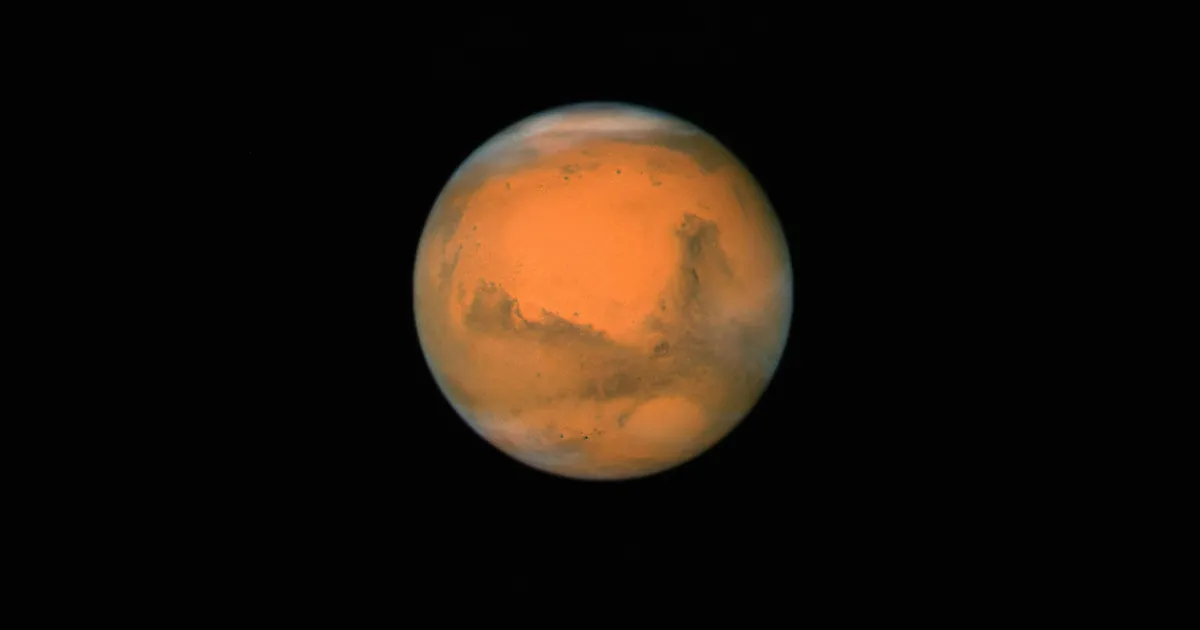
Ancient Rivers Hint at Wetter Martian Past
New research indicates that the southern region of Mars, known as Noachis Terra, was once far wetter than previously imagined, potentially reshaping our understanding of the planet’s early climate.
Extensive River Networks Discovered
Scientists have mapped over 15,000 kilometers of ancient river structures in Noachis Terra, an area surprisingly devoid of typical river valleys. These structures, called “winding fluvial backs,” are remnants of old riverbeds that suggest a prolonged period of precipitation on Mars.
Evidence of Long-Term Rainfall
Researchers from the British Open University presented their discoveries at a meeting of the Royal Astronomical Society. Their analysis suggests that water on Mars wasn’t just a fleeting phenomenon.
According to the team, the size and distribution of these fluvial backs point to extended rainfall, not just incidental melting water flows. The rivers were sustained by precipitation over vast stretches of time.
Earth-Like Meandering Rivers
Using images from NASA’s Hirise camera and altitude data from the Mars Orbiter Laser Altimeter, researchers created detailed maps of the river networks. Strikingly, many of these ancient riverbeds display a winding pattern, complete with meanders like those found in rivers on Earth.
The discovery challenges the conventional view of early Mars as a cold, dry planet with only sporadic water from melting ice sheets. These extensive river networks, some stretching hundreds of kilometers, are more akin to ancient river systems on our own planet.
Implications for Martian History
This new evidence supports the idea that early Mars had a considerably wetter and more dynamic environment than previously believed. A study published in Nature Geoscience found evidence of ancient lakes on Mars that persisted for thousands of years, further suggesting a more sustained presence of water (Nature Geoscience 2017).
