
Astronomers Uncover Stunning Details of Galactic Filaments
Scientists have captured an unprecedentedly detailed view of the galaxy cluster Abell 2255, revealing intricate, radio-emitting structures that stretch far beyond the galaxies themselves. This research sheds light on the evolution of galaxies and how supermassive black holes interact with the space between them.
Unraveling Cosmic Tendrils
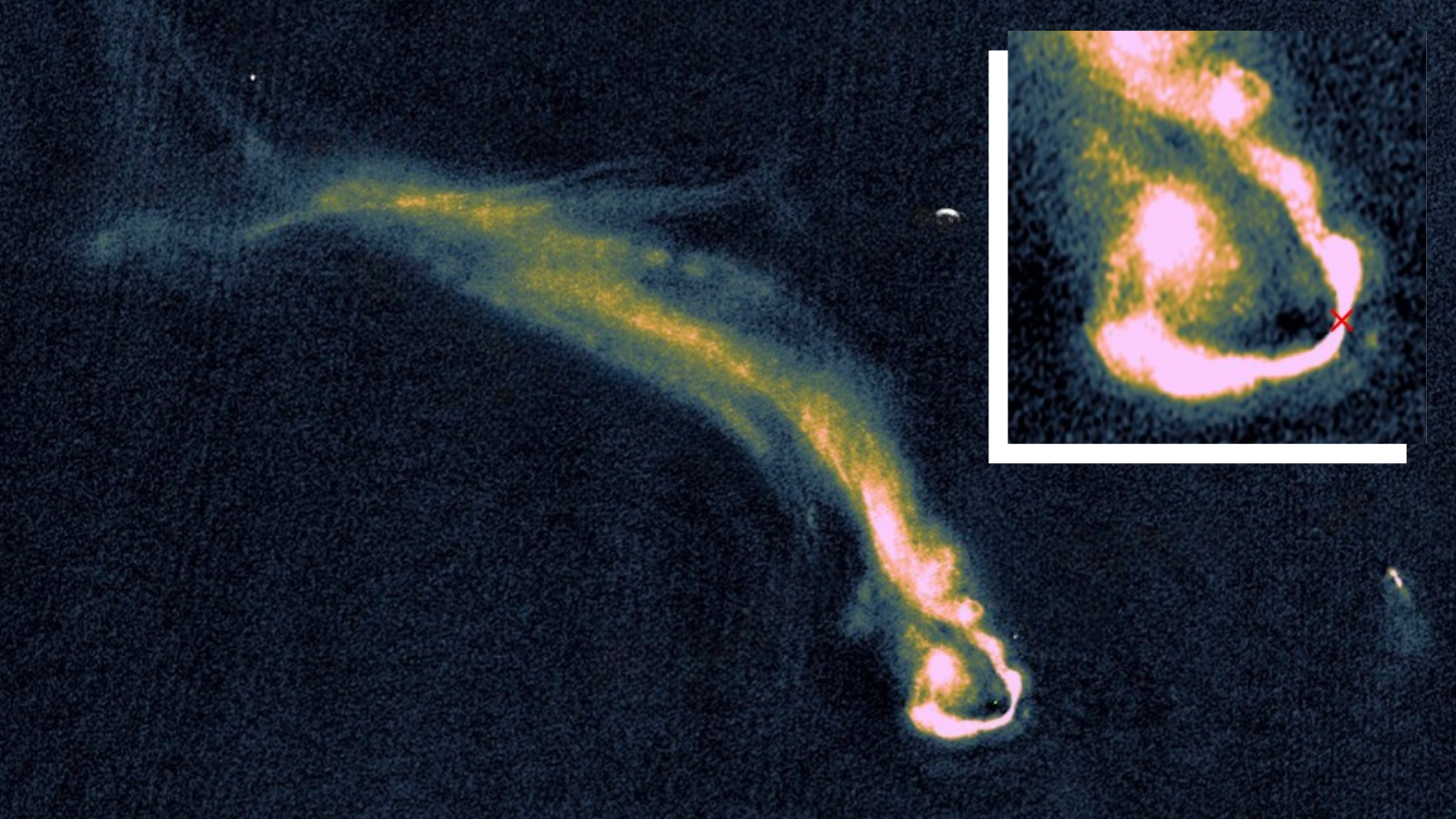
A team of astronomers has produced the most detailed image ever of the Abell 2255 galaxy cluster. This cluster, situated about 800 million light-years from Earth, contains up to 500 galaxies, some merging. The researchers used the European Low Frequency Array (LOFAR) radio telescope to observe the cluster’s radio galaxies.
These observations, conducted at a radio frequency of 144 MHz, allowed for deep imaging with an angular resolution of up to 0.3 arcseconds. The resulting images highlighted elongated filaments. These structures, extending between 260,000 and 360,000 light-years, originate from the radio galaxies within the cluster.
The filaments will eventually disperse into the intergalactic medium, a region of gas and dust between galaxies. The team’s work focuses on how the jets launched by supermassive black holes impact this medium.
Radio Galaxies Under Scrutiny
Radio galaxies, powered by supermassive black holes, emit powerful jets of matter at nearly light speed. These jets play a vital role in the evolution of their host galaxies. The study of Abell 2255 could help explain how these galaxies evolve and how their jets impact the gas and dust throughout the intergalactic medium.
“These results open the way to new perspectives for the study not only of radio galaxies but also of the properties of the gas that permeates galaxy clusters,”
—Marco Bond, Researcher, National Institute for Astrophysics (INAF)
The team concentrated on the Original Tailed Radio Galaxy. This galaxy displays a complex tail and filaments never before observed in such detail. The new LOFAR images also revealed new features of other radio galaxies within Abell 2255. They include the Goldfish, the Beaver, and the Embryo galaxies, all of which have distorted shapes and trailing radio tails.
These galaxies’ structures show jets and magnetic fields. These features are critical to comprehending galactic evolution.
“Our main goal was to use LOFAR-VLBI to detect possible filaments in the tails of the radio galaxies of Abell 2255, in order to study their morphological characteristics and understand their origin,” said Emanuele De Rubeis, team member and a researcher at the University of Bologna. The research team’s findings were published on June 10th in the journal Astronomy & Astrophysics.
Astronomers continue to improve radio telescope technology and techniques. They are continually refining calibration processes. The volume of raw data is enormous. For instance, a single night of observations can yield about 4 terabytes of data, which increases to 18–20 terabytes after calibration. Processing data and generating images can take around a month.
The detailed observations of galaxy clusters and their radio galaxies provide insights into the magnetic properties of the hot gas permeating the clusters and particle acceleration mechanisms. This has major implications for our understanding of the cosmos, and these studies are helping to shape that understanding.
