The World Cup’s Other Final: Platforms, Pizzas and a Planet Hitting ‘Buy Now
Digital Traffic and the Multi-Screen Audience Surge
Massive viewer engagement strained digital architectures worldwide during the tournament. By the round of 16, FIFA estimated that 5.2 billion people had engaged with the tournament, while digital channels generated 34 billion impressions and two billion engagements by the quarterfinals, according to the sources. The group stage alone yielded 11 billion video views and 39 million new followers across FIFA platforms.
Individual viral moments commanded unprecedented scale. A clip of Argentine player Lionel Messi scoring against Algeria pulled 53 million views on TikTok. Meanwhile, the opening performance featuring Shakira and Burna Boy reached 131 million views on Instagram and 44 million on YouTube.
Traditional broadcast ecosystems experienced parallel digital migrations. Brazil’s match against Haiti reached 51.3 million people across Globo’s ecosystem, while CazéTV established a new YouTube record for concurrent viewership of a football match. In the United Kingdom, the BBC averaged 9.7 million viewers for the final with a peak of 13.6 million, per ratings reported by the Guardian. The BBC’s dedicated football YouTube channel added 100 million views, alongside 2.55 billion total social views for tournament clips and analysis.
Inventory Pressures and eCommerce Execution
Retail supply chains faced heavy demand compression as fans rushed to secure official merchandise. Nike reported that national-team kit sales hit 2.5 times the volume recorded at the comparable point in the 2022 tournament, according to figures cited by Reuters. Adidas, which outfitted both finalists, booked roughly 250 million euros ($285 million) in World Cup product revenue during the first quarter and projected matching performance for the second quarter.
The sudden qualification of Argentina for the final triggered an immediate consumer travel response. Searches on Despegar for New York flights surged 6,000% within hours. Two special Buenos Aires-to-New York flights—carrying 540 seats priced at approximately $5,000 in economy and $10,000 in business—sold out by the following morning.
Midnight Deliveries and Mobility Spikes
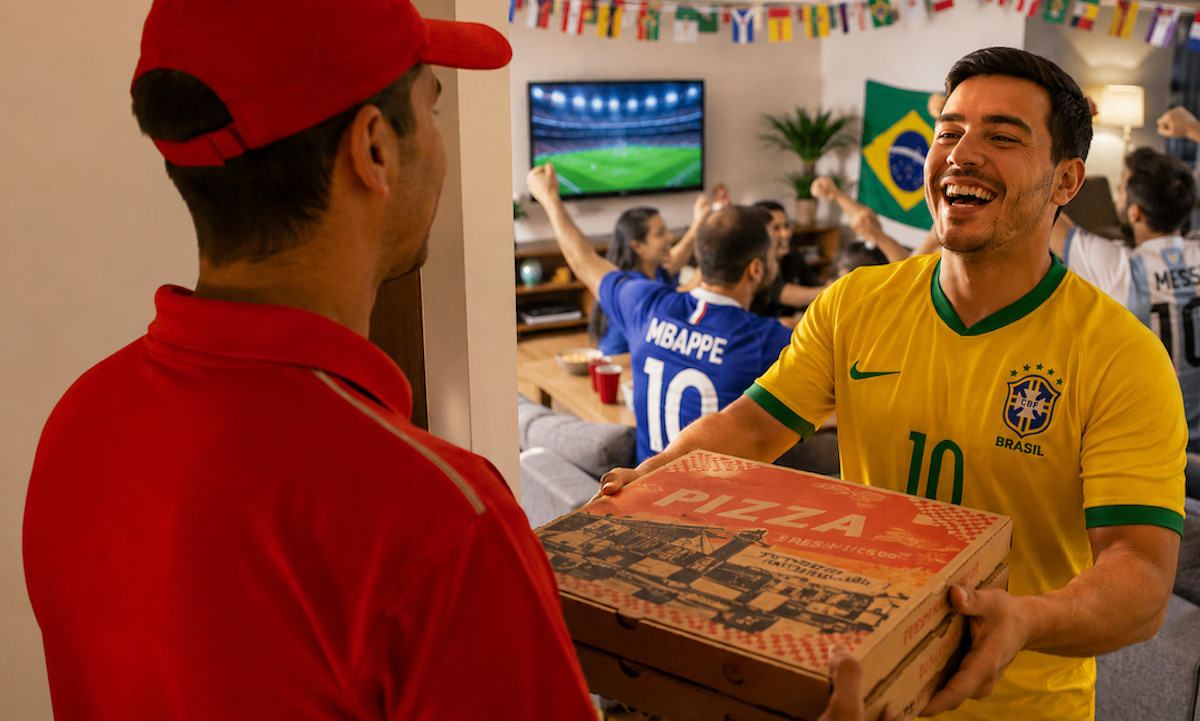
Global time zones dictated non-traditional purchasing habits. In India, midnight matches sparked heavy demand for pizzas, burgers, fries, and beverages, culminating in a single Chandigarh customer placing a 16,444-rupee ($140) finger-food order. Wolt reported match-hour orders up 20% in Israel, with family pizzas rising 35% and ice cream increasing 44%. Uber recorded more than 10 million ranch-dressing delivery orders globally during the tournament, followed by high volumes of water, electrolytes, and Tylenol.
Mobility networks absorbed unprecedented volume across all three host countries. Uber data highlighted anomalous consumer behaviors, including a fan who treated a 266-mile journey from Arlington to Houston as standard match-day transit, and another passenger who logged trips at 10 distinct venues across the host nations.