
Venezuela’s Economy Faces Steep Challenges in Second Half of 2025
Sanctions, Currency Volatility, and Inflation Cloud Outlook
As 2025 progresses into its latter half, Venezuela’s economic landscape is dominated by uncertainty, marked by the departure of foreign oil firms, renewed U.S. sanctions, and a volatile currency market.
Macroeconomic Instability Looms
Economist Víctor Álvarez warns that the reintroduction of oil sanctions significantly limits the national executive’s capacity to manage economic policy.
“With less income in foreign exchange, without international reservations and without external financing, the national executive lacks maneuvering margin to implement economic policies aimed at stabilizing the exchange rate, curbing inflation and avoiding a new contraction of the economy,”
—Víctor Álvarez, Director of Economic Pedagogy
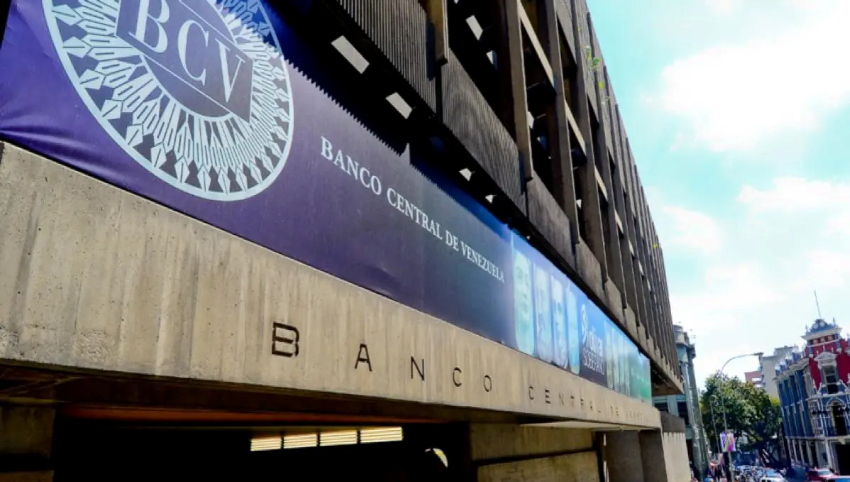
Álvarez highlights stark discrepancies in economic performance data between the Central Bank of Venezuela (BCV), the Venezuelan Observatory of Finance (OVF), and the Institute of Economic and Social Research of the UCAB (IES UCAB).
Oil Production and Currency Market Under Pressure
The cessation of operations by companies like Chevron, which contributed substantially to daily crude oil production, raises concerns. Álvarez estimates that without new markets for sanctioned oil, production could drop to 750,000 barrels per day, impacting foreign exchange earnings and the exchange rate.
The foreign exchange market faces reduced supply as foreign oil companies previously sold dollars to meet fiscal obligations. This limits the BCV’s ability to inject currency and stabilize the dollar’s price.
Inflationary Pressures Mount
Experts project a significant reduction in currency supply for the second semester, potentially by at least 25%. Ecoanalítica forecasts that currency sales in Venezuela will fall to $5 billion by year-end 2025. Remittance income is also anticipated to be affected by U.S. migratory policies.
The combination of lower currency supply and increased monetary liquidity is expected to drive up the dollar’s price, fueling inflation. The official exchange rate reportedly doubled in the first half of the year, affecting imported goods. Projections for the official exchange rate by the end of 2025 range up to 175 bolivars per dollar.
Inflation data remains a concern, with available figures showing a substantial rebound in the first semester. One estimate placed accumulated inflation at 105.5% in May alone, with an annualized rate of 229%. Both OVF and IES UCAB project year-end inflation exceeding 200%.
Fiscal Deficit and Monetary Liquidity
A projected fall in oil production will likely reduce tax revenues, potentially widening the fiscal deficit. This constrains the government’s ability to stimulate the economy through public spending or wage increases.
The government’s reliance on BCV financing to cover deficits in state-owned companies like PDVSA and Corpoelec, through money issuance unsupported by reserves or production, is seen as an inflationary driver. High inflation and low interest rates discourage bolivar deposits, pushing individuals to seek protection in dollars, further pressuring the exchange rate and intensifying inflation.
Expert Outlook for the Second Semester
Víctor Álvarez anticipates the second semester will feature stagnant oil production, foreign exchange shortages, declining international reserves, a rising official exchange rate, an inflationary surge, and a slowdown in economic activity. The consensus among analysts points to inflation exceeding 220% for 2025, accompanied by persistent currency devaluation.
Economic Contraction and Consumption Decline
Economist Douglas Becerra forecasts an economic contraction of at least 3% for 2025, a stark contrast to earlier official growth projections. He notes that official economic figures have not been disclosed for three years.
Becerra believes consumption has decreased, citing instances where rising prices led consumers to abandon previously affordable establishments. He also points to difficulties in the credit market and expresses surprise at reports of increasing international reserves, questioning the backing of gold reserves.
“We are going to have a fall of at least 3% this year,”
—Douglas Becerra, UCV Economist
Regarding inflation, Becerra estimates an interannual growth close to 300%, largely driven by the exchange rate’s performance. He further estimates a significant 33% reduction in consumption based on discussions with entrepreneurs and economists.
