
Indian Cinema Celebrates **Guru Dutt**’s Centenary
A look into the life and struggles of an iconic filmmaker
Next week marks the 100th birthday of **Guru Dutt**, the celebrated Indian director and actor. While his cinematic achievements are well-known, less explored are the emotional burdens and mental health challenges he faced.
Early Life and Inspirations
**Guru Dutt** was born on July 9, 1925, in Karnataka. His family later relocated to Bengal, where the region’s rich culture profoundly shaped his artistic vision. Entering the Bombay film industry in the 1940s, he dropped his surname, Padukone, and worked as a choreographer and telephone operator.
Amidst the turbulence of India’s independence struggle, **Dutt** penned “Kashmakash,” a story reflecting artistic frustration and social disillusionment, which laid the foundation for his future masterpiece, “Pyaasa.”
Rise to Fame and Personal Turmoil
A friendship with rising actor **Dev Anand** provided **Dutt** with the opportunity to direct his first film, the 1951 noir thriller “Baazi.” This success was followed by love with singer **Geeta Roy**, marking what many considered his happiest period.
After establishing his own film company, **Dutt** achieved further success with romantic comedies like “Aar-Paar” and “Mr & Mrs 55.” However, his yearning for deeper artistic expression led him to create “Pyaasa,” a film exploring an artist’s struggles in a materialistic society. According to the National Institute of Mental Health, creative professionals are 25 times more likely to have a mental health condition than the general population (NIMH).
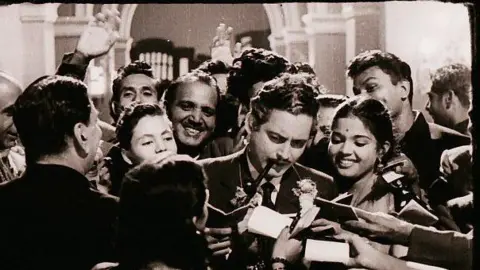
According to his sister, **Lalitha Lajmi**, **Dutt** relentlessly pursued perfection during the making of “Pyaasa,” often reshooting scenes and pushing himself to extremes. She recalled:
“Sleep evaded him. The misuse of and dependence on alcohol had begun. At his worst, he started experimenting with sleeping pills, mixing them in his whiskey. Guru Dutt gave his all to make Pyaasa – his sleep, his dreams, and his memories.”
—Lalitha Lajmi, Sister of Guru Dutt
In 1956, at the age of 31, **Dutt** attempted suicide. Despite this, his family did not seek professional help due to the stigma surrounding mental health at the time.
The Paradox of Success and Personal Life
Although “Pyaasa” brought him immense fame, **Dutt** often expressed a sense of emptiness. His cinematographer, **VK Murthy**, recalled **Dutt** saying:
“I wanted to be a director, an actor, make good films – I have achieved it all. I have money, I have everything, yet I have nothing.”
A contrast existed between **Dutt**’s films, which often portrayed strong women, and his expectations in his personal life, where he preferred his wife to adhere to more traditional roles.
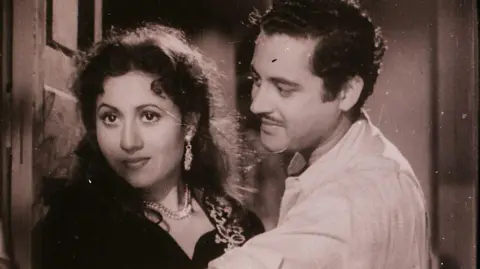
Following the triumph of “Pyaasa,” **Dutt** embarked on “Kaagaz Ke Phool,” a semi-autobiographical film exploring themes of marital unhappiness and artistic disillusionment. Although now considered a classic, its initial commercial failure deeply affected him.
**Waheeda Rehman**, his co-star, recalled him saying:
“Life mein do hi toh cheezen hai – kamyaabi aur failure. (There are only two things in life: success and failure) There is nothing in between.”
After “Kagaz Ke Phool,” **Dutt** never directed again.
Final Years and Legacy
Despite personal turmoil, **Dutt** continued to produce films, including “Chaudhvin Ka Chand,” a commercial success, and “Sahib Bibi Aur Ghulam.” His mental health continued to decline, marked by mood swings and increasing reliance on alcohol and sleeping pills.
Writer **Bimal Mitra** recounted **Dutt**’s struggles with insomnia and his growing despair, remembering **Dutt** frequently saying:
“I think I will go crazy.”
Another suicide attempt followed, and though a psychiatrist was consulted, no follow-up treatment was pursued.
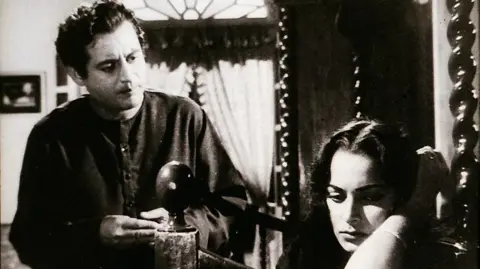
On October 10, 1964, **Guru Dutt** was found dead in his room at the age of 39. As his co-star **Waheeda Rehman** reflected, he had longed for death.
Today, **Guru Dutt**’s cinematic legacy endures, and many continue to wonder what he might have achieved had he lived longer.
