
Super Rugby’s Flow Experiment Faces Scrum Reality
Referees Seek Balance Between Pace and Set-Piece Control
A push for faster, more continuous play in Super Rugby Pacific 2025 has yielded positive results, but the enduring challenge of the scrum remains a significant obstacle to achieving a truly seamless spectacle. Referees aimed to prioritize fluidity and minimize stoppages, a strategy that has largely succeeded.
Innovations and Initial Success
Officials implemented several changes before the season began, including limiting TMO interventions, reducing interference at the ruck, and shortening goal kick times to 60 seconds. Uncontested lineouts were also permitted to proceed even if not perfectly straight. SANZAAR asserted these were “innovations [which] aim to enhance the flow of the game… while referees will also be empowered to lead decision-making.”
Early data suggests the experiment has saved between one and two minutes of game time compared to other major rugby competitions. However, the scrum continues to disrupt the desired rhythm.
While the difference in penalty percentages between Super Rugby and Top 14 appears small, it translates to roughly 400 fewer stoppages in a season of comparable length. A clear divergence in refereeing philosophies exists, with URC and Top 14 officials tending to award more scrums and penalties than their Super Rugby and Premiership counterparts. This creates two distinct pathways for international rugby development.
Scrum Dominance and Playoff Implications
Regardless of how they are officiated, scrums consistently impact a team’s overall success. Analysis reveals a strong correlation between scrum penalty differential and playoff qualification. The top six teams in Super Rugby Pacific boasted a combined +53 scrum penalty count, while the bottom five were collectively -53.
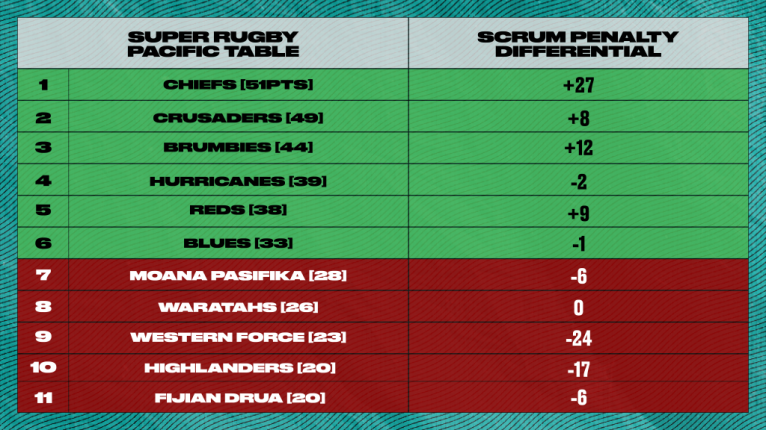
The struggles of the Queensland Reds and the New South Wales Waratahs highlight this point; their poor scrum penalty differential suggests they may have underperformed relative to their potential.
“The game certainly puts you in a despondent mood,”
—Les Kiss, Queensland Reds Head Coach
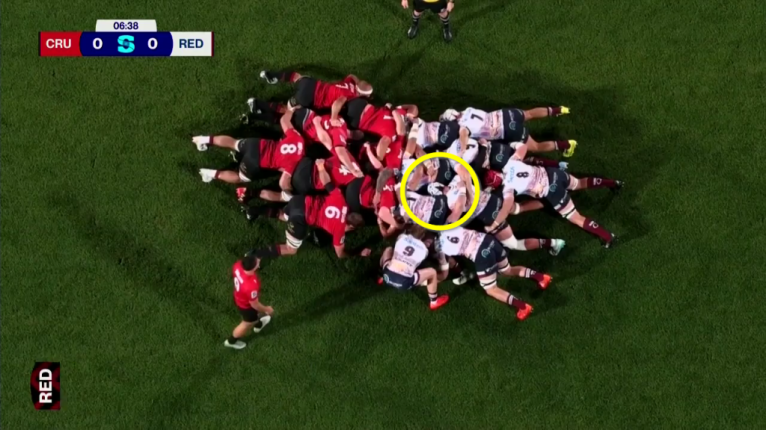
Following a 32-12 loss to the Crusaders, Reds coach Les Kiss acknowledged the impact of the Crusaders’ set-piece dominance. He stated the team needed to be “a bit more direct and earn the front yard before we went out the back.”
According to World Rugby data, scrum penalties account for approximately 28% of all penalties awarded in professional rugby matches in 2024 (World Rugby Scrum Laws). This underscores the significant influence of the scrum on game outcomes.
Crusaders’ Set-Piece Strength
The Crusaders exemplified this dominance against the Reds, consistently applying pressure through their scrum. Despite the absence of key front-row players like Matt Faessler, Alex Hodgman, and Massimo de Lutiis, the Reds struggled to compete.
The Brumbies, in contrast, showcased their scrum prowess against the Hurricanes, scoring two tries directly from the maul and with their front-rowers contributing four tries. Allan Alaalatoa emphasized the importance of earning opportunities in the opposition 22, stating, “Our A-zone was really good today.”
Looking Ahead to the Lions Tour
The differing refereeing approaches pose a challenge for the Wallabies as they prepare for the British and Irish Lions tour. Referees from the URC, known for stricter scrum policing, will likely officiate the Tests. This shift towards a more vigilant approach to the set-piece could disadvantage teams accustomed to a more lenient interpretation of the rules.
The Wallabies’ selection process should prioritize players with proven scrummaging ability, potentially favoring the Brumbies’ front-rowers—James Slipper, Allan Alaalatoa, and Billy Pollard—over those from the Reds and Waratahs. Avoiding a repeat of the 2013 third Test defeat, where scrum penalties proved decisive, is paramount.
The Brumbies’ continued success demonstrates the value of a dominant scrum. As the Wallabies prepare for the Lions, prioritizing set-piece strength will be crucial to avoid another period of struggle and secure a positive outcome against formidable opposition.
