
©Reuters.
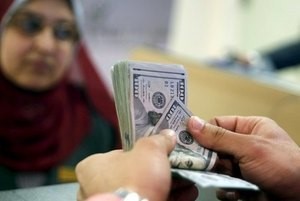
Investing.com – Minutes after Egyptian banks announced they were issuing savings certificates up to 25%, the Egyptian pound fell sharply against foreign currencies, closing at 26.49 pounds per dollar for the first time late of the trading day, which brings to mind the most awaited potential price International experts and banks.
The announcement of the increase in yields on interest-bearing bonds often coincides with a possible exchange rate adjustment, especially in Egypt, in order to control prices and withdraw liquidity from the market, which occurred in 3 previous currency fluctuations.
Read also:
interest rate hikes and fluctuations
October 2022
In October last year, the Central Bank of Egypt held an extraordinary meeting to decide to float the Egyptian pound for the second time in a year, after raising key interest rates by 200 basis points.
March 2022
The same thing happened in the March 2022 quotation, when the Central Bank of Egypt suddenly raised interest rates by 100 basis points on March 21, 2022 and the currency quotation occurred hours later. The overnight lending rate reached 10.25% and the overnight deposit rate reached 9.25%. At that time, the dollar’s price jumped to £18.50 in trading on Tuesday, March 22, 2022, after approaching the 15.50 levels.
2016..the first
Furthermore, the increase in interest rates has been associated with a fluctuation since 2016, when interest on overnight deposits and loans were increased by 300 basis points simultaneously, to 14.75% and 15.75%, respectively. coincide with the liberalization of exchange rates, as the pound jumped at that time above 13 pounds levels, compared to 8.88 pounds before the quotation.
Heavy losses on the black market
Prior to the 2016 float, the pound was trading on the black market at levels above official rates, but after the float and the official price coming close to black market levels, speculation disappeared for a while, but it is it’s back again, but with a much smaller difference than before the listing. Where currency liberalization coincides with huge losses for speculators on the increase in the price of currency on the black market. When the official rate in banks rises against foreign currencies, individuals turn to banks instead of dealing on the black market, which is “illegal” in Egypt.
As a result of speculation on the dollar in Egypt in the recent period, it jumped in parallel market transactions to exceed about 36.5 pounds, and traders were pricing it near the 40 pound level, which contributed to the exacerbation of speculation, which has attracted new segments to speculate on the dollar in an attempt to benefit from the subsequent hikes. The government has taken many measures to address this crisis, which started with the supply of dollars in banks relative to importers and the release of goods piled up in ports.
These steps were the key to eliminating black market speculation, and dollar speculation soon turned into big losses: those who bought dollars at price levels above £30, hoping for the pound to break above 40 levels, have suffered huge losses.
2022.. the beginning of the decline of the pound
The beginning of 2022 marked the end of the cohesion of the pound at the level of 15.75 pounds per dollar, and local and international financial institutions and banks have increased the talk about the real value of the pound, and that it is overvalued, and between these institutions is the International Investment Bank “Renaissance Capital”.
With the start of the Russo-Ukrainian war last year, the pressure on the Egyptian pound has intensified. Due to the flight of hot money from emerging markets, investment bank “JP Morgan (NYSE:)” was predicting a significant devaluation of the Egyptian pound at the time, and requested assistance from the International Monetary Fund; Which happened next.
Analysts at JP Morgan (EGX:AUTO) said a significant devaluation of the Egyptian pound is likely to be needed and the country could need more help from the International Monetary Fund if pressure intensifies.
What does the fund want?
When the pound fell to 24.8 levels, the International Monetary Fund saw this price again above its value. The head of the Fund’s mission in Egypt, Vladkova Hollar, said in an interview with Reuters: “The Fund is pending Egypt’s transition to a permanently flexible exchange rate after the cancellation of the letters of credit.” Return to collection documents.
The International Monetary Fund expects to see daily exchange rate movements in Egypt by the end of this month after canceling imports via letters of credit, according to Reuters.
As a result, the Central Bank of Egypt has decided to cancel the periodic book issued on February 13, 2022, related to stopping the management of collection documents and allowing them to be accepted to carry out all import operations.
This step – according to the International Monetary Fund’s expectations – indicates that we will see daily movements in the exchange rate in Egypt at the beginning of the new year, after canceling imports through documentary credits and switching to a floating exchange rate.
Prelude to a “permanent” floating exchange rate?
According to statements by IMF officials, in order to reach comprehensive and sustainable solutions that help stabilize the exchange rate of the pound against foreign currencies, the Egyptian government must comply with several points, in particular:
-
Undertake large-scale structural reforms to reduce state influence and improve governance and transparency.
-
Gradually reduce inflation rates and abolish subsidies for loan programs.
-
Fiscal control and debt management to ensure a decline in the public debt-to-GDP ratio.
For these points to be met, The Economist predicts that the pound will continue to decline against the dollar over the next four years. that is, until the year 2026; This makes it difficult to expect a fixed or definitive price for the Egyptian pound, which points to a complete liberalization of the exchange rate of the pound against foreign currencies, as stated by the head of the Central Bank of Egypt during the quotation last October that “the determination of the exchange rate of the pound will be left to the forces of supply and demand”.
What is the effect of the quotation on the market?
The fluctuation of the Egyptian pound would reduce the pressure on the central bank regarding the volume of foreign exchange reserves contained in it, besides that the depreciation of the national currency as a result of the quotation will lead to an increase in exports and Egyptian products will become much more cheap on foreign markets (because the Egyptian pound has depreciated a lot against the dollar and others) and then it will become more competitive.
On the other hand, imports will become much more expensive, and therefore it will be difficult for Egyptians to buy many imported goods, due to their high prices.
