The Observer Rebuilt Its Digital Business With Seven People and an AI Agent
The Observer rebuilt its digital business with a team of seven people and an AI agent, reaching more than 70,000 subscribers since launching its website in November 2025.
- Digital revenue has grown 13% a month on average for 11 months and now matches print subscription revenue.
- Print subscriptions rose from 36% to about 45% of print sales.
- The development team of seven includes three engineers and two designers; an AI agent built on Claude is counted as an eighth member.
- One analyst manages a data warehouse; staff query it through a Gemini connector on Slack or Claude.
Blank canvas after Tortoise purchase
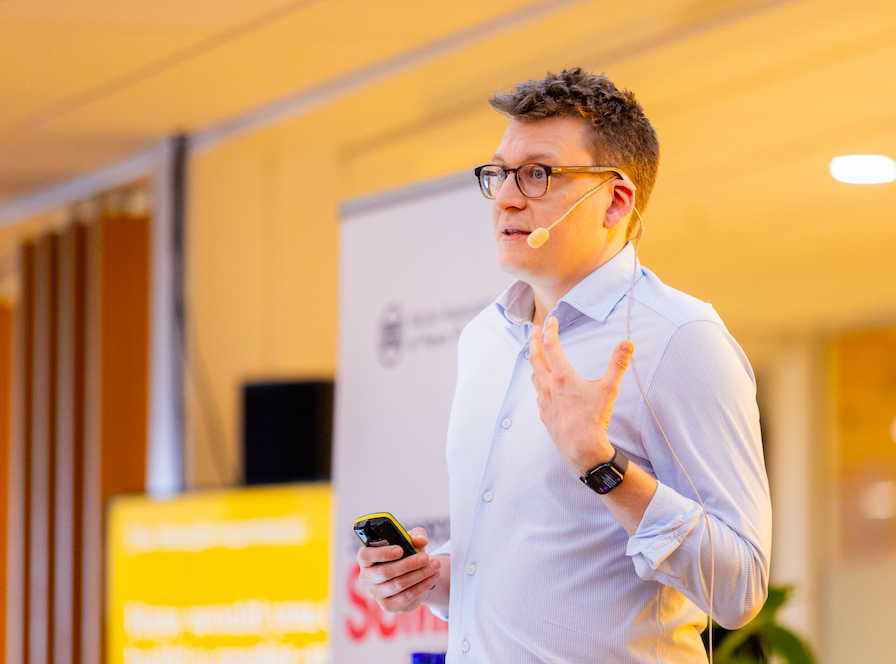
When Tortoise Media bought the 1791-founded Sunday title from Guardian Media Group in April 2025, it inherited a famous brand but no website of its own. Jack Riley, Tortoise’s Chief Customer Officer, told the WAN-IFRA Newsroom Summit in Oslo that he faced a blank canvas on the digital side. The Observer launched its new digital products in November 2025.
Strategy anchored in 1791 prospectus
Riley said the paper’s original prospectus — promising a title free of prejudice and party, devoted to truth and “every species of knowledge that may conduce to the happiness of society” — sets the brief. Three pressures shape the response.
First, AI makes ordinary reporting easy to copy; the answer is direct reader relationships and original reporting nobody else has. Second, younger audiences prefer to watch or listen; the answer is Tortoise’s podcast business, now folded into the newsroom. Third, readers attach to individual writers over titles; the answer is a newsroom reorganised around its best-known writers.
Subscription value beyond articles
Every subscriber receives Culture Club, launched in spring, which includes a weekly newsletter from Culture Editor Tim Adams, partner discounts, newsroom events such as film screenings and director Q&As, and a streamed book club. The six-part narrative investigation Foundling, released in March, is the title’s biggest subscription driver so far.
Observer series recently held the top two places on Apple’s podcast chart. Partnerships extend reach: a series on who funds Reform UK was made with Goalhanger and aired on The Rest Is Politics subscriber feed first; The Wargame was a co-production with Sky News.
Seven-person team, AI agent as eighth
Riley arrived with no business-side team and a budget smaller than competitors’. He hired for “super-powered individual contributors” with few management layers, people able to move between strategy and hands-on work. More came from outside publishing — Disney+, YouTube, ClassPass — than from inside it. Riley counts the AI agent the team built on Claude as another member. It combines Observer-specific knowledge — design guidelines, architecture, technical documentation — with connections to Jira, Figma, GitHub and Runway, the title’s data platform, and runs everything through automated review and testing.
The automated testing, he said, speeds up work and takes load off engineers. The effect is that non-engineers, Riley among them, build and release features on the live site. Almost everything on it, including sign-up and subscription flows, now carries some of the agent’s work.
A designer drew an interactive version of the daily graphic that plots stories on two axes; Riley connected Claude to the design file and built it in an afternoon. It now goes out every day.
One analyst, anyone can ask
Data follows the same logic. The Observer has one analyst. Every data source feeds a single Google BigQuery warehouse. A connector using Google’s Gemini model works out how to answer questions staff put through Claude or a Slack bot.
Tortoise Media operates a mixed business model built on podcasts, newsletters and live “ThinkIn” events, describing itself as part of the slow journalism movement. When it completed its purchase of The Observer from Guardian Media Group in April 2025, Tortoise folded its existing podcast business directly into the Sunday title’s newsroom to meet younger audiences’ preference to watch or listen.
The integration already shows traction: Observer podcast series recently held the top two places on Apple’s podcast chart, while partnerships with Goalhanger and Sky News extend reach through co-productions such as The Wargame and a Reform UK funding investigation aired first on The Rest Is Politics subscriber feed.
Limits and lessons
Riley was candid about constraints.