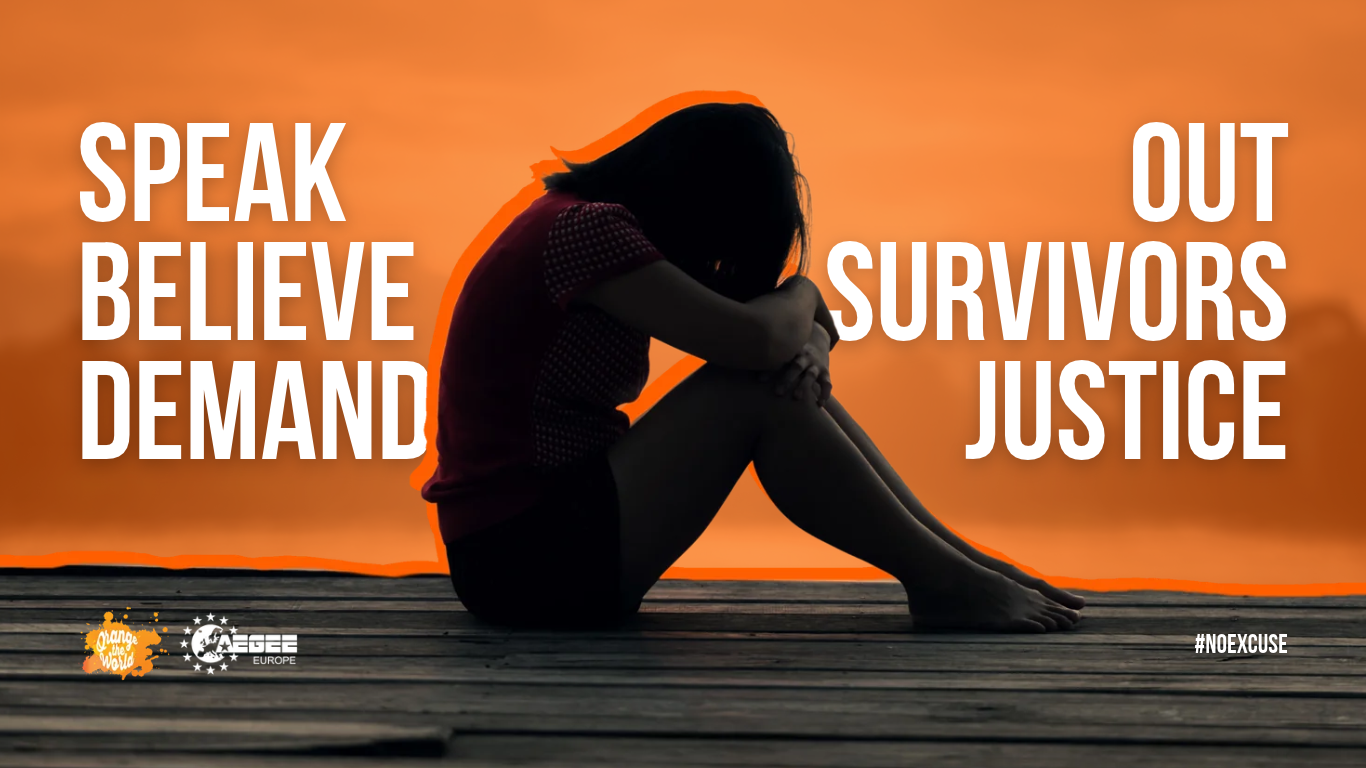
AEGEE-Europe Marks Day Against Gender-Based Violence, Warns of Structural Roots
AEGEE-Europe marked the International Day for the Elimination of Violence Against Women on Wednesday by warning that gender-based violence remains embedded in daily life across Europe, from universities to online spaces, and called on youth organisations to treat safe spaces as an operational requirement rather than an aspiration.
- UNODC and UN Women data show 47,000 women and girls were killed by intimate partners or family members globally in 2025.
- The femicide rate in Europe stood at 0.5 per 100,000 women in 2025.
- Only one in four victims seeks help and fewer than one in ten reports to police, UN Women said.
- UN human rights experts linked hunger and gender-based violence as mutually reinforcing crises.
Youth group targets structural roots
AEGEE-Europe, a European youth-led organisation, said gender-based violence is rooted in unequal power relations, harmful gender norms and structural inequalities that affect many young people across the continent.
“Young people have both the power and the responsibility to challenge these structures, question harmful attitudes, and contribute to a world where violence, harassment and discrimination are never tolerated or normalised,” Policy Officer for Social Equity Ioana Samoilă wrote in the organisation’s statement.
The group said creating safe spaces for women and girls “is not only something we advocate for, but also what we must ensure in our everyday work, events, activities and online environments.” It cited its Safe Person Committee, Pool of Safe Persons, awareness-raising campaigns, educational resources, Code of Conduct and internal procedures to address sexual harassment as concrete measures.
Global femicide toll and reporting gaps
Recent UNODC and UN Women data reveal the scale of femicide: 47,000 women and girls killed by intimate partners or family members globally in 2025, including a rate of 0.5 per 100,000 women in Europe, AEGEE-Europe reported. UN Women added that only one in four victims and survivors seeks help and fewer than one in ten reports to the police.
“Discriminatory laws and practices, harmful social norms, institutional bias, and weak implementation block access to services, justice, remedies, and reparations,” the UN entity said in its call to action for the Secretary-General’s UNiTE campaign.
UN Women warned that rapid digitalisation, the digital gender divide and artificial intelligence create new avenues for violence and intensify abuse online and offline, threatening women’s rights and democratic participation by silencing women and driving them out of public and political life.
Hunger and violence as interlocking crises
UN Human Rights Special Procedures drew a direct line between food insecurity and gender-based violence in a joint statement from Geneva. “Hunger is not sex- or gender-neutral, nor is violence against women and girls disconnected from the struggle to secure food, water and other essentials,” the experts said.
They described how unequal power relations undermine women’s ability to produce, access and control food, while deprivation and poverty increase exposure to criminalisation, violence, coercion and exploitation.
Women in the food industry, particularly hospitality and fast-food services, face low wages, precarious conditions and heightened exposure to workplace harassment and domestic violence, the statement said. In conflict, occupation, displacement and humanitarian crises, destruction of food systems and breakdowns in protection disproportionately affect women and girls, and the search for food itself becomes a source of danger, exposing them to harassment, rape, abduction and killings.
AEGEE-Europe, the European Students’ Forum established in 1985, operates as one of Europe’s largest transnational student organisations with around 13,000 yearly members across more than 200 local antennae in university cities. Its structure combines a yearly elected European board (Comité Directeur) in Brussels with autonomous local groups supported by a Network Commission, enabling coordinated action across borders without a national level.
The organisation’s Safe Person Committee and Pool of Safe Persons, alongside its Code of Conduct and internal procedures, function as concrete operational mechanisms to address sexual harassment and create safer environments at events and online, translating advocacy into everyday practice.
Through its Policy Officer for Social Equity Ioana Samoilă, AEGEE-Europe framed gender-based violence as rooted in unequal power relations and structural inequalities affecting young people continent-wide.
16 Days of Activism underway
Wednesday also marked the start of the global 16 Days of Activism against Gender-Based Violence campaign, which runs until December 10. AEGEE-Europe urged participants to “challenge harmful norms, speak up instead of looking away, stand in solidarity with survivors, and create safer and more inclusive spaces.”
UN Women called on governments to strengthen laws and policies, guarantee access to support and independence, deliver justice, address online violence, invest in prevention, engage men and boys, and fund and protect women’s rights organisations.