
Martian Meteorite Reveals Ancient Martian Past at Expo 2025
Frozen Antarctic Discovery Offers Glimpse into Solar System’s Origins
A 13.7-kilogram Martian meteorite, Yamato 000593, discovered in Antarctica, is a star attraction at Expo 2025 Osaka, Kansai, offering profound insights into Mars’s watery past and the solar system’s formation.
A Martian Time Capsule Unearthed
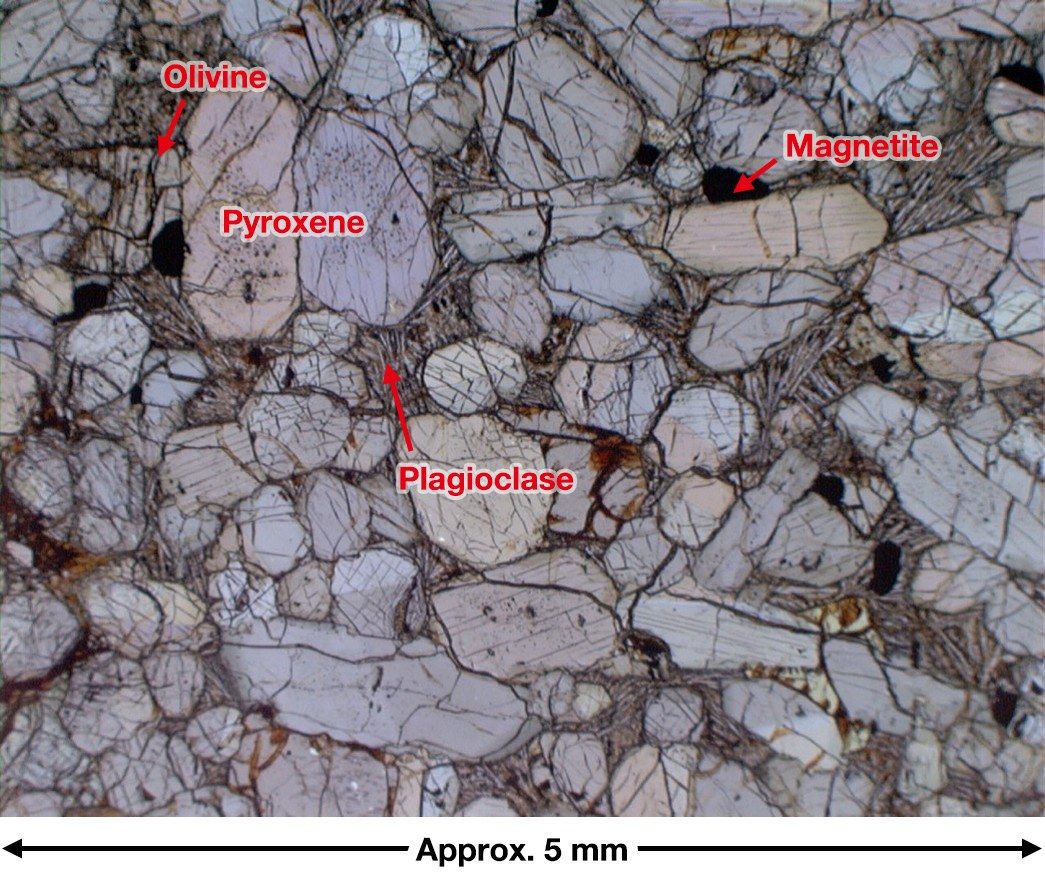
Yamato 000593, a rugby-ball-shaped rock measuring 29cm by 22cm by 17.5cm, was found by the 41st Japanese Antarctic Research Expedition in 2000. This specimen, now weighing 12.7 kilograms after portions were removed for study, is a type of Martian meteorite known as a nakhlite, primarily composed of greenish pyroxenes.
Its scientific significance is immense, being the world’s largest known nakhlite specimen. Researchers believe it, along with nearby meteorites Yamato 000749 and Yamato 000802, may have once been a single fragment shattered upon atmospheric entry.
The Perilous Journey of Discovery
The quest for Yamato 000593 was part of the 41st expedition, which operated in Antarctica from February 2000 to February 2001. Led by individuals including geologist Imae Naoya, the team ventured inland from Shōwa Station aboard three snowcats towing 22 sleds, a mobile base laden with supplies and equipment.
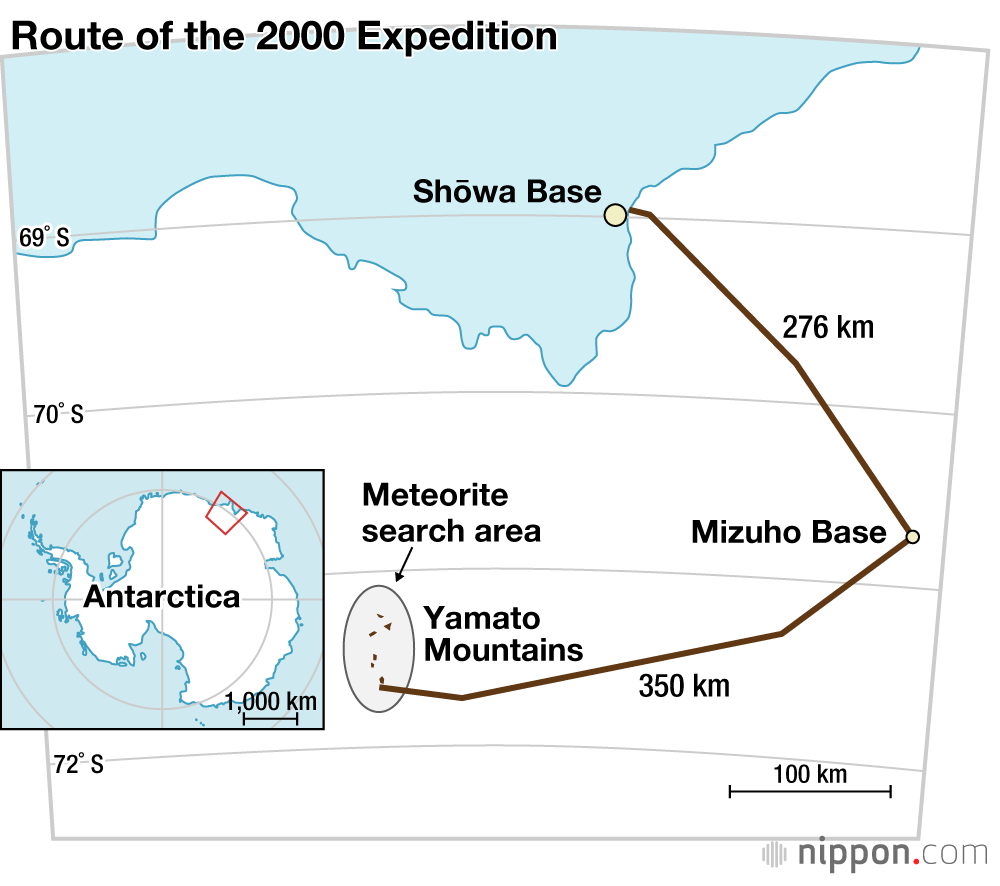
The expedition faced formidable challenges, navigating treacherous sastrugi (wind-sculpted snow formations) and avoiding deep crevasses. In one incident, a crucial food sled was lost down a crevasse but was successfully retrieved by the team’s collaborative efforts.
After a arduous 19-day journey, the team reached the Yamato Mountains. During their 54-day search, they discovered a 51-kilogram iron meteorite, then the largest found in the region. Shortly after, Yamato 000593 was found approximately 500 meters away.
“When we found the meteorite, its unique greenish hue was striking. I knew instinctively that it was one I had not seen before. As soon as we got back to Japan, we analyzed it.”
—Imae Naoya, Assistant Professor at the National Institute of Polar Research
Decoding Mars’s Ancient Atmosphere and Water
Analysis confirmed Yamato 000593’s Martian origin, evidenced by rare gas isotopes, nitrogen, and carbon dioxide matching the Martian atmosphere composition recorded by the Viking probe. The presence of clay minerals suggests that liquid water was once abundant near the Martian surface.
Radiometric dating indicates the meteorite solidified about 1.3 billion years ago from Martian mantle magma. Cosmic-ray exposure dating estimates its journey through space lasted roughly 10 million years, implying a significant impact event on Mars ejected debris, including this meteorite, into orbit.
Current data suggests that at least 29 meteorites found on Earth share this approximate ejection timeline, supporting the theory of a major ancient impact on the Red Planet.
Unlocking the Solar System’s Secrets
The National Institute of Polar Research houses an extensive collection of Antarctic meteorites, many dating back approximately 4.6 billion years to the solar system’s formation. These primitive meteorites serve as invaluable records of the early solar system’s composition.
Studying these ancient samples helps scientists address fundamental questions about planet formation and the origins of life. They also act as crucial comparison points for samples collected by missions like Hayabusa2 from asteroids such as Ryūgū, enhancing our understanding of the material evolution across the solar system.
The ongoing meteorite search in Antarctica, coupled with advancements in analytical technology, promises further discoveries that illuminate the universe’s mysteries. As of 2023, over 60,000 meteorites have been cataloged worldwide, with Antarctica being a particularly rich hunting ground.
Visitors to Expo 2025 Osaka can witness Yamato 000593 firsthand, connecting with a tangible piece of Mars’s history and a testament to the enduring human spirit of exploration and discovery.
