
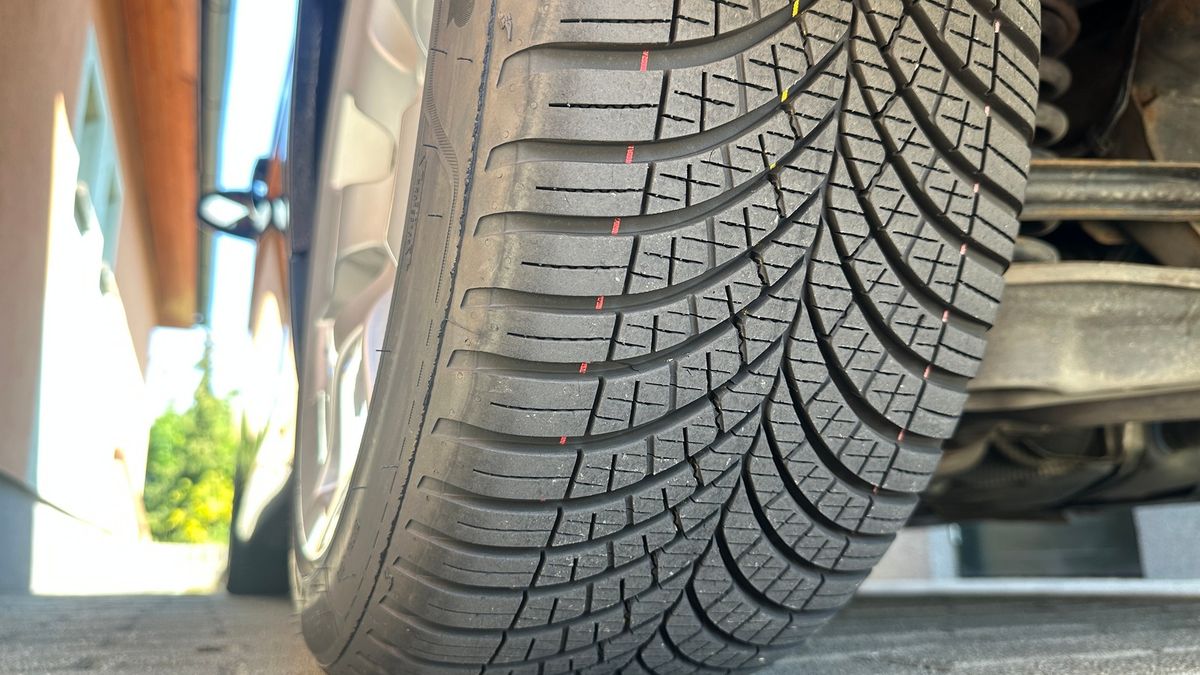
Cost Doesn’t Equal Performance: Winter Tire Test Reveals Expensive Brands Underperform, Cheapest Options Surprisingly Viable
Prague, Czech Republic – A recent winter tire test reveals a counterintuitive truth for drivers bracing for colder months: the most expensive tires aren’t necessarily the best, and some budget-kind options offer surprisingly competitive performance. The test, conducted by an unnamed source and reported by sdn.cz, assessed tires in the 225/40 R18 dimension, highlighting important disparities in traction, longevity, fuel efficiency, and noise levels.
The findings are particularly relevant as winter approaches and drivers prepare to swap summer tires for winter-specific rubber. The study challenges the assumption that a higher price tag guarantees superior safety and performance, potentially saving consumers significant money without compromising on crucial winter driving characteristics. The results impact anyone preparing for winter driving conditions, with price points ranging from 1,400 to 3,911 CZK per tire.
The test showed Syron tires demonstrated the best traction on snow (254 N), closely followed by Kleber and Michelin. on ice, Syron again led, stopping from a distance of 15.2 m, with Ceat, Radar, and Tomket close behind. Evergreen tires performed the worst in icy conditions, requiring 21.1 m to come to a complete stop. Interestingly, some tires that struggled with wet conditions excelled in extreme winter scenarios.
German ADAC estimates Radar tires have the longest lifespan (81,000 km), with Goodyear predicted at 76,500 km and Hankook exceeding 70,000 km. Nankang tires were projected to have the shortest lifespan, at 34,200 km. Fuel consumption varied from 5.6 to 6.0 l/100 km, with Momo tires proving the least efficient. Noise levels ranged from 70.3 dB (Point tires) to 75.5 dB (CST tires).
According to data from Zboží.cz, the tires performing worst in the test also carried the highest price tag (3,911 CZK). Top-rated tires in the 225/40 R18 dimension averaged between 2,400 and 3,300 CZK, with the winning Goodyear falling within this range. The least expensive tires were available for between 1,400 and 1,900 CZK.
The report concludes that a price difference of approximately 500 CZK can secure significantly better tires, urging drivers to prioritize performance over solely seeking the cheapest option, emphasizing the potential safety implications of choosing poorly performing tires. “Think if it is worth saving you about two thousand on the whole set, and then ride some compressed darkness, which you will not brake on the wet and cancel three unfortunate cars in front of you, unlike you and bought rubber,” the report states.
