
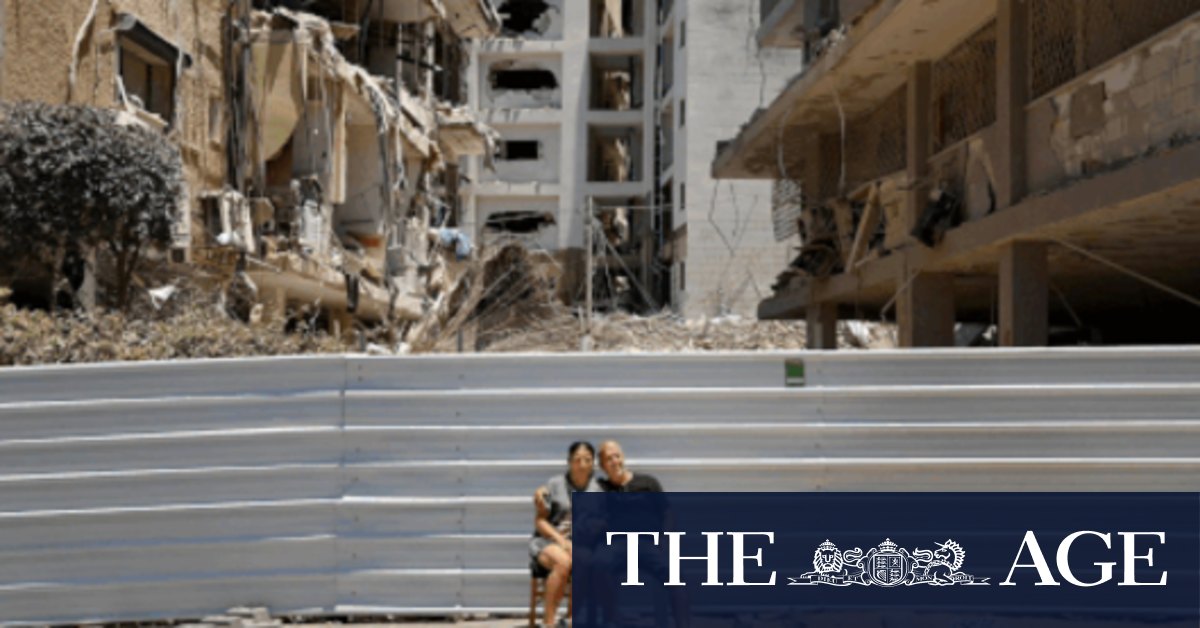
Missile Attack Shatters Lives, Divides Opinions in Israel
The recent conflict between Israel and Iran has left a trail of devastation, not only in the physical realm but also in the hearts and minds of those caught in the crossfire. This is exemplified by the story of one family and the divided sentiments that followed the strikes.
The Price of War
For Raja Khatib, the memories of life before the missile strike are a constant torment. His home, once a symbol of prosperity for his family, was destroyed in the attack. His wife, Manar, and two of their daughters, Shada and Hala, were killed in the missile strike, along with his sister-in-law.
“My palace is gone and I don’t care,” he said, his voice heavy with grief. “I don’t want to see the house. I will never want to live there again. If God gives me strength, I will live somewhere else.”
Divided Reactions
The attack elicited mixed reactions within Israel. While some Israelis mourned the loss of life, others celebrated the strikes. A video circulated online showed people cheering as rockets landed in Khatib’s hometown, Tamra, while singing an anti-Arab song.
Video showing a crowd of Israelis cheering while watching the missile strikes in Iran is circulating on social media. pic.twitter.com/b81mG8K6c4
— Middle East Eye (@MiddleEastEye) December 18, 2024
Israeli President Isaac Herzog condemned the video, calling it “appalling and disgraceful.” Prime Minister Benjamin Netanyahu also rejected such rejoicing, stating that the missile “harms Jews as well as Arabs.” A recent poll found that support for the war varies significantly depending on ethnicity: 82% of Jewish Israelis supported the strikes, while 65% of Arab Israelis opposed the attacks (Israel Democracy Institute).
A Different Perspective
In Bat Yam, a city near Tel Aviv, another perspective emerged. An Iranian missile struck a 10-story apartment building, killing nine people. Despite the destruction of their home, Ronen Sha’a Shua and his partner, Ivanka, expressed unwavering support for the war.
“I’m not even mad about this because I support the war,”
—Ronen Sha’a Shua
Sha’a Shua said. He added, “It was a justified war and we did an incredible job.” This sentiment highlights the deep divisions within Israeli society, where political allegiances often overshadow personal tragedy.
Political Ramifications
The war’s impact extends beyond individual lives. While the exact long-term consequences of the war remain unclear, it has undoubtedly impacted the political landscape. The conflict has provided an opportunity for political leaders to gain favor. The Israeli-Palestinian conflict has added another layer of complexity to an already volatile situation.
In the aftermath of the conflict, Khatib expressed his hope for a just peace, advocating for two states where Palestinians and Israelis can live side by side. He acknowledges that the pain of his loss will never fully fade, but he remains resolute in his determination to rebuild his life for his surviving daughter.
