
Writer’s Mysterious Fall Echoes Space Race Triumph
On the same historic day **Yuri Gagarin** made his pioneering flight into orbit, Hungarian writer **Imre Sarkadi** met a tragic and unexplained end, plunging from a fifth-story window. The circumstances remain shrouded in ambiguity, with speculation even touching upon his friend’s wife.
A Painter’s Passion and a Fateful Gathering
In 1958, celebrated painter **Béla Kondor** and his wife, **Ágota Kaufmann**, settled into a spacious apartment on the fifth floor of a grand building. **Kondor**, known for his intense passion for flight, filled his studio with airplane models and painting stands. His affection for cats, particularly a black one named Csombe, was also well-known.
April 12, 1961, found **Kondor** in the company of construction engineer **Jenő Juhász** and poet **István Ágh**, who was accompanied by his brother, **László Nagy**. Their evening conversation may have touched on the upcoming Eichmann trial, the Congo’s dictator, or English poetry. Unbeknownst to most, this was the day **Yuri Gagarin** would achieve a monumental feat.
As the gathering progressed, the phone rang. It was the writer **Imre Sarkadi**, returning home from Hungarian Radio. Eager to hear about **Gagarin**’s flight, a subject close to his heart as a lover of aviation and sailing, **Sarkadi** inquired if he could join them.
A Literary Life of Contrasts
**Imre Sarkadi** was a prominent, though often controversial, figure in post-1945 Hungarian literary circles. Originally from Debrecen, he moved to the capital and, after studying law and working as a pharmacist’s assistant, became deeply involved in political and literary life. His writing often focused on the peasantry, yet his pessimistic worldview frequently puzzled critics.
He was lauded as a highly talented young writer, yet at times found himself compelled to take teaching positions or work in less esteemed roles, such as at the State Vaccine Production Institute. Despite these fluctuations, **Sarkadi** penned the acclaimed short story “Carousel,” which formed the basis for a Fábri film, and earned the József Attila Prize three times. He also received the Kossuth Prize in 1955, a sum he used to purchase a sailboat.
His plays, including “Lost Tomato” and “Columnar,” were frequently performed. His work “The Coward,” a novella whose protagonist’s wife was recognized as **Kondor**’s wife, remains a subject of discussion.
Emotional Extremes and Reckless Behavior
Described by **Géza Hegedűs** as experiencing moods that swung “between happy fascination and agonizing sadness,” **Sarkadi**’s psychological state was volatile. **Hegedűs** recalled him as simultaneously “emotional, a good husband, and an every-skirt-chasing adventurer.”
Severe alcoholism plagued **Sarkadi**. His writing process was often hampered, leading to instances where he would sit “in front of the typewriter with a stunned head,” his responses nonsensical, yet stories still flowed from his fingertips.
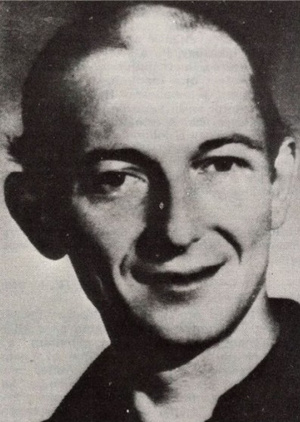
His struggles with alcohol also fueled dangerous escapades. He would famously walk on rooftops or hang from window sills, several stories above the ground, only to return laughing. On one occasion in Szigliget, he reportedly removed a mouflon head from a wall and frightened a roommate by barking like the animal outside an open window. Poet **György Somlyó** recalled **Sarkadi** climbing the exterior of a creative house, navigating ledges and gutters until the commotion brought him down.
The Night of the Fall
Returning to April 12, 1961, **Sarkadi** had consumed a bottle of cognac before arriving at **Kondor**’s. **István Ágh** remembered him arriving dressed for mild weather, describing his gait as resembling a heron’s. **Ágota** offered **Sarkadi** a bouquet of violets and was greeted by the family’s black cat.
The evening continued with **Sarkadi** engaging in philosophical debate with **Jenő Juhász**. He then reportedly went to the model podium in the apartment and recited a poem, purportedly addressed to **Ágota**. As the gathering wound down around midnight and **Kondor** retired, **Sarkadi** announced he had forgotten his cap and returned to the stairwell. When he didn’t reappear, his friends went to search for him. **István Ágh** called an ambulance and then discovered **Sarkadi**’s body on the street below.
Unanswered Questions
The police investigation outlined three possibilities for **Sarkadi**’s death: accident, suicide, or foul play. The lack of a farewell note and his planned meeting with **László Németh** the following day cast doubt on suicide. If it was an accident, questions arise about the prudence of his actions, especially wearing a balloon jacket. If he was pushed, the circumstances surrounding the others present and the sleeping host remain unclear.
As **Géza Hegedűs** noted, those who knew him well suspected suicide, while others believed it was an accident, albeit one that might have occurred later given **Sarkadi**’s life of constant “gambling with death.”
