
Starlings Store Images as Song, Stunning Scientists
Avian Mimics Capable of Complex Data Transfer
The animal kingdom continues to surprise, with starlings now revealed to possess an extraordinary ability: they can encode and reproduce complex information, like images, through their songs. This groundbreaking discovery challenges previous understandings of avian intelligence and communication.
Nature’s Tiny Hard Drives
Musician and scientific communicator Benn Jordan conducted a remarkable experiment that transformed a PNG image of a bird into a sound file using a wavelength synthesizer. The data remained intact, meaning the sound could be converted back into the original image.
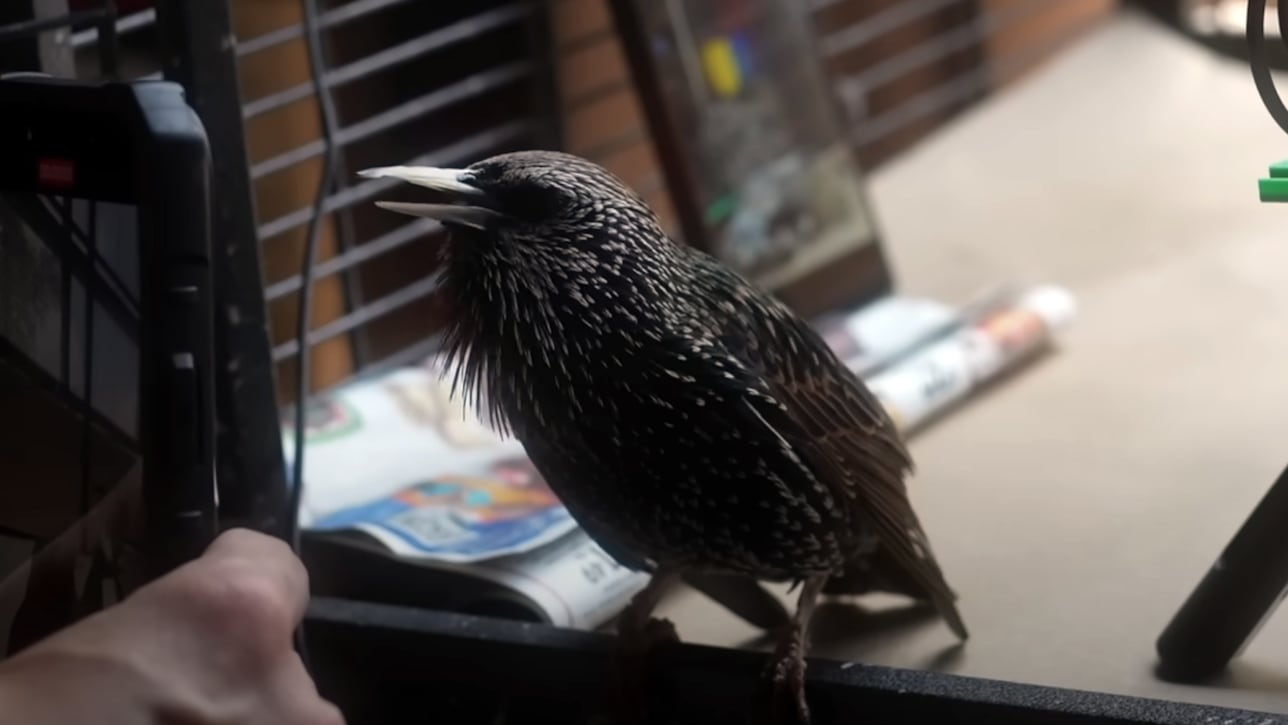
A European starling kept as a pet by Jordan learned this complex audio data by heart. When the sound was played back, the bird reproduced it with such fidelity that the resulting audio, when reversed, yielded an image virtually identical to the original. This demonstrated that starlings can act as “living storage units.”
Listen to the incredible mimicry of the European Starling! This bird can reproduce an astonishing range of sounds, from car alarms to human voices. https://t.co/x0F2bQo5H5 pic.twitter.com/zP0X0tQz4a
— World of Nature (@WorldofNature) February 24, 2023
Jordan noted the starling’s achievement, stating, “This little bird has successfully learned and imitated the sound in the same frequency range in which it heard it, transmitting effectively around 176 kilobytes of uncompressed information.”
Anatomy of a Sound-Based Storage System
The starling’s remarkable capability stems from its syrinx, the vocal organ located at the base of the trachea. This apparatus is exceptionally developed in songbirds, allowing them to replicate a vast array of sounds with astonishing accuracy, even surpassing parrots in versatility. While parrots are renowned for mimicking human speech, starlings can reproduce intricate environmental noises, including the calls of other animals and mechanical sounds.
A key factor in this specific experiment was the starling’s upbringing. Rescued as an abandoned chick by Jordan, the bird was raised in a human environment. As it developed, it learned by imitating its surroundings, favoring human sounds over typical avian calls. This included mimicking conversations, car sounds, and even a mobile camera shutter.
The success of the experiment hinges on both the starling’s inherent vocal prowess and its unique developmental environment. Researchers are exploring how this astonishing ability could be harnessed in the future. For context, consider the complex communication systems of other species; for instance, some whale songs can convey information over hundreds of miles, a testament to the diverse ways animals share data (Nature, 2021).
The findings suggest that in the future, starlings might serve as more than just avian curiosities; they could potentially become biological data couriers, a far cry from the familiar messenger pigeons of the past.
