
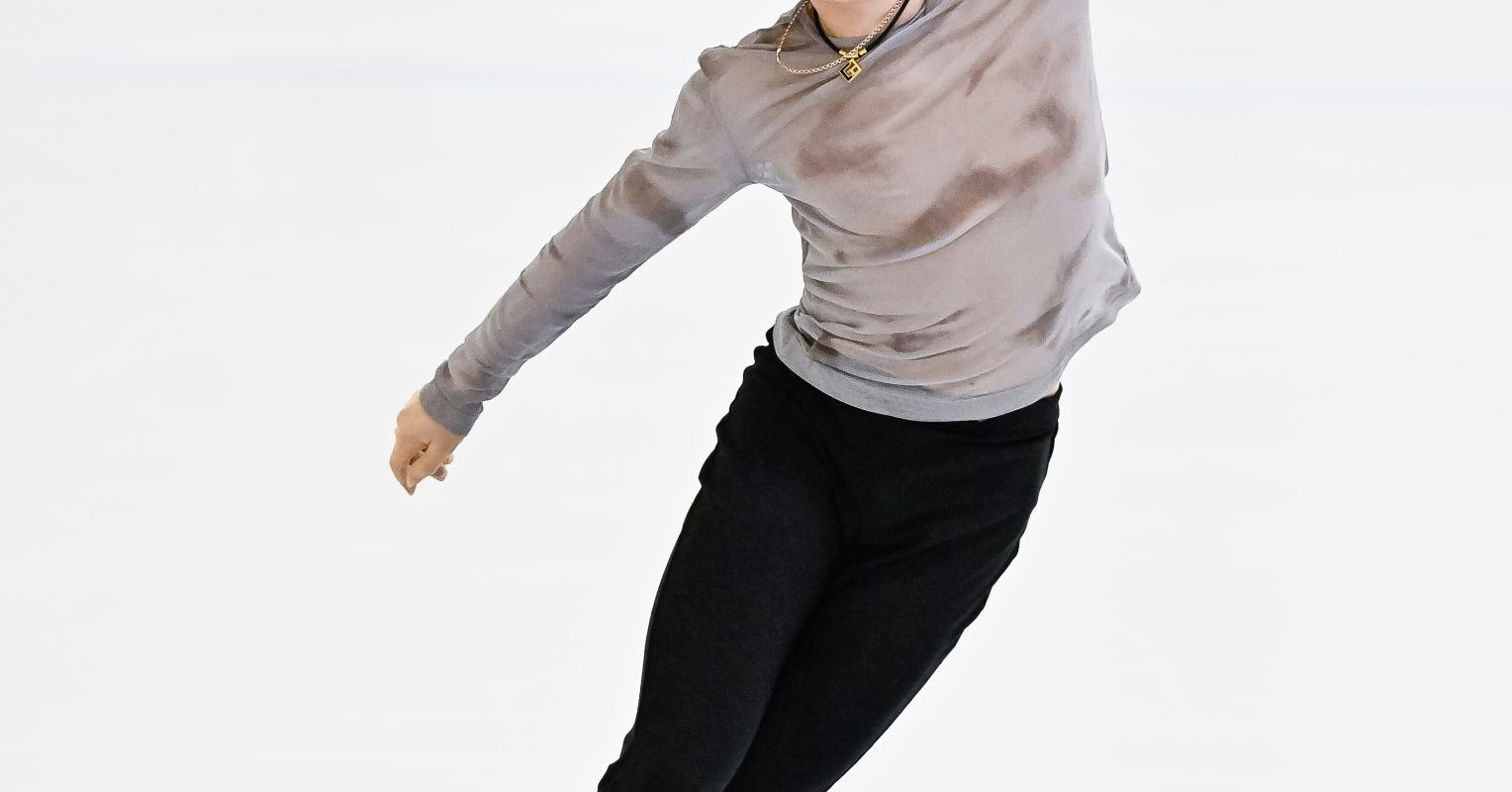
Ilia Malinin stepped off the ice, the weight of expectation visibly crushing him. His first words, overheard by reporters after a disastrous free skate at the Milano Cortina 2026 Winter Olympics, weren’t about the missed jumps or the lost medal. They were a lament of past rejection: “I don’t understand… (If they had) sent me to Beijing, I wouldn’t have skated like that.”
The 20-year-old American figure skater, dubbed “the quad god” for his mastery of quadruple jumps, had arrived in Milan as a favorite. But his performance, riddled with falls and withdrawn jumps, was a stunning collapse, a stark illustration of the pressures facing elite athletes in a performance-obsessed culture. The incident has sparked a wider conversation about the psychological toll of relentless competition and the fragile link between achievement, and belonging.
Malinin’s journey to the Olympics was fueled by a desire to prove those who had doubted him wrong. In 2022, despite finishing second at the U.S. Championships at age 17, he was not selected for the Olympic team, a decision that clearly resonated with him. “To be honest, I think if it wasn’t for that decision (not making the 2022 Olympic team), I don’t think I’d be here in this moment,” he said, acknowledging the snub as the catalyst for his subsequent success. He channeled that rejection into a relentless pursuit of technical innovation, mastering the quad axel and pushing the boundaries of the sport.
But the very drive that propelled him to the top also seemed to contribute to his downfall. In the lead-up to his Olympic skate, Malinin framed the stakes on social media with a stark ultimatum: “What we have is your moment—it’s either do or die.” The pressure, both self-imposed and external, appeared to overwhelm him. “Right before I got into my starting pose… all the negative thoughts just rushed into my head. All the negative, traumatic experiences,” he later revealed. He described feeling a loss of control, a sense of being overwhelmed by past anxieties.
The aftermath of his skate offered a glimpse into the internal turmoil he was experiencing. He reposted TikToks expressing feelings of exhaustion and a desire for something to simply *end*. One read, “Sometimes I wish something bad would just happen to me so I don’t have to do it myself.” Another stated, “Your little boy is tired, Mom.” These posts, shared publicly, suggest a deeper struggle with the weight of expectation and the conditional nature of self-worth in a high-performance environment.
Malinin’s experience is not isolated. Fellow American athletes Mikaela Shiffrin, Lindsey Vonn, and Chloe Kim have all faced injuries during the Milano Cortina games, adding to a sense of struggle for the U.S. Team. Vonn, a three-time Olympic medalist, competed despite having a non-functioning ACL. These injuries, coupled with Malinin’s mental breakdown, highlight the physical and psychological risks inherent in pushing the limits of human performance.
The current Olympic Winter Games in Milan represent the most gender-balanced in history, with women making up 47 percent of the athletes. Jessie Diggins, a decorated U.S. Athlete, is competing in what will be her last Olympics. Yet, the pursuit of gender equality is not universal within the Games, as evidenced by the exclusion of women’s Nordic combined, despite Annika Malacinski being ranked 10th in the world in the discipline. She commented on the disparity, stating that she and her brother “work just as hard, sacrifice just as much,” yet only he has the opportunity to compete.
The story of Ilia Malinin, and the struggles of other athletes in Milan, raises fundamental questions about the nature of ambition and the price of success. When belonging is contingent on relentless performance, the line between healthy competition and destructive obsession blurs. The pursuit of excellence, while admirable, can become a pathway to anxiety, self-doubt, and a shattering of the very foundation it seeks to build upon.
