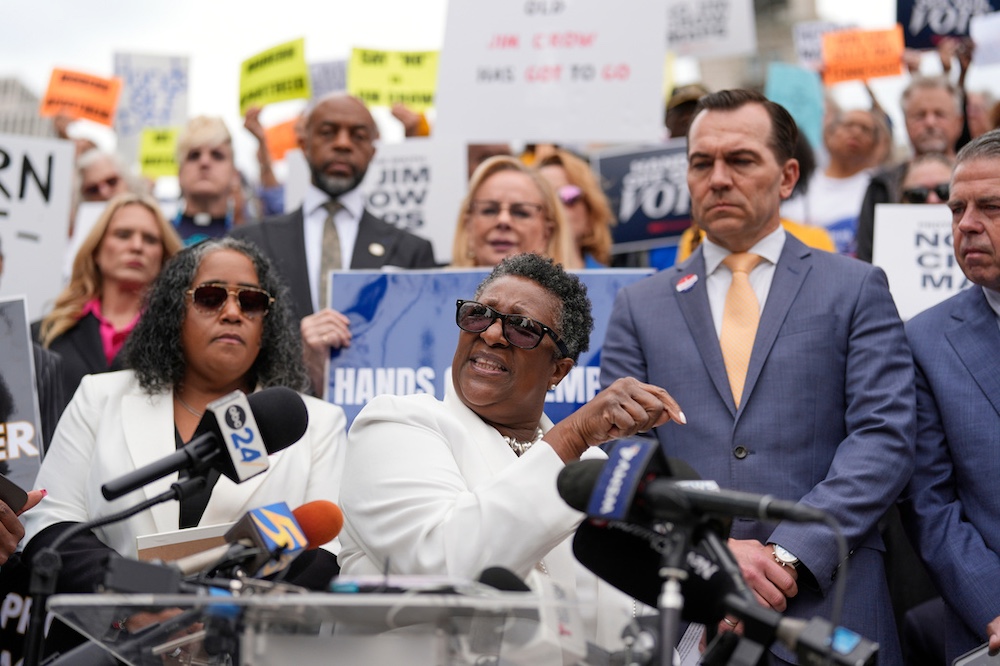
Tennessee GOP House Speaker Purges Democrats from Committees, Slashing Legislative Debate Time
On May 13, 2026, Tennessee’s Republican-led House of Representatives stripped all Democratic lawmakers of their committee assignments, escalating a partisan battle over redistricting that threatens to paralyze state legislation. The move—approved by Speaker Cameron Sexton (R)—follows months of Democratic protests against GOP-drawn district maps, which critics argue dilute minority voting power and violate the Voting Rights Act. Nashville, the state capital, now sits at the center of a legal and political storm that could redefine Tennessee’s political landscape for a decade.
The Problem: A Legislative Hostage Crisis
This isn’t just about committee seats. It’s about the death of legislative comity in Tennessee. Democrats, who hold 25 of the 99 House seats, have been systematically excluded from shaping bills that will determine everything from school funding to infrastructure projects in urban strongholds like Memphis and Chattanooga. The GOP’s strategy—removing Democrats from committees to limit their ability to debate or amend legislation—mirrors tactics seen in other red states, but with a Tennessee twist: the state’s General Assembly operates on a supermajority rule for key votes, meaning even routine bills now require near-unanimous Republican support.
“This isn’t about governance. It’s about control. By removing Democrats from committees, Republicans are ensuring no bill leaves committee unless it aligns with their agenda—even if it harms Nashville’s public transit or Memphis’ flood resilience projects.”
The immediate fallout? A legislative logjam. Bills stalled in committees include:
- A $1.2 billion infrastructure package for West Tennessee’s flood-prone regions (e.g., Memphis and Jackson).
- Expansion of Medicaid in East Tennessee, where uninsured rates remain above the national average.
- Reforms to Tennessee’s public school funding formula, which currently allocates less per pupil than 40 other states.
Historical Context: Tennessee’s Redistricting Wars
This isn’t the first time Tennessee’s redistricting has sparked conflict. In 2021, the state’s new congressional maps—drawn by Republicans after the Census—were challenged in federal court. A three-judge panel blocked key provisions, citing violations of the Voting Rights Act. The current House map, approved in 2023, has already faced lawsuits from the NAACP and local advocacy groups like the Tennessee Black Caucus, which argue it packs Black voters into a handful of districts while cracking others to dilute influence.
But this time, the stakes are higher. The GOP’s committee purge comes as Tennessee’s population shifts: Nashville’s metro area grew by 12% since 2020 (the fastest in the Southeast), while rural counties in East Tennessee saw declines. The state’s 2025 demographic data shows a rising Latino electorate—now 6% of the state—and a Black population concentrated in urban cores. Republicans, controlling both chambers, are using redistricting to lock in their majority for years.
Who Loses? The Regions Left Behind
Nashville’s urban core may dominate headlines, but the real victims of this power grab are Tennessee’s three Grand Divisions—East, Middle, and West—each with distinct economic and social needs.
| Region | Key Vulnerabilities | Potential Impact of Committee Purge |
|---|---|---|
| East Tennessee (e.g., Knoxville, Chattanooga) |
|
|
| Middle Tennessee (Nashville, Murfreesboro) |
|
|
| West Tennessee (Memphis, Jackson) |
|
|
The Legal Battleground
Democrats have already filed an emergency motion in Tennessee’s Supreme Court, arguing the committee removals violate the state constitution’s guarantee of “equal representation.” Legal experts say the case could reach the U.S. Supreme Court, where conservative justices have increasingly sided with states on redistricting issues. But here’s the catch: Even if Democrats win in court, the damage is done. The legislative session is already halfway through, and critical bills—like the 2026 Education Funding Act—are stuck in limbo.
“The Republicans are playing 4D chess. They know the courts move slowly, and by the time a ruling comes, the session will be over. Their goal isn’t justice—it’s to ensure no Democrat gets a seat at the table until after the next election.”
Who Benefits? The GOP’s Long Game
For Republicans, this is about political survival. With Governor Bill Lee (R) pushing a conservative agenda—including abortion bans and charter school expansions—the party needs to maintain control. By sidelining Democrats, they ensure:

- No filibusters on controversial bills.
- No bipartisan compromises on funding for urban areas.
- No oversight of GOP-led committees (e.g., the Education Committee, which has fast-tracked voucher programs).
But the strategy has a flaw: it alienates moderates. In Middle Tennessee—where suburbs like Franklin and Brentwood lean slightly Democratic—business leaders are growing frustrated. A recent survey by the Nashville Chamber of Commerce found 68% of CEOs believe the gridlock is hurting economic growth.
The Solutions Directory: Who Can Fix This?
When governance breaks down, institutions step in. Here’s who’s already mobilizing—and who you should turn to if you’re affected:
- Legal Recourse: Organizations like the ACLU of Tennessee and Tennessee Justice Center are filing lawsuits to restore committee assignments. If you’re a local government official or nonprofit, consult their pro bono legal clinics to explore your options.
- Advocacy & Lobbying: Groups like Common Cause Tennessee and the Tennessee Voters Alliance are organizing grassroots pressure on Republican lawmakers. Businesses in Nashville’s tech sector are quietly funding these efforts to push for infrastructure deals.
- Economic Workarounds: With state funding stalled, cities are turning to private-public partnerships. Memphis, for example, has partnered with nonprofits to fund flood mitigation without state approval. If your municipality is facing similar delays, explore certified grant writers to access federal programs bypassing the legislature.
- Media & Transparency: The Tennessee Center for Policy Research is tracking legislative deadlock in real time. For businesses and residents, their alert system flags stalled bills affecting your industry or community.
The Kicker: A State at the Crossroads
Tennessee’s legislative paralysis isn’t just a political story—it’s a warning. When one party weaponizes committee assignments to silence opposition, the entire state suffers. The infrastructure crumbling in Memphis. The schools underfunded in Knoxville. The healthcare gaps in Chattanooga. These aren’t partisan issues; they’re human ones.
If you’re a local official, business leader, or concerned citizen, the time to act is now. The World Today News Directory connects you to verified attorneys, grassroots organizers, and urban planners who can help navigate this crisis. Because in Tennessee today, the real question isn’t who’s in power—it’s who’s left to fix the damage.
“Democracy isn’t just about elections. It’s about the daily work of governing—compromise, debate, and shared solutions. Right now, Tennessee is failing that test.”