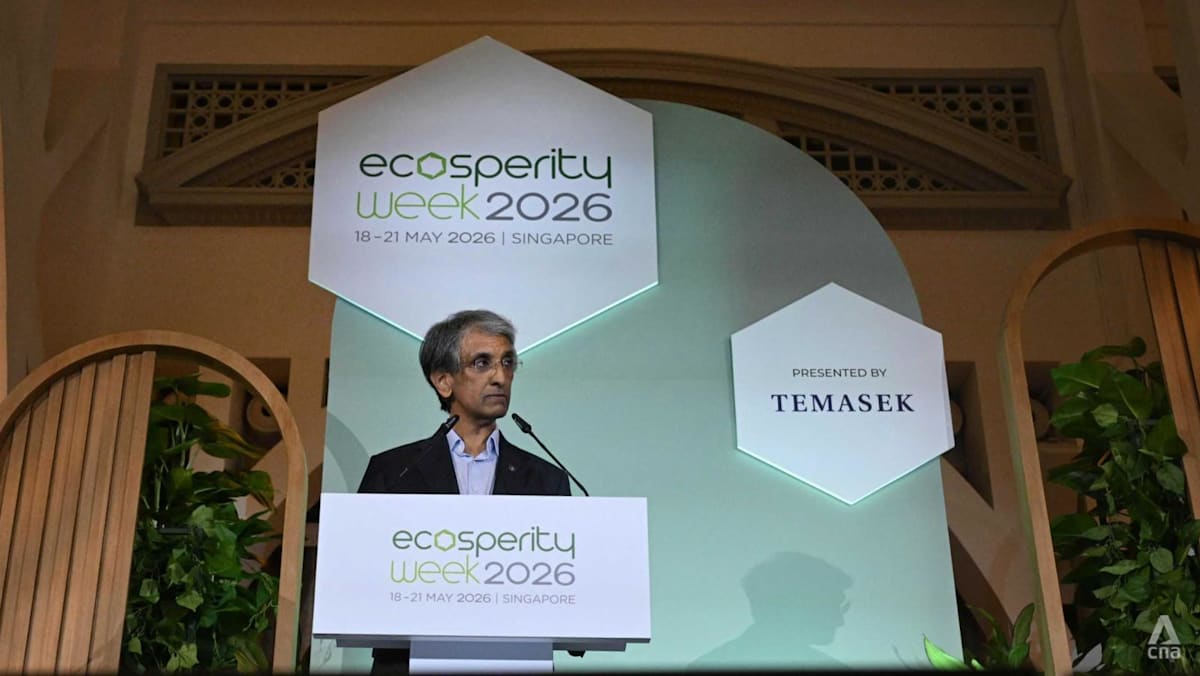
Temasek CEO: 2030 Climate Target Unlikely Amid Global Pressures
Temasek CEO Dilhan Pillay has signaled that the Singaporean investment giant is unlikely to achieve its 2030 climate targets. Citing a complex, non-linear low-carbon transition and an increasingly difficult global landscape, the admission highlights the growing friction between ambitious institutional net-zero pledges and the practical realities of large-scale industrial decarbonization.
This admission from one of the world’s most significant investment managers serves as a sobering reality check for the global financial community. For years, the narrative surrounding ESG (Environmental, Social, and Governance) integration has been one of steady, predictable progress toward decarbonization. However, Pillay’s assessment suggests that the path to net-zero is far more volatile and unpredictable than many capital allocators initially modeled. This “non-linear” reality creates a massive headache for institutional investors who must now reconcile long-term sustainability mandates with the immediate, messy requirements of global energy security and industrial stability.
The fiscal implications of missing these mid-term milestones are significant. As portfolios face the dual pressures of maintaining competitive returns and navigating transition risk, the gap between stated goals and actual carbon intensity is widening. This discrepancy is forcing a total reassessment of how enterprise risk management firms assist large-scale asset owners in quantifying their exposure to stranded assets and regulatory shifts.
The Non-Linear Transition: Why Incrementalism is Failing
In financial modeling, “non-linear” is a term that keeps C-suite executives awake at night. It implies that progress will not follow a smooth, predictable curve, but will instead be characterized by sudden jumps, plateaus, and unexpected setbacks. In the context of Temasek’s climate goals, this non-linearity is driven by the sheer complexity of the global energy transition.
Decarbonizing heavy industry, power generation, and global logistics is not merely a matter of deploying more capital; it requires fundamental technological breakthroughs that have not yet achieved commercial scale. When a transition is non-linear, the capital expenditure (CapEx) required to hit specific targets can spike unexpectedly, or conversely, stay flat for years while waiting for a technological “tipping point.”
For investment firms, this uncertainty makes long-term forecasting nearly impossible. If the transition to low-carbon technologies stalls due to supply chain bottlenecks or high interest rates, the “green premium” on certain assets may evaporate, leaving firms with portfolios that are misaligned with both their internal targets and external regulatory expectations. This is precisely why many organizations are now turning to specialized carbon accounting and auditing services to gain more granular, real-time data on their emissions trajectories.
“The disconnect between theoretical decarbonization models and the actual capital expenditure required for hard-to-abate sectors is widening. We are seeing a massive reality check for institutional portfolios globally, as the ‘smooth transition’ narrative hits the wall of industrial reality.”
— Erik Vance, Senior Macro Strategist at Global Capital Insights
The Macro Headwinds: Geopolitics and Energy Security
Pillay’s mention of a “tougher global landscape” points to a convergence of macroeconomic and geopolitical forces that are actively working against rapid decarbonization. The era of cheap, stable energy is being replaced by a period of heightened volatility. Geopolitical tensions have forced many nations to prioritize immediate energy security over long-term climate objectives, often resulting in a renewed reliance on traditional energy sources to stabilize domestic economies.
This shift creates a profound conflict for global investment firms. On one hand, there is intense pressure from stakeholders to accelerate the move toward sustainable living and net-zero emissions. On the other, there is the pragmatic necessity of investing in the sectors that currently power the global economy. This tension increases the complexity of portfolio construction, as managers must balance the risk of being “too green” (and missing out on essential energy returns) against the risk of being “too brown” (and facing massive regulatory and reputational penalties).
As these macro headwinds persist, the demand for sophisticated sustainable finance advisory is skyrocketing. Firms are no longer looking for simple ESG scores; they are looking for deep, structural analysis that accounts for how geopolitical shifts will impact the long-term viability of low-carbon investments.
The Shift in Capital Allocation Strategy
The realization that 2030 targets may be missed is likely to trigger a fundamental shift in how institutional capital is deployed over the next several fiscal quarters. We are moving away from a period of “aspirational ESG”—where targets were set based on ideal scenarios—and into an era of “pragmatic decarbonization.”
This new era will likely be characterized by:
- Increased focus on transition finance: Rather than simply divesting from carbon-intensive industries, investors will focus on funding the actual technological transition within those sectors.
- Heightened scrutiny of decarbonization pathways: Investors will demand more rigorous, data-backed evidence of how companies plan to navigate the non-linearities of the low-carbon economy.
- A move toward “Real-World” metrics: Moving beyond superficial ESG ratings toward hard data regarding carbon intensity, energy efficiency, and resource circularity.
The inability to meet near-term targets does not necessarily signal a failure of intent, but rather a failure of the previous modeling assumptions. For the B2B sector, this represents a massive opportunity. As the complexity of these transitions grows, the need for high-fidelity data, legal expertise in evolving environmental regulations, and advanced risk modeling will become the primary drivers of value for service providers.
The market is currently in a state of recalibration. The “unlikely” status of Temasek’s targets is a harbinger of a broader trend where the financial world must reconcile its climate ambitions with the jagged, unpredictable reality of global industrial change. For the discerning investor, the goal is no longer to find the easiest path to net-zero, but to build a portfolio resilient enough to survive the turbulence of the transition itself.
To navigate this increasingly complex regulatory and operational environment, businesses must partner with experts who understand the nuances of global decarbonization. Explore the World Today News Directory to connect with vetted ESG consultants, risk management specialists, and environmental auditors who can help your organization turn transition risk into a competitive advantage.