
From Vegetable Hater to Plant-Based Empire Builder
Singaporean Entrepreneur Defies Expectations with Greendot Group
A surprising success story unfolds in Singapore, where Fu Yong Hong, a former meat enthusiast, has cultivated the nation’s largest plant-based restaurant chain, Greendot Group, despite initially disliking vegetables. His journey demonstrates how embracing opportunity can overcome personal preferences and tap into growing market demand.
Early Days and a Canteen Start
Now 36, Fu leads Greendot, generating an annual revenue of $21 million from 15 locations, including the well-known Lotus Vegetarian Restaurant. The group is poised to expand further, opening a 16th Greendot outlet at The Star Vista in July. The business began in 2011, a collaboration between Fu, then a business student at the National University of Singapore, and his secondary school friend, Justin Chou.
Chou, a lifelong vegetarian, recognized a gap in the market for affordable meatless options for students. He proposed leveraging his family’s resources – his mother, Rebecca Lee, 64, operates Lotus Vegetarian Restaurant, and the family owns a vegetarian food manufacturing facility in Johor, Malaysia – to launch a vegetarian food stall.
Despite his personal aversion to greens, Fu saw a valuable business opportunity. He agreed to partner with Chou, with one key condition: We shouldn’t limit ourselves to just vegetarian customers. I want to target non-vegetarians too.
To gain experience and parental approval, both founders worked part-time at Lotus Vegetarian Restaurant in 2010, mastering the basics from vegetable preparation to buffet setup.
From Humble Beginnings to Fast-Casual Success
In December 2011, the pair, along with a third partner, invested $20,000 to launch Greendot at Temasek Polytechnic’s School of Design canteen. They initially handled all cooking themselves, utilizing ingredients from Chou’s family’s factory. A full-time cook was hired with the opening of their third outlet. Initially, Fu actively avoided vegetables in his own diet. If a burger had lettuce, I would remove it. If noodles had bean sprouts, I would pick them out.
The first few months proved challenging. Fu recalls neighboring stallholders criticizing his cooking, particularly the texture of his eggplant. However, he persevered, honing his culinary skills. By 2012, Greendot had expanded to Raffles Girls’ School and Fu’s alma mater, Chung Cheng High School (Main), where he worked full-time. Daily exposure to vegetarian cuisine gradually shifted his perspective. That changed my mind. I started enjoying what I was making,
he says.
Early menus leaned towards Western fare, but customer feedback indicated a preference for local dishes. Fu’s mother-in-law advised them that locals favored hearty rice and noodle sets over fast food. Adapting to this insight, Greendot introduced these staples, which quickly became the most popular items, accounting for 70 percent of revenue. They also offered a selection of pre-made vegetarian dishes for bento boxes.
Strategic Branding and Growth
To broaden appeal, Greendot deliberately avoided overt vegetarian branding. We don’t use the Chinese characters for vegetarian or name dishes things like ‘vegetarian chicken rice’,”
Fu explains. We call it what it is – crispy beancurd skin with sesame rice.
They also steered clear of guilt-inducing messaging related to animal welfare or religious connotations, instead promoting a positive message: Eat green, feel good.
Despite strong customer traffic, Greendot experienced losses for the first two years, with ingredient costs reaching 50 percent of revenue. In 2013, the third partner exited the business. Undeterred, Fu and Chou opened their first mall outlet at Bedok Mall in December 2013, marking a transition to a fast-casual chain. Fu even used this business evolution as a case study for his university coursework, earning a high grade.
Overcoming Setbacks and Personal Transformation
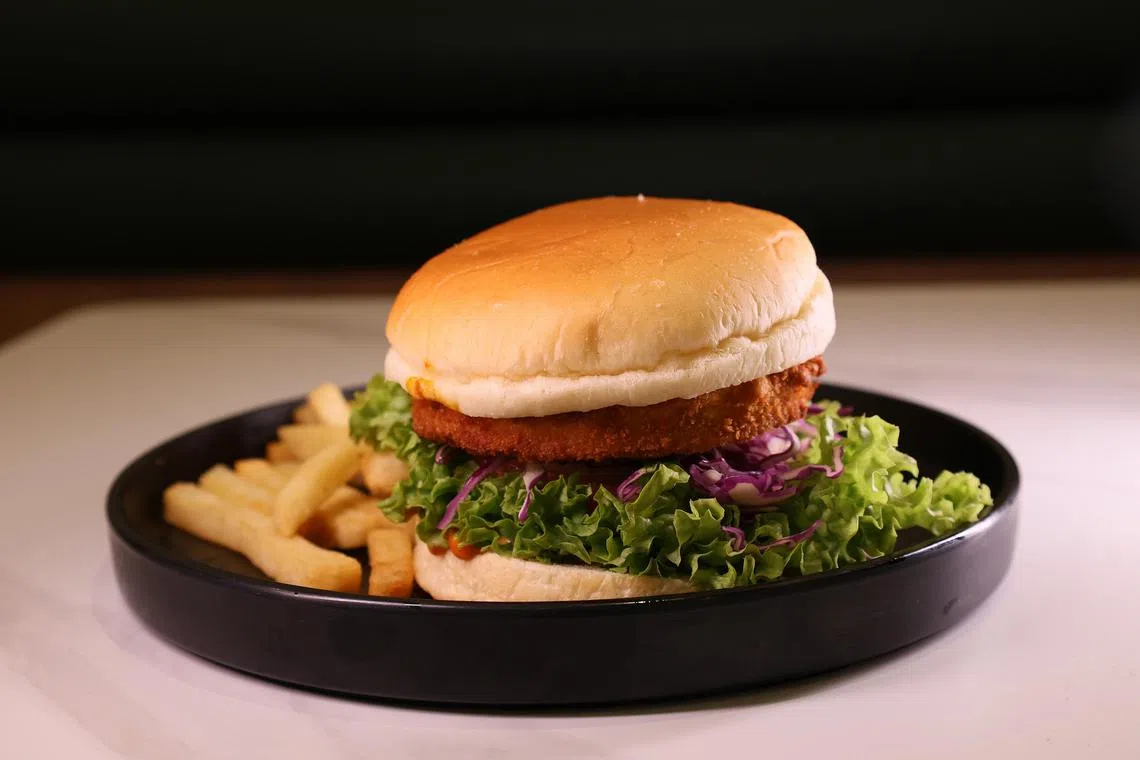
The move to fast-casual was driven by necessity. School canteens were only viable during the academic year, leading to financial instability during breaks. Mall locations offered consistent foot traffic and a broader customer base. The menu shifted to bentos and set meals, featuring premium ingredients like the Signature Lion’s Mane Mushroom Rendang with Turmeric Basmati Rice ($10.90).
A failed venture into Taiwanese shaved ice desserts under the Smoothie House brand in 2016, costing nearly $1 million and resulting in debt until 2023, highlighted the importance of focus. In 2018, Lotus Vegetarian Restaurant merged with Greendot, with Fu assuming the role of chief executive.
However, the demanding workload took a personal toll. Fu was working long hours and his relationship suffered. Recognizing the need for change, Chou intervened, encouraging Fu to prioritize his well-being through exercise and self-reflection. This led Fu to delegate responsibilities, embrace a healthier lifestyle, and adopt a plant-based diet himself in 2019. I finally aligned with the meaning and purpose of my business. I no longer saw Greendot just as a business. It became a mission.
Future Outlook
Greendot now employs 200 people and operates 15 outlets. The company is committed to innovation, introducing new menu items every two months, such as the Specialty Sauce Mee Pok Yong Tau Foo ($11.90). The plant-based food market is experiencing significant growth; a recent report by Grand View Research projects the global plant-based food market size to reach USD 77.8 billion by 2030. Grand View Research, 2024

Fu envisions expanding Greendot to 20 locations in Singapore and entering the Malaysian market within the next two years. His ultimate goal is to establish Greendot as a global leader in plant-based cuisine, promoting health and sustainability through delicious and accessible food.
