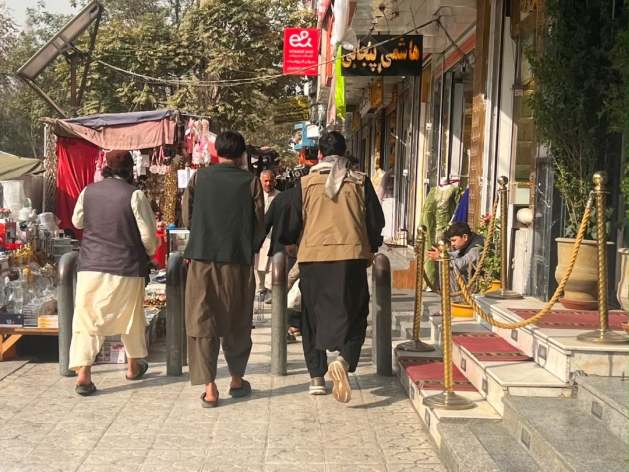
Taliban Morality Police Conduct Daily Inspections of Young Men in Kabul
Taliban morality police are enforcing strict surveillance on young men in Kabul, conducting daily inspections of clothing and mobile devices to penalize personal style or Western influence.
While international attention has focused on the systematic removal of rights for Afghan women, young men in the capital are increasingly subject to an invisible cage of monitoring, according to reports from Inter Press Service and Global Issues. Infractions as minor as wearing a T-shirt, carrying family photos on a phone, or sporting a necklace have resulted in beatings, interrogations, and forced lifestyle changes.
Farid, a 27-year-old economics graduate, said he was beaten by morality police while shopping because he wore a short-sleeved T-shirt. “They said my clothes were not in accordance with Islam and that I should wear a perahan tunban,” Farid told Inter Press Service. He has since abandoned his preferred clothing to avoid further confrontation, noting, “My right to choose what I wear has been taken away from me.”
Digital privacy has also been curtailed as security forces routinely stop pedestrians to search mobile phones for apps, contacts, or images deemed corrupt.
Hamid, a 23-year-old engineering student, reported being detained and berated for having photos of his mother and sister on his device. “They started berating me: ‘You shameless man, who are these women? Why do you have their photos on your phone?’” Hamid told Inter Press Service, adding that he now carries only basic, non-smart mobile models to avoid scrutiny.
The enforcement extends to social milestones and individual expression.
In one instance, morality police raided a wedding, smashed music equipment, and arrested the groom, who was only released after village elders paid a ransom, Inter Press Service reported.
Naser, a 22-year-old stationery store worker, described being physically assaulted by officers who yanked a silver chain from his neck, leaving a wound. “To the Taliban, purity, neatness, and following fashion are all sins,” Naser told Inter Press Service. “But for heaven’s sake, we’re young!”
The constant surveillance and pressure have led to increased levels of depression and anxiety among the youth. Many young people living in the city now live in fear that they will be stopped in the street and have their mobile phones searched by the authorities. He said that in his community, neither the young nor the old see a single happy day.
Kabul, the capital and largest city of Afghanistan with an estimated population of 5,333,284, has been the country’s political, cultural, and economic center for centuries. In 2021, the city fell to the Taliban following the United States’ withdrawal from Afghanistan, marking a decisive shift in its socio-political landscape.
As a key destination on the ancient Silk Road and a meeting point between Tartary, Hindustan, and Persia, Kabul has historically been a strategic hub, but under Taliban rule, its streets now serve as the primary enforcement zone for morality police, conducting daily inspections of clothing and mobile devices to enforce strict interpretations of Islamic law.