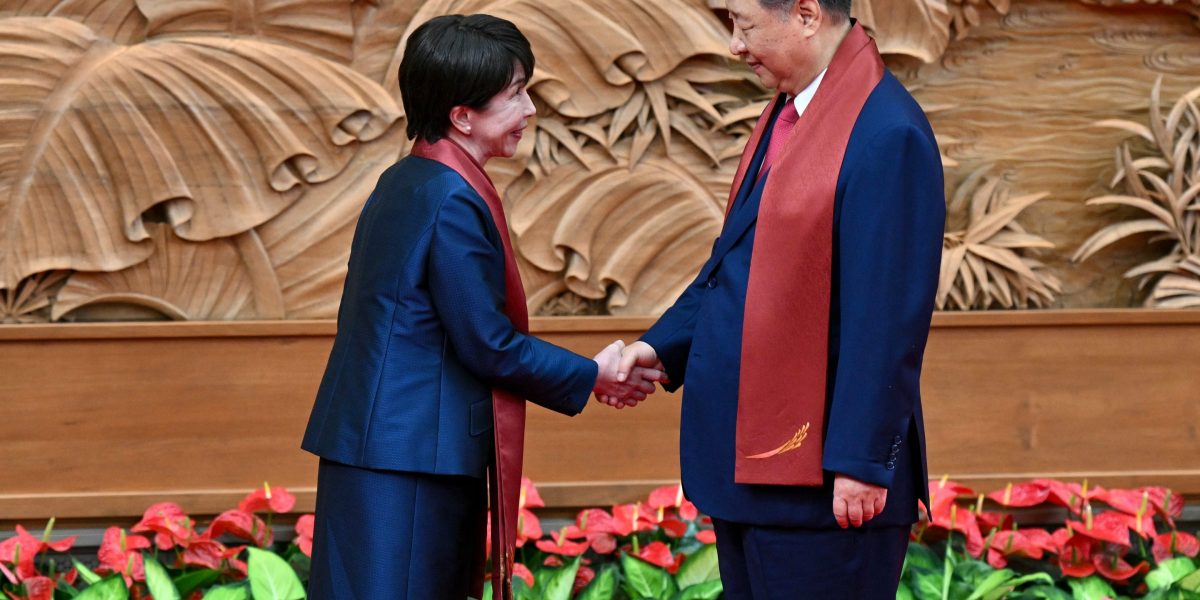
Takaichi, Xi Exchange Brief Handshakes at APEC Amid Strained Japan-China Ties
Japanese Prime Minister Sanae Takaichi and Chinese President Xi Jinping exchanged brief handshakes at the APEC summit in Shenzhen last week, marking the most significant, albeit strained, contact between the two leaders in a year.
The summit opened on Nov. 18, with Takaichi arriving at Shenzhen Baoan International Airport that afternoon.
- Takaichi and Xi shook hands twice during the summit, including an 11-second interaction on Thursday.
- Relations have remained frozen since November 2025, when Takaichi suggested Japan could intervene in a Taiwan conflict.
- China has responded to the diplomatic friction by restricting exports of critical minerals and dual-use technology.
The encounter in Shenzhen stood in contrast to the warmer receptions afforded to other regional leaders, such as South Korean President Lee Jae Myung. Japanese officials had requested that Beijing ensure Takaichi received treatment equal to her counterparts. According to Mainichi, a senior Japanese Foreign Ministry official described the modest welcoming ceremony for Takaichi as “diplomatic discourtesy.” The official added, “It is truly rude.”
Diplomatic and Behavioral Analysis
Body language experts said that Takaichi employed a proactive approach to the interaction. While her initial greeting on Wednesday was described as formal, her 11-second handshake on Thursday appeared intended to project control. “She is using her body language to say that ‘I am a serious player capable of surprises’,” said Geoff Beattie, a psychology professor at Edge Hill University.
“Open palms do not reliably indicate a person’s status, confidence or true intentions,” said Leow, co-founder of the Malaysia-based behavioural intelligence organisation, Humanology.
However, Beattie also said that Takaichi’s low, open-palm gesture during the first encounter indicated the Japanese leader’s “uncertainty and discomfort” after that brief handshake, which he described as “formal and cursory.”
The diplomatic frost follows a series of incidents that have shifted the bilateral relationship from one defined by trade to one dominated by security concerns. In March, a Japanese officer was arrested after entering the Chinese embassy in Tokyo with a knife, an event Beijing labeled a threat to the safety and dignity of its personnel.
This followed China’s 2025 move to advise its citizens against travel to Japan and the imposition of export controls on rare earth elements and permanent magnets.
Despite the political tension, the economic impact remains mixed. While visitor numbers from January to October fell 2.5% to 34.6 million, the tourism sector has largely persisted, with foreign visitors spending $30.4 billion in the first half of 2026.
However, experts suggest that commercial ties no longer provide the stability they once did. “Previously economic relations provided steadying ballast in the overall relationship, but now both nations view the relationship more through the security angle,” said Jeff Kingston, a professor at Temple University.
Tokyo is also monitoring Washington’s approach to Beijing, fearing that U.S. President Donald Trump might prioritize his own engagement with China at Japan’s expense. During his own meetings last week, Trump referenced the U.S.-China alliance against Japan during World War II, a comparison that Japanese officials view as an attempt to drive a wedge between the allies.
According to Daniel Sneider, a professor at Stanford University, Japan views Trump’s recent meetings with Xi and Russian President Vladimir Putin as a “means to isolate Japan and drive wedges between Japan and its ally.”
Whether these brief exchanges in Shenzhen will lead to a broader thaw in communication remains uncertain. While former Japanese officials have held recent private-sector talks with Chinese counterparts, formal government dialogue channels remain largely inactive. Takaichi also has limited ties with lawmakers regarded as China hands.
The question of whether future formal talks will occur remains unanswered, as does the extent to which China will escalate its opposition during Japan’s planned revision of national security documents at the end of the year.
Sanae Takaichi ascended to the premiership after a persistent climb within the Liberal Democratic Party. Following a narrow defeat to Shigeru Ishiba in the 2024 leadership race, she secured victory in the 2025 leadership election by placing first in both rounds of voting. This win allowed her to form a coalition with the Japan Innovation Party, leading to her election as prime minister by the National Diet on 21 October 2025.
Her mandate was further solidified in 2026, when she called a snap general election. The resulting landslide victory for the LDP delivered a two-thirds supermajority, marking the largest number of seats ever won in postwar Japanese electoral history and cementing her political authority.