

Czech Rental Market Sees Surge in Institutional Housing
Foreign Investors Drive Boom in Prague’s Build-to-Rent Sector
Institutional rental housing, once a concept borrowed from abroad, is rapidly becoming a significant fixture in the Czech real estate landscape, particularly in Prague. Developers are increasingly focusing on projects designed for long-term lease under single ownership rather than individual unit sales.
Prague Leads the Build-to-Rent Expansion
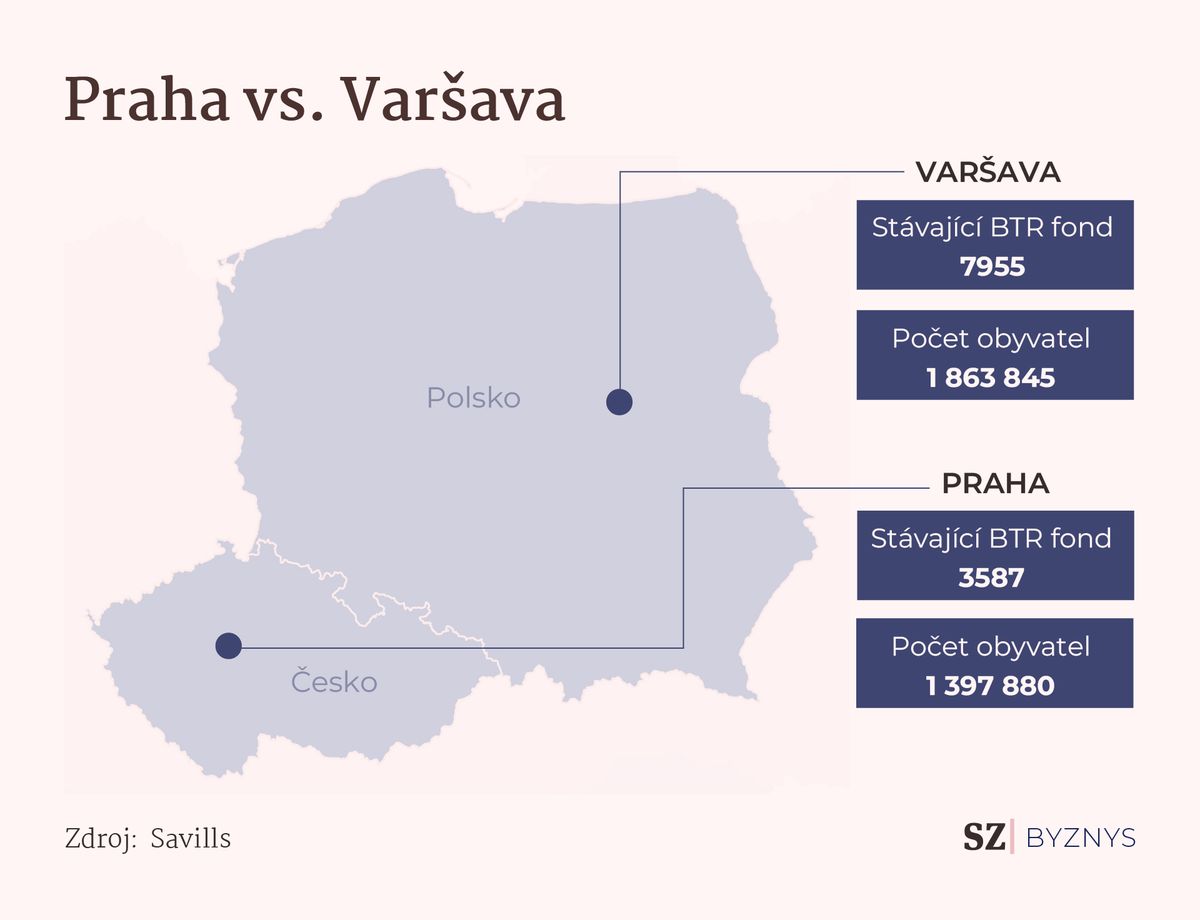
Consultancy firm Savills reports that by mid-2025, Prague will host over 4,500 apartments designated for professional rental. Projections indicate further growth, with an additional 1,100 units slated for completion in 2026, 1,902 currently under construction, and plans for another 3,400 to commence building within the next two years.
Marek Pohl, Savills chief, noted the escalating investor appetite for urban rental segments. “Investors’ interest in the rental housing segment is growing, especially projects in cities. It is an attractive and stable asset, which also offers flexible exit strategies, including the possibility of gradual sale of units in the form of individual apartment sales,”
he stated.
The capital city, Prague, remains the focal point due to its concentration of purchasing power and sustained demand for rental accommodations.
Zdenka Klapalová, President of the Association for Property Development (ARTN), confirmed the positive trajectory of the Build-to-Rent (BTR) sector. “The Build-to-Rent (BTR) segment, literally ‘build and rent’, is successfully developing on the market and finds its place quickly. It fills the gap in the field of professional rental housing, which we perceive on the market for a long time,”
she commented.
Foreign Demand Fuels Market Growth
Prague’s housing availability is the lowest in the Czech Republic, coupled with a significant presence of expatriates and mobile young professionals. This demographic is a key driver for the burgeoning rental projects.
The AFI group, a pioneer in Czech institutional rental housing, aims to expand its portfolio to 5,000 rental units. “We perceive strong interest from tenants and investors. Especially foreigners appreciate professionalization of rental market and growing quality of services,”
said Jana Domanová, CFO of AFI.
Rudolf Krain, director of Trigem Rental, echoed this sentiment, highlighting the demand for fully equipped apartments, robust Wi-Fi, quality management, and reception services from international clients, who constitute over 60 percent of residents in projects like Fragment and Distillery.

While Prague and major cities benefit from foreign interest, regional towns are more reserved about institutional housing. In many of these areas, market apartment prices still fall short of net construction costs.
Jakub Kořínek, co-founder of the Czech Housing Fund, sees potential in regional centers. “The Czech Housing Fund has been betting on regional and district towns for a long time, where we see space for growth and good occupancy. Missing new buildings and will be missing, which makes the rental housing sense as a replacement,”
he explained, predicting a rise in demand for larger rental units.
Obstacles to Development Persist
Despite growing investor interest, the pace of construction in the Czech Republic lags behind other European nations. Complex permitting procedures and financing limitations are significant hurdles.
“The construction procedure is not shortened, rather the opposite. And with real estate attenuation in 2022 and 2023 there was a significant decrease in the number of initiated buildings,”
stated Jakub Kořínek, pointing to administrative challenges and the delayed impact of two years of reduced development activity.
Jan Jurčíček, head of building and project consulting at Savills, identified the availability of banking loans as a persistent challenge. “The amount of rent is attractive in terms of revenue, but at the same time limits availability for a wider group of population, which can be perceived as a risk,”
he noted.
Despite these challenges, the sector is expanding. Petr Dufka, chief economist at Creditas, believes the BTR segment has a promising future. “Own housing is no longer such a strong symbol of success as before. The younger generation prefers flexibility and mobility. And that is what professional rental housing offers,”
he commented.
Dufek also cautioned against populist interventions, citing the example of Berlin’s rent cap. “The example of Berlin shows how populist interventions can paralyze the rental housing and the availability of housing ultimately reduce,”
he warned, noting that such measures can inadvertently encourage short-term rentals.
Rental Prices Climb Amidst Quality Improvements
Rent increases are evident in the Czech Republic, even for new projects by institutional investors, largely attributed to higher living standards including equipped apartments and enhanced services.
Savills data indicates that smaller units, such as 1+kk, rent for approximately 19,900 CZK monthly, while 2+kk units average 27,400 CZK. Larger apartments, however, command significantly higher prices, with 3+kk units around 43,000 CZK and four-room apartments reaching up to 68,000 CZK per month. These figures substantially exceed Prague’s average market rent.
While this represents a premium service with a premium price, it contrasts with Prague’s urgent need for affordable housing, making these new rental options accessible only to a select demographic.
Addressing Housing Availability Concerns
Lenka Veselá, an attorney and chairwoman of the Czech Tenants, expressed concern that a lack of regulation could lead to less stable leases. “At first glance, it may be good that professional companies are entering rental housing. They often promise higher standard, better services and stability. However, abroad experience shows that if the rules are missing – for example in the form of longer rental contracts – it leads to leases rather than improving availability,”
she stated.
Currently, BTR housing appeals to young, unencumbered individuals seeking modern amenities, but families, seniors, and lower-income residents often find themselves excluded. “We know from practice that these groups are sometimes automatically eliminated because of the number of people, type of reception or lower creditworthiness. These are people who need stable rental housing most,”
Veselá added.

Jan Milota, an advisor on ending homelessness, stressed the need for state intervention and regulation to keep pace with market changes. “If the state does not actively regulate the situation, rental apartments may become investment products detached from the real needs of the population,”
he warned, highlighting the risk of social exclusion due to rising housing costs.
A Push for Non-Profit Housing Solutions
Matouš Hutník, spokesperson for the Institute of Planning and Development of Prague, suggested that a diversified market with non-profit and state sector involvement, similar to Denmark’s model with its non-profit fund, could improve housing availability.
Kristian Holan, a fundraiser for affordable housing, is working to establish a non-profit institution to rent apartments in the Czech Republic. His fund has operated a pilot program with 14 apartments, primarily in the Ústí Region, housing mothers and children from a charity’s asylum house. “Most of the funds came from small creditors who lent the fund with an interest of 3 %, ie a slight profit corresponding to approximately the yield of Austrian housing companies with limited profits,”
Holan explained.
The model has proven effective, and the fund plans to actively seek additional donors and creditors, initially focusing on purchasing existing apartments before moving towards new construction.