
Stay informed with the latest headlines and in-depth reporting on Google News.
Join the conversation and receive real-time updates on our WhatsApp Channel.
Source:

Stay informed with the latest headlines and in-depth reporting on Google News.
Join the conversation and receive real-time updates on our WhatsApp Channel.
Source:

The latest mobile device boasts an aluminum frame and is equipped with Gorilla Glass 7i for its display. This handset also carries an IP68 certification, indicating its resistance to dust and water.
Stay updated with the latest news and articles on Google News
source:
→ Full text of the original article.

The newly launched Vivo V40 Lite is making waves, offering consumers a compelling blend of sophisticated design, robust performance, and advanced AI-powered camera capabilities. Arriving in late September 2024, this model has quickly garnered attention for its near-flagship photography features.
A standout feature is the V40 Lite’s camera system. The rear setup boasts a 50 MP main lens complemented by a 2 MP sensor, engineered to produce professional-looking bokeh effects. Its AI Aura Light Portrait technology ensures natural image capture, even in low-light conditions. For selfies and vlogging, a 32 MP front camera performs optimally, supporting night mode and video recording.
Vivo has integrated innovative AI tools like AI Eraser, allowing users to effortlessly remove unwanted subjects from photos with a single tap. Furthermore, Ai Photo Enhance breathes new life into older images by sharpening details and enriching colors, appealing to those who enjoy visual content manipulation.
Under the hood, the V40 Lite is powered by the Snapdragon 685 4G chipset, built on a 6nm architecture. This octa-core processor features four cores clocked at 2.8 GHz for demanding tasks and four at 1.9 GHz for power efficiency, striking a balance between speed and battery life. The device runs on Funtouch OS 14, based on Android 14, providing a refined and user-friendly interface.
Users can choose between two configurations: 8 GB of RAM with 128 GB of internal storage, or a more spacious 256 GB variant. Both models support an additional 8 GB of virtual RAM and allow storage expansion via microSD cards up to 1 TB, catering to users with extensive data needs, such as gamers or content creators.
A substantial 5,000 mAh battery powers the V40 Lite, supported by rapid 80W fast charging technology, minimizing downtime. The device sports a slim and lightweight profile, measuring 163.23 mm x 75.93 mm with a mere 7.79 mm thickness for the Carbon Black version. Available also in Titanium Silver and Pearl Violet, it weighs between 188 and 190 grams, ensuring comfortable handling.
The smartphone features a 6.67-inch AMOLED display with Full HD+ resolution (2400 x 1080 pixels). Its impressive 1800 Nits brightness ensures visibility even in direct sunlight. A 120Hz refresh rate and 394 ppi pixel density contribute to a fluid and responsive visual experience.
Connectivity is comprehensive, with support for 4G LTE, dual SIM slots, and microSD expansion. It includes WiFi, Bluetooth 5.0, NFC, USB, GPS, and OTG. Integrated sensors such as light, gyroscope, and proximity sensors, along with an electronic vibrating motor, enhance user interaction.
Priced at Rp3,599,000 for the 128 GB model and Rp3,699,000 for the 256 GB version, the Vivo V40 Lite presents a strong value proposition. Its combination of high-end specifications, elegant design, and innovative AI features positions it as a formidable contender in the mid-range smartphone market.
The smartphone market continues to see intense competition, with brands like Samsung also focusing on AI integration. For instance, Samsung’s Galaxy AI features on its latest devices have been praised for enhancing productivity and creativity, demonstrating the growing consumer demand for intelligent mobile experiences. The Vivo V40 Lite enters this landscape aiming to capture users who prioritize cutting-edge camera technology and AI enhancements without breaking the bank.

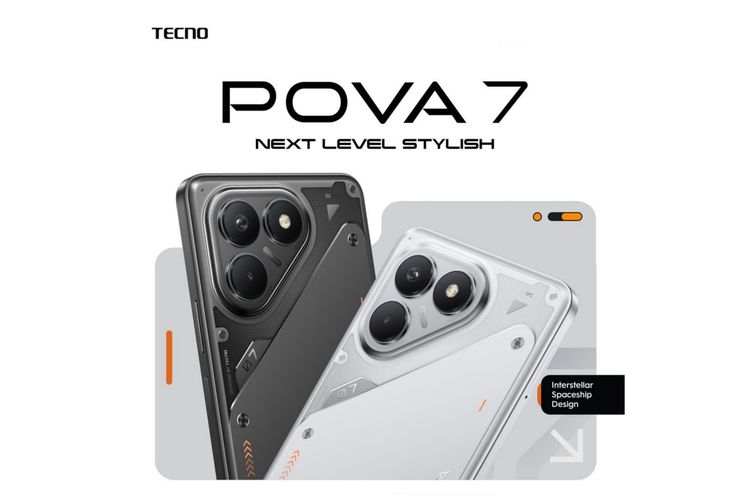 Tecno Pova 7 is available in Indonesia starting June 25.”/> Tecno Pova 7 is available in Indonesia starting June 25.
Tecno has officially launched its latest smartphone, the Pova 7 4G, in Indonesia. The device is now available for purchase across the country as of June 25th.
The Tecno Pova 7 4G is being offered in Indonesia with a price tag of Rp 1,989,000 for the variant that comes with 8 GB of RAM and 128 GB of internal storage. For users who require more space, the storage capacity can be expanded further, supporting up to 1 TB via a microSD card.
For a comprehensive overview of the Tecno Pova 7 4G’s features and technical specifications, interested consumers can refer to the detailed article titled “Price and Specifications of Hp Tecno Pova 7 in indonesia.”
Simultaneously occurring,Xiaomi has also introduced its new entry-level smartphone,the redmi A5,to the Indonesian market. This device made its debut in the country in March 2025.
The Xiaomi Redmi A5 is equipped with a considerable 5,200 mAh battery. However, the charging capabilities for this large battery are limited to 15 watts.
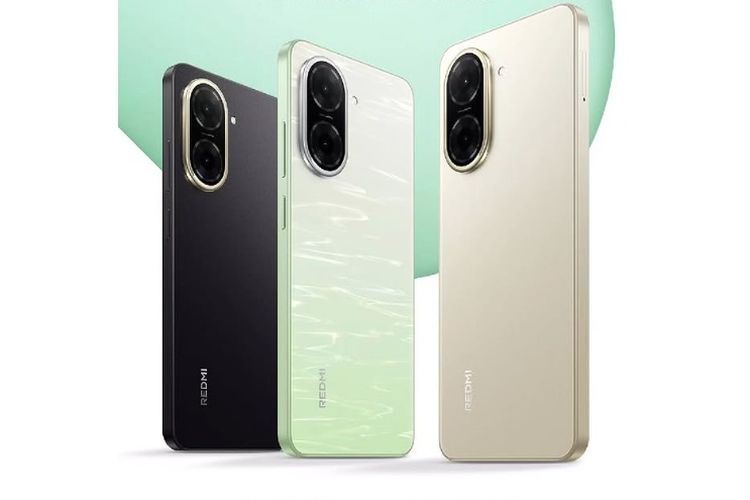 Xiaomi Redmi A5 officially launched in Indonesia, friday (3/21/2025)