Skip to content
World Today News
  • Business
  • Entertainment
  • Health
  • News
  • Sport
  • Technology
  • World
World Today News
  • Business
  • Entertainment
  • Health
  • News
  • Sport
  • Technology
  • World
Friday, December 5, 2025
World Today News
World Today News
  • Business
  • Entertainment
  • Health
  • News
  • Sport
  • Technology
  • World
Copyright 2021 - All Right Reserved
Home » Automotive Industry » Page 3
Tag:

Automotive Industry

Business

Ford EVs flying off lots as tax credit countdown sparks buying frenzy

by Priya Shah – Business Editor September 7, 2025
written by Priya Shah – Business Editor

Ford EV Sales Surge as $7,500 Tax Credit Deadline Looms

DETROIT – Ford’s ⁤electric vehicle sales are ‍experiencing a notable jump as consumers ‍rush to take advantage of ‌the current $7,500 ‍federal tax credit ​before it possibly changes ⁤at the end of September. The surge comes as predicted by​ industry analysts who anticipated a buying frenzy ahead of the incentive’s possible alteration.

Industry expert Jessica Caldwell of Edmunds anticipates a “whipsaw” in the other direction as EV sales evaporate in the fourth quarter, similar to ‍a prediction made by Cox Automotive’s ⁣Karl ⁢Drury. “Its a predictable pattern, one ⁤we see​ whenever ‌large purchase incentives are removed from the marketplace,” Caldwell said.

Consumers looking to purchase an EV can expect⁣ to find ⁢deals as⁢ dealership inventory diminishes. “Dealers are very aware of​ this pattern, and those‍ with EV stock will offer increasingly desirable‍ pricing and financing as the end of September draws near,” Caldwell explained. “Having a large supply of​ unsold EVs on their lot on Oct.​ 1 is a position dealerships will actively⁤ avoid.”

beyond​ EVs, Ford reported overall positive⁤ sales trends in August. SUV sales increased 6.2% to 81,539 units, while pickup truck sales rose 2.4% to 105,432. Traditional passenger car sales saw a modest 2.2% increase, reaching 3,235 units sold.

Several Ford models⁢ experienced notable sales gains.The Bronco saw a 32% increase to 13,378​ vehicles sold, the Explorer⁢ soared 22% to 20,617 units, and the Maverick pickup rose 16.4% ​to 11,956 vehicles.

However,some⁣ models faced sales declines. Escape sales were down 10.4% to 12,290,and despite‍ a rise in lightning sales,total F-Series sales dipped 3.4% to 68,318 units.

At Lincoln, the ⁣Navigator and corsair were the only models to report sales gains. The Corsair, which Ford will discontinue production of by year-end, sold 2,526 units, an 8.6% increase.The Navigator saw ‍a 2.5% gain to 1,624 units sold.

September 7, 2025 0 comments
0 FacebookTwitterPinterestEmail
World

Trump Reduces Auto Tariffs on Japan – Trade Deal Details

by Lucas Fernandez – World Editor September 6, 2025
written by Lucas Fernandez – World Editor

Washington,⁣ D.C. – A new trade agreement between the⁢ United States and ​Japan went into effect this⁤ week, ‍significantly lowering tariffs on Japanese automobiles and other‌ key products.President Donald Trump signed a decree Thursday​ reducing the tariff on Japanese ⁢car imports from 2.5% to 15%, as reported by Reuters. Tariffs ⁤on airplane parts will be eliminated ‍entirely, while those⁣ on semiconductors and ‍pharmaceuticals will be set to the lowest⁤ possible levels-no‌ higher than those extended to any other U.S. trade partner.

The agreement, finalized after months of negotiations with Japan – ⁢America’s most ⁤important Asian federation ​- ​also includes a ‌commitment ‍from Japan to invest $550 billion in the United States.⁢ Japan has further pledged to increase purchases of U.S.agricultural products and open its market⁢ to american defense equipment.

The new ⁢regulations ⁢become effective seven days after​ official publication.Analysts predict the reduced tariffs ⁣could increase⁢ the⁤ competitiveness of Japanese automakers​ in the U.S.market, ⁢potentially impacting European car exports.

September 6, 2025 0 comments
0 FacebookTwitterPinterestEmail
Technology

Kapur Family Feud: Sona Comstar Dispute and Allegations of Exclusion

by Rachel Kim – Technology Editor August 18, 2025
written by Rachel Kim – Technology Editor

Sona Comstar Family Feud⁤ Escalates: Widow Challenges Company Leadership

Table of Contents

  • Sona Comstar Family Feud⁤ Escalates: Widow Challenges Company Leadership
    • Family Claims of Exclusion and Disrespect
    • legal Battles and Allegations ‍of Coercion
    • grief and Unanswered ‍Questions
      • Key Dates and Actions
    • Frequently Asked Questions about the Sona Comstar Dispute

New Delhi – A bitter dispute has erupted within the family of the late⁤ Sunjay Kapur, ‍former ⁢chairperson of Sona Comstar, a prominent mobility technology company valued at⁤ approximately 30,000 crore rupees. Rani Kapur, the ​80-year-old widow of Sona Comstar’s founder, Surinder Kapur, is ​publicly challenging the company’s​ current‌ leadership, alleging ⁤systemic exclusion and disrespect towards her and her⁢ family.

Family Claims of Exclusion and Disrespect

Mandhira ⁢Kapur​ Smith, sister of the late Sunjay Kapur, voiced her concerns in​ an interview with the ANI⁢ news ‍agency, stating that her family has been treated as outsiders following ‍Sunjay Kapur’s death on June 12.”Within ⁤days, everything has been taken away from the family,” Smith claimed.‍ She ⁢further alleged⁢ that family members were omitted from official ⁤obituaries⁢ and public acknowledgements.

Smith ​emphasized her mother’s pivotal role in the company’s early success, noting that Rani Kapur was instrumental in supporting Surinder Kapur as he transitioned the business from ‌jewelry trading to ‍automotive component manufacturing. Despite⁢ this foundational contribution, Smith asserts that ​Rani Kapur ​has been effectively sidelined by the current management.

“There should⁤ have been some ‌respect given to my mother who is one of the founders with my father,”‌ Smith stated.”Sona Comstar was built as‌ of​ my ⁣father.” She believes Rani Kapur deserved a non-executive board position, recognizing her historical significance‌ to the company.

legal Battles and Allegations ‍of Coercion

The‌ conflict escalated‌ when Sona Comstar issued a cease-and-desist notice to Rani ⁤Kapur.In a letter to ‌the board,Rani Kapur asserted⁣ her​ status as the sole ⁢beneficiary of her late husband’s estate and the majority shareholder ​of the ⁣Sona⁢ Group,including Sona Comstar. ‌

Rani Kapur also alleged she was pressured to ⁢endorse ⁣the appointment of her daughter-in-law, Priya‌ Sachdev⁤ Kapur, to a non-executive director role on the company’s board. Sona comstar refuted these claims, stating that Rani Kapur has ​not held any role within the company, directly or indirectly, ⁢as 2019.

Did You know? Corporate governance disputes involving family-owned businesses are increasingly common, often stemming from issues of succession planning and control [[1]].

grief and Unanswered ‍Questions

Smith also criticized the company’s request for her mother to ⁣publicly apologize for seeking a postponement of⁢ a ‍board meeting following⁢ Sunjay⁣ kapur’s ‍unexpected⁣ death. “She has been thrown to the curb,” Smith lamented.”They⁤ have not cared about her or her ‌feelings or that ​she‍ stood by my father while he built the company.”

For Rani Kapur, Sona Comstar represents more than just a business; it’s a legacy.”She’s not a stranger,” Smith emphasized, adding that requesting⁢ a delay ⁤in the board meeting‌ was a reasonable‍ gesture given the circumstances.the core of the dispute, according ⁢to Smith, transcends financial ‌matters. “People who have not built ​it will only see money, people who‌ have built it, which is ‌us, see much more than that. ⁤We see [this as] a legacy,we see dad’s dreams.”

Adding to the ⁤family’s distress, Smith revealed her mother is grappling with unanswered‌ questions surrounding sunjay Kapur’s ​death, which was​ attributed to cardiac ‌arrest following‌ an autopsy. “He⁢ was fit. ⁤Who is giving‌ her‌ answers? My mum’s asking⁤ me every ​day, how‌ did this happen?”

Key Dates and Actions

Date Event
June 12, 2025 Sunjay ⁣Kapur dies of cardiac arrest while playing polo in London.
July 25, 2025 Rani Kapur urges ⁢delay of Sona ⁤BLW AGM.
July 30,2025 Sona Comstar issues cease-and-desist notice to Rani ⁣Kapur.
August 17, 2025 Mandhira Kapur‍ Smith publicly voices family concerns.

Pro Tip: When navigating complex family business disputes,seeking autonomous legal counsel‌ and mediation can be strategic steps toward resolution.

What​ role should family members play in the governance‍ of companies they founded,‌ even after relinquishing formal leadership positions? How​ can companies balance respecting the legacy of founders with the need for modern business⁣ practices?

the Kapur family’s dispute highlights a common challenge in family-owned ⁢businesses: ​navigating‍ succession planning and maintaining ⁢family​ harmony while adapting to evolving market ‌dynamics. The automotive sector,particularly ‌in‌ India,is experiencing rapid growth⁣ and technological‍ disruption,requiring agile leadership and ‌strategic ⁤decision-making. The case of Sona Comstar serves as a cautionary⁣ tale about the importance​ of ⁣clear governance structures and proactive communication within family businesses.

Frequently Asked Questions about the Sona Comstar Dispute

  • What is the core issue in the Sona Comstar family dispute? The dispute centers around Rani Kapur’s ⁢alleged exclusion from the company she helped build and her challenges to the current leadership’s decisions.
  • Who ‍is Sunjay Kapur? Sunjay ⁣Kapur was⁣ the former chairperson of ‌Sona Comstar, a mobility technology company. ‌He ⁤passed away on June 12,‌ 2025.
  • What is Rani Kapur ⁣claiming? Rani‌ Kapur claims she is the sole beneficiary of her ⁢late husband’s estate ⁤and⁢ the majority‍ shareholder of Sona Comstar, and alleges ⁢she was pressured regarding board appointments.
  • What has Sona Comstar’s response‌ been? Sona Comstar has denied allegations of coercion and stated that Rani Kapur has not had ‌a role in the company since 2019.
  • What is the value of Sona⁣ Comstar? The company is valued at approximately 30,000 crore rupees.

Disclaimer:​ This article provides news coverage of a⁤ developing situation and should not be considered legal or financial advice.

We ‍hope you found this report insightful. Please share it with your network, ⁣leave a ​comment below with your thoughts, ⁢and subscribe ⁢to World Today‌ News‌ for more breaking news and in-depth analysis.

August 18, 2025 0 comments
0 FacebookTwitterPinterestEmail
Business

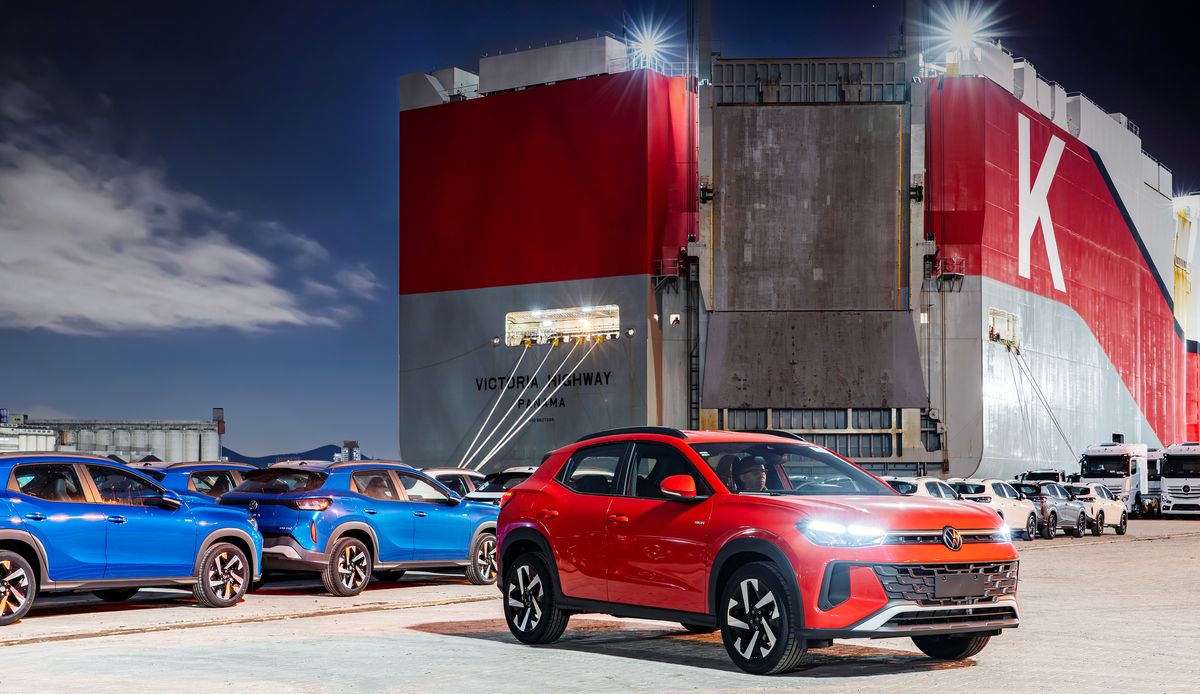
Volkswagen Tera Exports to Latin America – Safety & Record Demand

by Priya Shah – Business Editor August 11, 2025
written by Priya Shah – Business Editor

São Paulo, Brazil – Volkswagen do Brazil has commenced exports of its newly launched Tera model, marking a meaningful expansion for the German automaker in the South American market. The first shipments are headed too a dozen countries across Latin America and the Caribbean.

Initial export destinations include Argentina, Aruba, Chile, Colombia, Costa Rica, Curacao, El Salvador, Guatemala, Honduras, Mexico, Paraguay, and Uruguay. Volkswagen anticipates adding Bolivia, Ecuador, Panama, Peru, the Dominican Republic, and St. Maarten to the export roster in the coming months. The Tera is being produced at Volkswagen’s Anchieta plant in São Bernardo do Campo, brazil.

“The start of tera exports is a pivotal moment for Volkswagen do Brazil, reinforcing our position as the leading automotive exporter in Brazil, with over 4.3 million vehicles shipped globally,” stated Hendrik Muth, Vice President of Volkswagen Sales. “The Tera has already proven incredibly popular domestically and we are confident it will achieve similar success throughout Latin America.”

The Tera’s launch in Brazil was record-breaking, with 12,296 pre-orders placed within the first 50 minutes of its official unveiling on November 29, 2023. This unprecedented demand underscores the model’s appeal to Brazilian consumers. Pricing for the base model Tera starts at 99,990 Brazilian Reais (approximately $20,000 USD as of February 29, 2024).

Safety is a key feature of the Tera, having achieved a five-star safety rating from Latin NCAP. The vehicle is equipped with six airbags,autonomous emergency braking,traction and stability control,and advanced driver-assistance systems (ADAS). Latin NCAP testing, conducted in November 2023, specifically highlighted the tera’s performance in adult and child occupant protection, scoring 87.48% and 88.89% respectively.

August 11, 2025 0 comments
0 FacebookTwitterPinterestEmail
Technology

Tesla, Uber, and Waymo Face Scrutiny Over Robotaxi Traffic Offenses

by Rachel Kim – Technology Editor August 7, 2025
written by Rachel Kim – Technology Editor

Uber Accelerates Robotaxi Expansion, Seeking Funding to Scale autonomous Fleet

SAN FRANCISCO – August 7, 2025 – Uber is aggressively pursuing expansion of its robotaxi services, actively seeking funding from private equity and banks to support a notable rollout of autonomous vehicles.The company plans a multi-faceted approach, combining revenue-sharing agreements with fleet operators, direct vehicle ownership, and licensing of its self-driving technology.This move comes as competition intensifies in the emerging robotaxi market,with Tesla and Waymo also expanding their services.

The rise of Robotaxis: A Long-Term Shift in Transportation

The growth and deployment of robotaxis represent a perhaps transformative shift in the transportation landscape. The core promise is a reduction in operating costs for ride-hailing companies like uber,currently heavily burdened by driver compensation. Successful large-scale deployment could dramatically increase profitability and potentially lower costs for consumers. However, the path to widespread adoption is fraught with challenges, including regulatory hurdles, public acceptance, and ample upfront investment.

Uber’s Strategy for Autonomous Growth

Uber’s current strategy centers on a flexible model designed to minimize risk and maximize scalability. The company intends to fund initial deployments using approximately $7 billion in existing annual cash flow, alongside potential minority stake sales in related companies. This approach allows Uber to avoid significant debt while together attracting strategic investment.

Key elements of Uber’s plan include:

Revenue Sharing: Collaborating with fleet operators, sharing revenue generated by autonomous vehicles.
Vehicle Ownership: Directly owning a portion of the robotaxi fleet.
Technology Licensing: Licensing its self-driving software to other companies.
Strategic Partnerships: Leveraging partnerships with established automakers and technology firms.

Uber is already actively integrating robotaxis into its ride-hailing network in Austin, Texas, and Atlanta, Georgia, utilizing Waymo’s technology. Recent deals further solidify this strategy:

Volkswagen Partnership: A commitment to acquire thousands of autonomous electric vans from Volkswagen over the next decade.
Lucid/Nuro Collaboration: A $300 million agreement to deploy over 20,000 autonomous taxis manufactured by Lucid and equipped with self-driving technology from Nuro over a six-year period.

Competition Heats Up

despite facing regulatory scrutiny and high development costs that have forced some companies to exit the space, key players are pushing forward. Tesla launched a limited robotaxi service in Austin in June and expanded to the Bay Area last month. Waymo currently operates in five U.S.cities, including San Francisco.

Uber reports no noticeable shift in demand in austin or San Francisco following Tesla’s launch, suggesting a current capacity for multiple providers.

Financial Outlook & Industry Potential

Uber CEO believes that demonstrating the revenue-generating potential of robotaxis will unlock significant financing opportunities. Analysts agree, highlighting the potential for substantial cost savings and increased profitability.

Ken Mahoney, CEO of Mahoney Asset Management, notes the optimistic outlook for the robotaxi industry, citing “lofty predictions about the robotaxi industry’s total addressable market.” elon Musk, CEO of Tesla, has even predicted a trillion-dollar market value for robotaxi services.Crucial Details & key Takeaways:

Funding Sources: Uber is exploring private equity, bank loans, internal cash flow ($7 billion annually), and minority stake sales.
Partnerships: Key collaborations with Waymo,Volkswagen,Lucid,and Nuro.
Deployment Locations: Current services in Austin, Texas, and Atlanta, Georgia, with expansion plans underway.
Competition: Facing competition from Waymo and Tesla.
Market Potential: Industry analysts and Elon Musk predict a substantial market value for robotaxi services. Regulatory Landscape: The industry continues to navigate significant regulatory scrutiny.

August 7, 2025 0 comments
0 FacebookTwitterPinterestEmail
World

Trump’s Tariffs Hurt US Auto Industry, Give Foreign Rivals Advantage

by Lucas Fernandez – World Editor August 4, 2025
written by Lucas Fernandez – World Editor

Trump Tariffs Backfire, Boosting Foreign Auto Production in US

Washington D.C. – August 4, 2025 – A new wave of tariffs imposed by the Trump governance on imported vehicles is having the unintended consequence of increasing foreign auto manufacturing within the United States, while together hindering domestic production. This counterintuitive outcome, detailed in a USA Today opinion piece, highlights the complexities and potential pitfalls of protectionist trade policies.

The core issue stems from the administration’s attempts to incentivize domestic car production through tariffs on vehicles imported from countries like Mexico and Canada – key partners in the US automotive supply chain. However, the policy is demonstrably failing to achieve its stated goal. Instead, it’s creating a competitive advantage for manufacturers from nations like Japan, who have proactively adjusted to the changing landscape.

The Irony of Increased Foreign Investment

The situation is notably ironic given recent announcements. Japanese automakers, including Toyota, are actively expanding their existing manufacturing operations within the US. This expansion isn’t a response to the tariffs, but rather a calculated move to avoid them by producing vehicles directly within American borders.The economics have shifted; continuing production in Japan is now more financially viable than exporting to the US under the new tariff structure.

This highlights a fundamental flaw in the tariff strategy: it doesn’t level the playing field, but rather reshapes it, often to the detriment of American companies. The tariffs are effectively providing a subsidy to foreign manufacturers willing to invest in US-based production, while simultaneously increasing costs for domestic producers reliant on international supply chains.Why the Tariffs Aren’t Working as intended

The article points to several key factors contributing to this dysfunction:

Uneven Negotiation Timelines: The Trump administration reached a deal with Japan before finalizing agreements with Mexico and Canada. This gave Japanese manufacturers a head start in adapting to the new tariff surroundings.
Lack of Phased Implementation: The sudden and unpredictable nature of the tariffs, often implemented with little warning, leaves manufacturers with insufficient time to adjust their production processes and supply chains. Companies cannot realistically overhaul manufacturing practices overnight. Policy Volatility: The constantly shifting nature of the administration’s tariff policies creates an environment of uncertainty, making long-term investment and strategic planning impossible for affected industries. This instability discourages proactive adaptation.

Beyond the Headlines: Additional Context & Crucial Details

The article doesn’t delve into the specific tariff rates currently in effect,which vary depending on the vehicle’s origin and engine type.Currently, tariffs range from 2.5% to 25% on imported cars and light trucks.( This data is based on publicly available data as of August 4, 2025, and is subject to change.*)

Furthermore, the impact extends beyond the major automakers. The tariffs are also affecting the vast network of suppliers that provide components for vehicle production, possibly leading to job losses and economic disruption throughout the automotive industry. The US auto parts industry, a importent employer, is particularly vulnerable.

The situation also underscores the interconnectedness of the global automotive market. Modern vehicles are frequently enough assembled using parts sourced from multiple countries, making it difficult to isolate the “country of origin” for tariff purposes. This complexity further complicates the implementation and effectiveness of the tariffs.

The Long-Term Implications

The long-term consequences of this policy are potentially significant. Continued reliance on tariffs could erode the competitiveness of the US automotive industry, discourage foreign investment, and ultimately harm American consumers through higher vehicle prices. The article concludes that the administration’s approach is a “headache for everyone involved,” with domestic producers bearing the brunt of the negative effects.This situation serves as a cautionary tale about the unintended consequences of protectionist trade policies and the importance of careful consideration and strategic planning when implementing such measures.

August 4, 2025 0 comments
0 FacebookTwitterPinterestEmail
Newer Posts
Older Posts

Search:

Recent Posts

  • Robots Unload Trucks: AI-Powered Automation for Warehouses

    December 5, 2025
  • US Senate Democrats renew bid to extend Obamacare subsidies

    December 5, 2025
  • Kim Cattrall Marries Russell Thomas: Wedding Details & Romance Story

    December 5, 2025
  • Candidate Lineup and Rankings Preview

    December 5, 2025
  • Title: Cardinal: Bitcoin Bridge Preserving Ownership

    December 5, 2025

Follow Me

Follow Me
  • Live News Feeds
  • Short Important News
  • Most Important News
  • Headlinez
  • Most Recommended Web Hosting
  • About Us
  • Accessibility statement
  • California Privacy Notice (CCPA/CPRA)
  • Contact
  • Cookie Policy
  • Copyright Notice
  • Disclaimer
  • DMCA Policy
  • EDITORIAL TEAM
  • Links
  • Privacy Policy
  • Terms & Conditions

@2025 - All Right Reserved.

Hosted by Byohosting – Most Recommended Web Hosting – for complains, abuse, advertising contact: contact@world-today-news.com


Back To Top
World Today News
  • Business
  • Entertainment
  • Health
  • News
  • Sport
  • Technology
  • World
World Today News
  • Business
  • Entertainment
  • Health
  • News
  • Sport
  • Technology
  • World
@2025 - All Right Reserved.

Hosted by Byohosting – Most Recommended Web Hosting – for complains, abuse, advertising contact: contact@world-today-news.com