
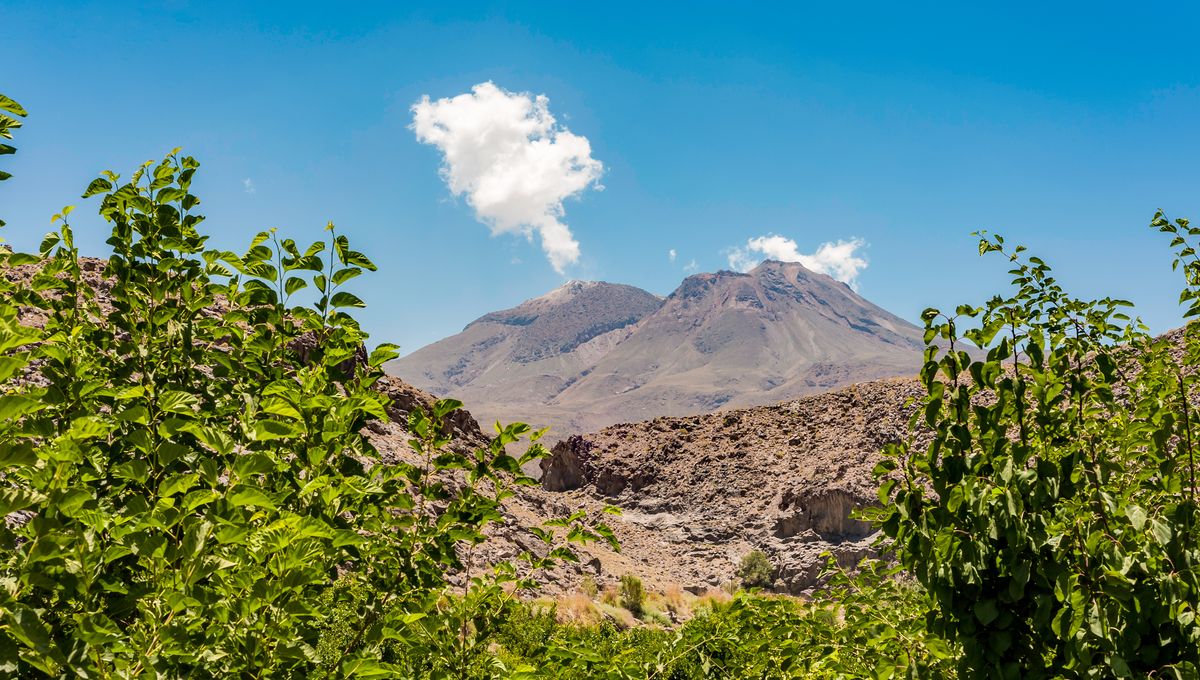
Iran‘s Taftan Volcano Shows Signs of Unrest After Centuries of Dormancy
Southeastern Iran – A remote stratovolcano, Taftan, is exhibiting its first clear indications of activity in recorded history.New satellite data reveals the 3,940-meter (12,927-foot) peak swelled approximately 9 centimeters (3.5 inches) between July 2023 and May 2024,prompting increased concern from volcanologists.
Taftan is the only active volcano within the Makran continental volcanic arc, a chain formed by the Arabian Plate subducting beneath the Eurasian Plate. While previously considered largely dormant, with reported smoke emissions in 1902 and unverified claims of a small lava flow in 1993, scientists estimate its last major eruption occurred around 700,000 years ago-long before the emergence of Homo sapiens.
The current swelling is described by researchers as ”spontaneous” and “triggerless,” as it doesn’t appear linked to typical volcanic catalysts like earthquakes or significant rainfall.The study suggests the inflation might potentially be caused by magma being pushed upward by a pocket of hot water and steam approximately 460-630 meters (1,509-2,067 feet) beneath the surface.
“We postulate that changes in gas permeability within the shallow part of the volcanic edifice and/or undetected deep magmatic intrusions could have led to the observed pressure buildup in a volume of the hydrothermal system,” the study authors write.
While an immediate explosive eruption isn’t predicted, the findings indicate Taftan is more active than previously believed. researchers emphasize the need for enhanced monitoring, updated geological hazard maps, and increased preparedness.
“Our findings reveal that Taftan is more active than previously recognized,” the study authors conclude. ”This highlights the urgent need for a revision of the current volcano risk of the Makran subduction volcanic arc…aiming to reduce volcanic risks.”
The study was published in the journal Geophysical Research Letters.
