Swiss Students Test Sheep Wool on Alpine Glacier to Slow Ice Loss, says La Nación
Four university students in Switzerland deployed 200 square meters of sheep’s wool onto an Alpine glacier to test whether natural materials could slow seasonal ice loss, reducing the melt rate by more than 50% over a three-month trial, La Nación reported.
The Keep It Wool Field Experiment on Glacier 3000
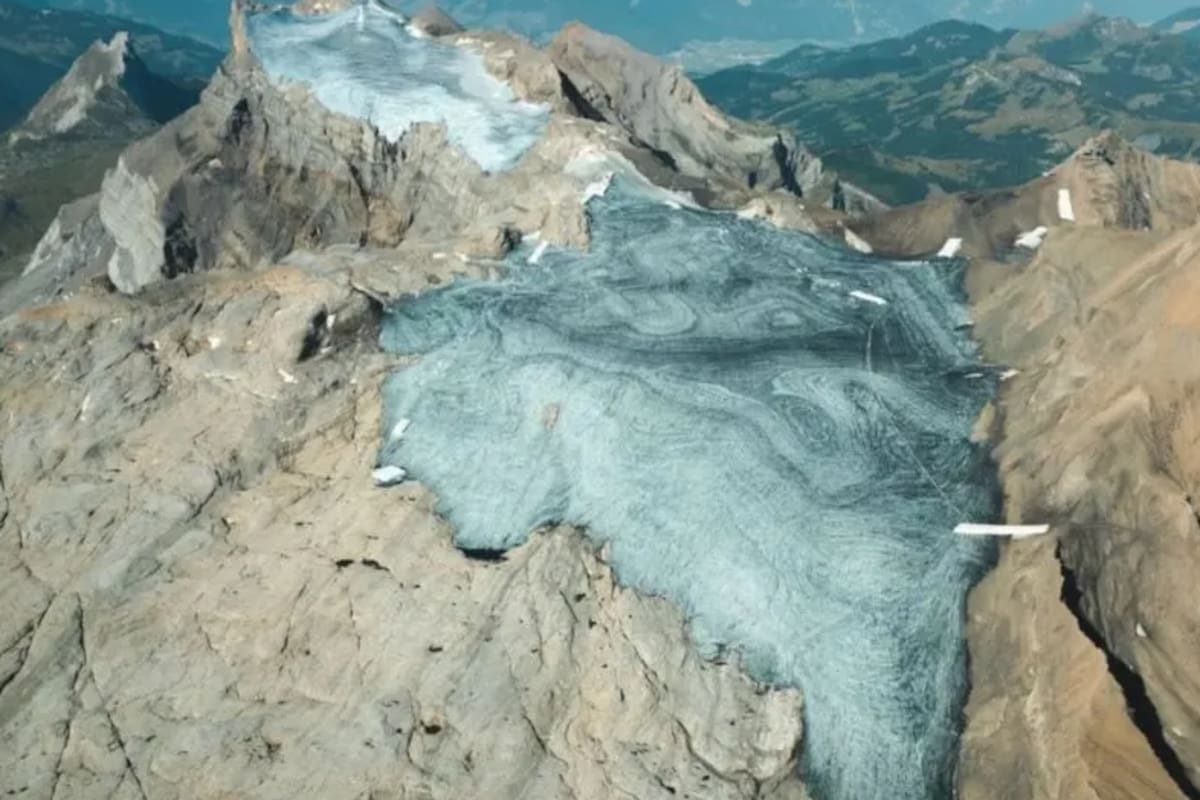
The project, titled "Keep It Wool," ran from June to September 2026 on the Tsanfleuron glacier at Glacier 3000 near Les Diablerets in the canton of Vaud. On June 22, the team installed two wool prototypes measuring 10 by 10 meters each, built with different thicknesses. Right beside them, they laid down a synthetic geotextil cover of identical dimensions to serve as a baseline comparison. To anchor the wool against high-altitude Alpine winds, the students used recycled malt sacks filled with gravel, as detailed by Gizmodo en Español.
Researchers tracked changes in the ice pack by taking measurements every two weeks using stakes driven into the center of the protected zones. According to data cited by Canal26, the two wool prototypes showed a protection capacity comparable to conventional synthetic geotextiles after three months of observation. “Now tenemos un resultado que podemos ver e incluso tocar. Funcionó increíblemente bien,” Elliot Gaffiot told Reuters, as reported by El Debate. Despite the promising numbers, the team noted that the findings remain preliminary and require deeper analysis before final conclusions can be drawn.

Plastic Shedding Concerns Behind the Wool Alternative
The motivation for using sheep’s wool instead of traditional polymers stemmed from an art and science exhibition presented in Vevey in 2025 by UNIL art history professor Nathalie Dietschy, titled “Glaciers Under Cover,” according to TN. That exhibition criticized the widespread deployment of polyester and polypropylene sheets because weathering and rainfall can cause synthetic materials to shed microplásticos into mountain ice, snow, and meltwater. By contrast, the project utilized local, renewable, and biodegradable Swiss wool.
This localized approach operates alongside an existing summer practice in Les Diablerets known as snow farming, which involves storing accumulated snow during warm months to reuse it when winter returns. Yet, the scale of protection remains constrained. As El Debate noted, current geotextile blankets protect merely 0.02% of Switzerland’s total glacier surface, saving about 300,000 cubic meters of snow annually. That local retention stands against a much broader crisis: Swiss glaciers have shed nearly 40% of their total mass over recent decades, with approximately 1,000 small ice formations vanishing completely, according to data from La Nación and TN.
Limitations Against Rapid Climate Change
The participating students readily acknowledge that wool blankets cannot halt the fundamental retreat of glaciers driven by global temperature increases. Reducing greenhouse gas emissions remains the primary mechanism for curbing long-term ice loss across the Alps, where more than 9.6 billion tons of glacial ice have melted worldwide since 1961, per satellite observations cited by El Debate. Rather than offering a systemic cure for climate warming, the natural wool covers present a targeted tool for specific ski stations, research areas, or sensitive micro-zones where ice must be artificially preserved through the summer heat.
Further research must still evaluate how many seasons the wool blankets can endure, whether they can be reused, and how their material costs compare to mass-produced synthetic alternatives.
