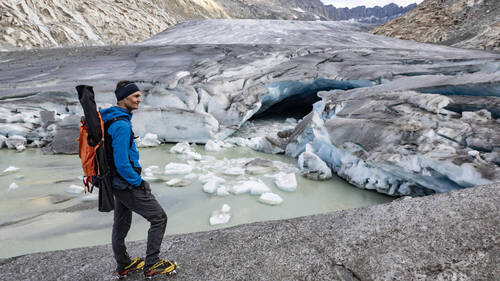
Swiss Glaciers Lost 5% of Volume in Catastrophic Year
According to an alert issued by the Swiss Academy of Sciences (SCNAT), Swiss glaciers lost 5% of their volume compared to 2025, due to a winter lacking in snow and persistent heatwaves from May until the end of summer.
Catastrophic Ice Loss Recorded Across Swiss Ranges
The latest findings released by the SCNAT categorize the period as a catastrophic year for the country’s glacial systems. Data collected in September by the Swiss Glacier Monitoring Network (GLAMOS) and the Swiss Commission for the Observation of the Cryosphere reveal that the average ice thickness on multiple glaciers shrank by 2.5 to 4 meters. On the glacier tongues, the ice loss reached extremes of up to ten meters.
This rapid depletion continues a severe multi-year downward trend. Over the preceding five-year window alone, Switzerland has shed nearly 20% of its total remaining ice volume. The compounding effect of low winter accumulation and intense summer thermal events leaves alpine formations increasingly vulnerable to irreversible degradation.
Long-Term Impacts on Regional Water Resources
The persistent shrinkage of alpine ice masses presents profound challenges for future water resource management across the region. As natural storage reservoirs dwindle year after year, downstream river basins face mounting risks during extended periods of seasonal drought. Water authorities and regional planners must adapt management frameworks to cope with diminished glacial meltwater feeding major river systems during dry summer months.
Addressing these complex environmental and infrastructural shifts requires close coordination with hydrologists, environmental engineers, and regional water management authorities to secure sustainable solutions for alpine communities and agricultural sectors alike.