
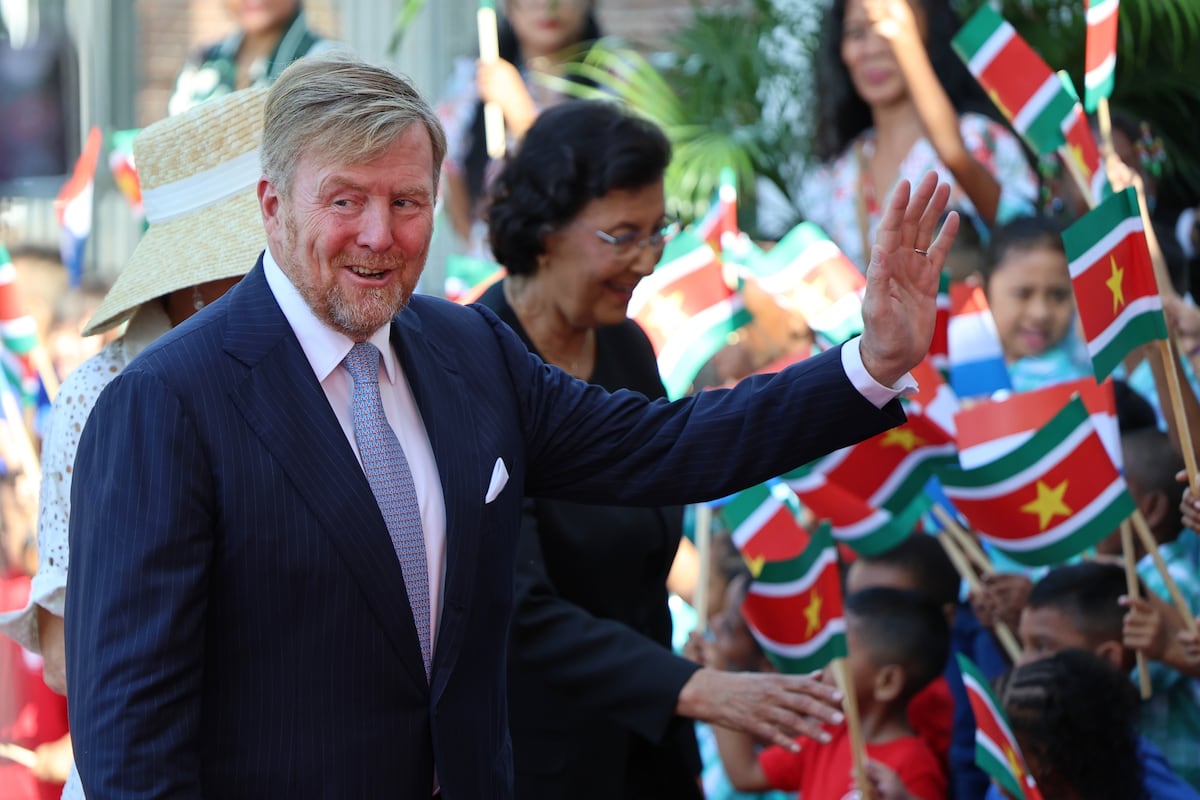
Dutch King willem-Alexander Apologizes for SlaveryS Legacy During Historic Suriname Visit
PARAMARIBO, SURINAME – King Willem-Alexander of the Netherlands has issued a formal apology for the Netherlands’ role in the enslavement of people in its former colonies, during a landmark state visit to Suriname. The apology,delivered in Amsterdam in July 2023,was further underscored during the first day of his visit to Suriname - the first by a Dutch monarch in 47 years – where he met with descendants of enslaved people.
The visit, which began Monday and is scheduled to conclude Wednesday, marks a significant moment in acknowledging a painful chapter of shared history. “We are all descended from those who were involved,” King Willem-Alexander stated during the meeting, as reported by Dutch public television NOS. “I am aware that the pain lasts for generations.” He also expressed a desire to “learn more about what exactly it means to live as a descendant of slaves,” focusing on the experiences of Afro-Surinamese, indigenous, and maroon communities – the latter being descendants of escaped slaves who established autonomous settlements in the jungle.
The last reigning Dutch monarch to visit Suriname was Queen Juliana in 1978, three years after the nation gained independence in 1975.
The visit coincides with Suriname’s expressed desire to begin discussions regarding a €66 million program allocated by the Netherlands intended to address the lasting impacts of slavery. surinamese President Jennifer Simons clarified that while the funds are “not a reparation, but a gesture,” they represent a step towards acknowledging the past.
Historically, the Netherlands forcibly transported approximately 600,000 people from africa to North America, Suriname, Brazil, and the Caribbean, facilitated by the West India Company. Those enslaved endured brutal conditions working on plantations cultivating coffee, sugar, cocoa, and cotton. While slavery was officially abolished in 1863, enslaved people in Suriname were compelled to continue working on the same lands for an additional decade at minimal wages, allowing former owners to recoup perceived losses. The East India Company, a counterpart to the West India Company, transported between 660,000 and 1.1 million people to present-day Indonesia and South Africa.
The historical ties between the two nations remain strong, with over 250,000 Surinamese emigrating to the Netherlands in the last 50 years. Currently, approximately 180,000 people born in Suriname reside in the Netherlands, benefiting from relatively easy access to Dutch nationality in the years promptly following Suriname’s independence. However, emigration became more challenging after a military coup led, in part, by Desi Bouterse, who served as president from 2010 to 2020.
