Supreme Court to Review Diversity Policies Limiting Asian Students
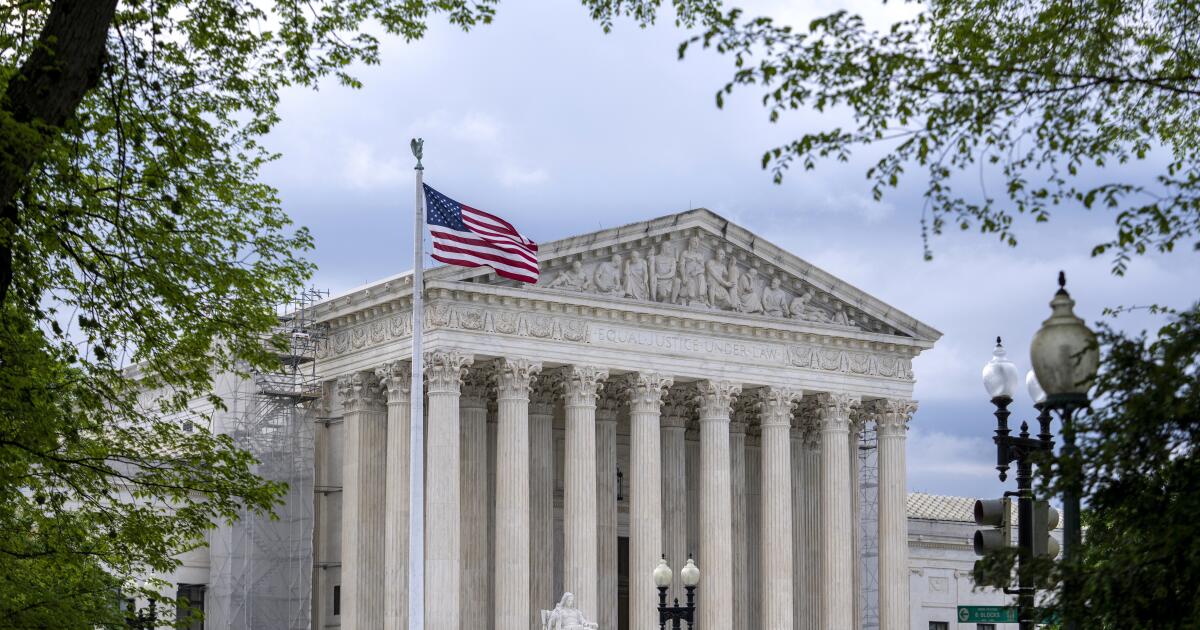
The U.S. Supreme Court agreed on Monday to consider outlawing school diversity policies that limit Asian American students at magnet programs and selective high schools, setting up a major test of admissions equity three years after the tribunal ruled that Harvard and other universities may not discriminate on whom they admit based on the race of their applicants.
The Montgomery County Magnet School Dispute
The case reaches the high court through an appeal from parents in Montgomery County, Maryland, who challenged a sharp drop in Asian students at the district’s four magnet programs for gifted students. For a decade, the county school board observed that fewer than 15 percent of students in those magnet programs were Black or Latino, even though those groups made up about half of the overall county student population. Meanwhile, Asian students comprised less than 15 percent of the county total but made up about half of the magnet enrollment.
Following years of debate, school officials dropped the use of a countywide competitive test. Instead, they selected top-performing students from all middle schools using a lottery system. That operational shift prompted a lawsuit from the Association for Education Fairness, which argued the new system stripped Asian students of a level playing field.
The U.S. 4th Circuit Court of Appeals ruled against the parents by a 2-1 vote. Judges reasoned that Asian American students still secured seats above their share of the overall school population. The parents then urged the Supreme Court to intervene, arguing that school districts across the country have systematically overhauled admissions criteria to achieve specific racial enrollment patterns.
Broader Legal Battlegrounds in Virginia and Boston
The Montgomery County dispute mirrors similar legal challenges playing out across the nation. Justices have remained deeply divided over admissions rules implemented at highly selective public institutions, including Boston, New York, and Fairfax County, Virginia. In northern Virginia, officials adopted a race-neutral admissions policy for the Thomas Jefferson High School for Science & Technology. While a federal judge initially ruled that the policy deprived Asian parents of a fair competition, the 4th Circuit ultimately upheld the approach.
Legal defenders of these socioeconomic policies argue that utilizing race-neutral metrics honors established constitutional boundaries. Richard D. Kahlenberg, director of the American Identity Project at the Progressive Policy Institute, stated that the Maryland school board followed the correct precedent by offering admissions breaks based on the economic disadvantage of the elementary schools students attended, rather than their racial background. Kahlenberg questioned whether the court intends to stand by established precedent or shift the goalposts.

Conversely, the court’s conservative wing, led by Justices Clarence Thomas and Samuel A. Alito, has condemned race-neutral proxy policies as thinly disguised racial discrimination.
Local Impact on Los Angeles Unified
The pending Supreme Court decision carries significant implications for large municipal school districts with extensive magnet systems. Los Angeles Unified, the nation’s second-largest school system, operates 66 whole-school magnets and 268 magnet centers. Many of these programs lack a discernible integration benefit and function primarily as enrollment inducements because few white students apply.
🚨 SUPREME COURT TAKES UP MARYLAND SCHOOL ADMISSIONS DISCRIMINATION CASE AND FEDERAL HOME DISTILLING BANThe U.S. Supreme Court agreed Monday to hear two cases involving constitutional limits on government authority, including a challenge to Montgomery County Public Schools’…
For oversubscribed magnet campuses, Los Angeles Unified relies on a Magnet Priority Point System and the requirement to maintain a racially balanced enrollment. Families must indicate a federally recognized race or ethnicity on applications, earning points for factors such as prior unsuccessful applications. Among the district’s 53 schools designated for gifted students and four programs for highly gifted students, demographic participation varies widely. Available data for the highly gifted program at North Hollywood High indicated that approximately 38 percent of enrolled students were Asian, compared to an overall district enrollment that is roughly 3.5 percent Asian.
Oral Arguments Scheduled for Next Year
The justices plan to hear oral arguments in the case early next year. Families and educational administrators following these complex selection criteria are closely monitoring the upcoming proceedings to determine how future admissions standards will operate.
3/ The Association for Education Fairness, a group of mostly Asian American parents, argues that Montgomery County Public Schools’ admissions system disadvantages Asian American students and violates the Constitution’s guarantee of equal protection.
More on Supreme Court
🚨 SUPREME COURT TO REVIEW MONTGOMERY COUNTY SCHOOL ADMISSIONS POLICY AFTER ASIAN AMERICAN PARENTS ALLEGE RACIAL DISCRIMINATIONThe U.S. Supreme Court agreed Monday to hear a constitutional challenge to Montgomery County Public Schools’ competitive magnet admissions system,…
Supreme Court agrees to hear a challenge to Maryland's selective public school admissions policy, which parents allege discriminates against Asian American students. pic.twitter.com/YU8B6CA9Z3