Supreme Court sides with Republicans on lower broadcast ad rates
The Supreme Court sided with Republicans on Wednesday to give political parties and their fundraising committees lower rates for broadcast campaign ads, granting a fast-track appeal from the Trump administration and the National Republican Congressional Committee over two dissents.
In a brief order, the justices decided the dispute belongs at the Federal Communications Commission. The ruling gives Republican candidates a distinct advertising advantage in the final weeks of the campaign. Federal law dictates that any legally qualified candidate running for election receives a lower unit charge for campaign ads during the 60 days prior to an election.
The Federal Communications Commission Rule Change
The conflict began on March 30, 2026, when the Republican-controlled FCC announced that broadcasters must extend those reduced rates to political parties and their joint fundraising committees. The notice provided no basis for the shift and refused to hold a commission hearing. The alteration favored Republicans, whose party committees draw substantial funding from wealthy donors. In contrast, Democratic candidates typically raise more money through direct, limited contributions from individual donors.
The nonpartisan Campaign Legal Center asserted that the FCC rule change ran contrary to the text and purpose of the federal statute. The center argued the shift effectively grants super PACs an advertising discount. Anna Gomez, the lone Democrat on the commission, objected publicly. She protested that sweeping rule modifications for an election year ought not to be suddenly imposed upon the American public right before the vote without providing even one chance for public commentary.
Democratic Candidates Challenge FCC Rule Change in Court
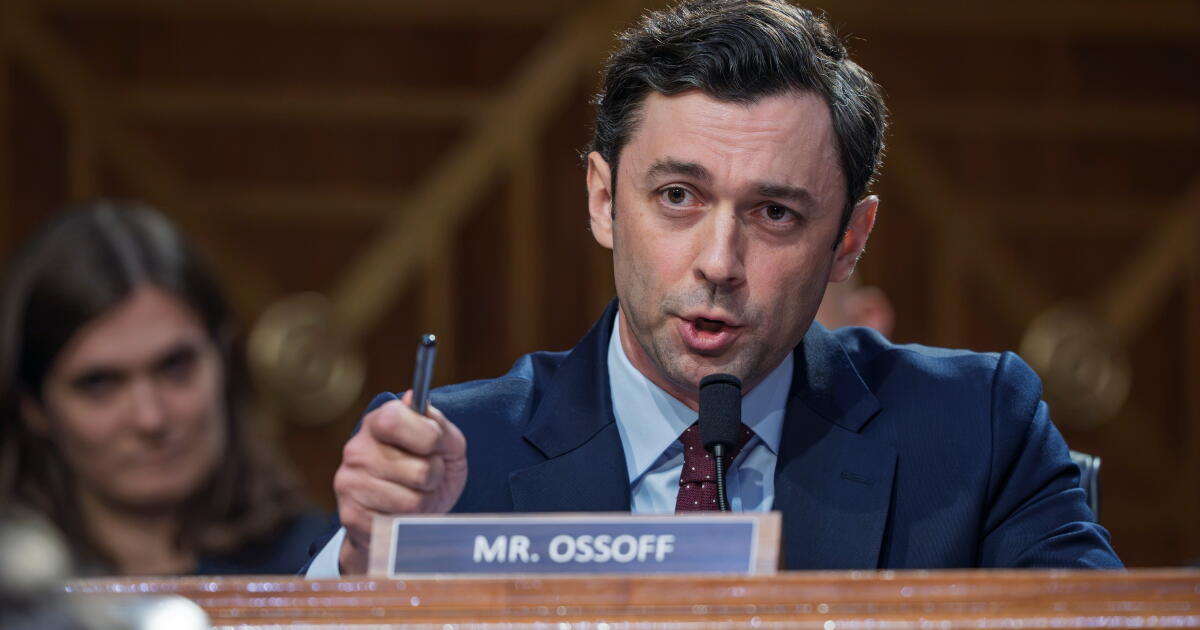
Democratic Senate candidates Sherrod Brown of Ohio, Jon Ossoff of Georgia, and Roy Cooper of North Carolina challenged the rule change in April after the commission took no action on their requests for review. They argued the FCC lacked authority to alter a law that granted lower ad rates exclusively to candidates rather than fundraising committees. The ensuing litigation bounced back and forth between the parties, with each accusing the other of seeking a late procedural shift.

The U.S. 4th Circuit Court of Appeals in Virginia ultimately ruled for the Democrats in a pair of 2-1 decisions. Judge Robert B. King, a Clinton appointee, wrote on October 7, 2026, that any chaos was entirely the fault of the FCC rather than the court. He noted that the commission endeavored to create a new rule from whole cloth outside the purview of judicial review.
Supreme Court Overturns 4th Circuit Rulings
The Supreme Court intervened twice to overturn the 4th Circuit. An unsigned September 4 order stated that the appellate court had intervened prematurely. According to statutory regulations, an aggrieved party must wait for an official commission order resolving their application for review before submitting a petition for judicial review. Justice Ketanji Brown Jackson issued the sole dissent at that time.
NYT: US Supreme Court Again Sides With Republicans in Political TV Ad FightThe Supreme Court on Wednesday sided with the Trump administration in a monthslong fight over who is entitled to low rates for political ads.The emergency order, which was unsigned and did not give a… pic.twitter.com/SjhjmSI0rI
Following the September order, the FCC took no action other than requesting public comments on the March rule change. Frustrated by the delay, the 4th Circuit issued a second order demanding that the commission act by October 9, 2026. Solicitor General D. John Sauer appealed that deadline, prompting Chief Justice John G. Roberts to put the 4th Circuit order on hold.
In Wednesday’s final Supreme Court order, the full court determined the 4th Circuit should have left the matter entirely to the FCC. In an unsigned opinion, the justices explained that the constitutional framework of separated powers forbids the judiciary from interfering in the internal operations of a fellow branch of government in that fashion. Justices Ketanji Brown Jackson and Sonia Sotomayor dissented, voting to deny the administration’s appeal.
