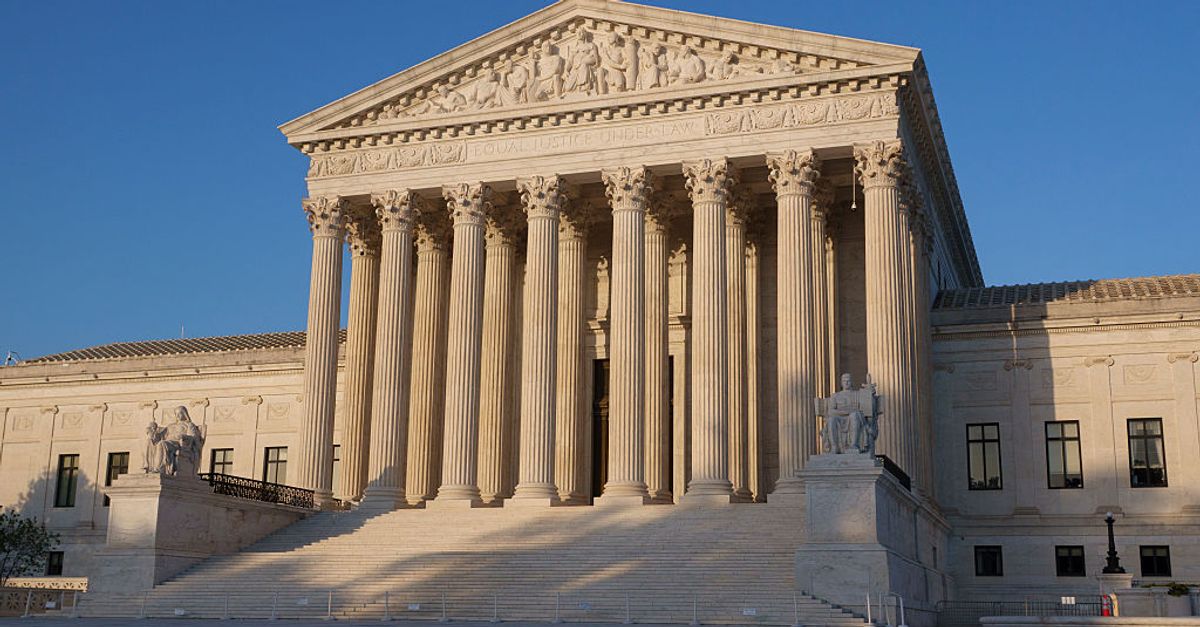
Supreme Court to Decide if Bankruptcy Courts Can Override the Federal Arbitration Act in Goldman Sachs Case
The Supreme Court has agreed to decide whether bankruptcy courts can override the Federal Arbitration Act, taking up an appeal from Goldman Sachs Bank over debt collection claims filed by two consumers.
Supreme Court Accepts Goldman Sachs Case
On Friday afternoon, the Supreme Court added the dispute to its oral argument docket for the 2026-27 term, according to SCOTUSblog. The justices granted a petition for review filed by Goldman Sachs Bank in the case Goldman Sachs Bank v. Brown.
The underlying dispute began three years ago when debtors Rhea Brown and Gregory Maze filed for bankruptcy. Both listed credit card debts with Goldman Sachs Bank on their filings, and both allege that the bank continued debt collection attempts by email and telephone despite receiving multiple notices of the bankruptcy.
Automatic Stay Violations and Arbitration
The Bankruptcy Code imposes an automatic stay that halts all efforts to collect prebankruptcy debts. Because the bank allegedly continued seeking payment, the debtors filed a separate adversary proceeding within their bankruptcy case, arguing that Goldman Sachs willfully violated the automatic stay provision under section 362(k) of the Bankruptcy Code, according to reporting by SCOTUSblog and analysis from Credit Slips.
As noted in Credit Slips, researchers document the high incidence of bankruptcy debtors facing debt collection activity and how stopping such collection is a motivating factor for many bankruptcy filers. In Reframing Arbitration & Bankruptcy, the author said that most every analysis of arbitration in bankruptcy is wrong.

Pointing to an arbitration clause in the credit card agreements, Goldman Sachs asked the bankruptcy court to put the lawsuit on hold and force the dispute into arbitration.
The bankruptcy court denied that request, and both the federal district court and the U.S. Court of Appeals for the 4th Circuit upheld the denial. A divided three-judge panel of the 4th Circuit ruled that requiring arbitration would interfere with the policies of the Bankruptcy Code.
Stakes in Consumer Credit Agreements
Goldman Sachs urged the Supreme Court to take the case by arguing that the 4th Circuit’s ruling conflicted with a decision from the 2nd Circuit. The bank told the justices that the practical stakes are enormous because arbitration clauses are ubiquitous in consumer credit agreements, threatening their enforceability. The bank further argued that the 4th Circuit’s ruling imperils the enforceability of arbitration agreements.
“imperils the enforceability of arbitration agreements in many of them.”
Under the law, the Federal Arbitration Act and the Bankruptcy Code are statutes of equal dignity that courts must apply together unless they inherently conflict, Credit Slips reported. While bankruptcy courts hold exclusive in rem jurisdiction over the estate and retain inherent power to police their own orders, a section 362(k) damages action functions as an arising-in matter where bankruptcy tribunals have original but not exclusive jurisdiction under 28 USC § 1334(b).
The case is expected to be argued next year, with a decision following by late June or early July, SCOTUSblog reported. More orders from the justices’ private conference are expected at 9:30 a.m. EST on Monday.