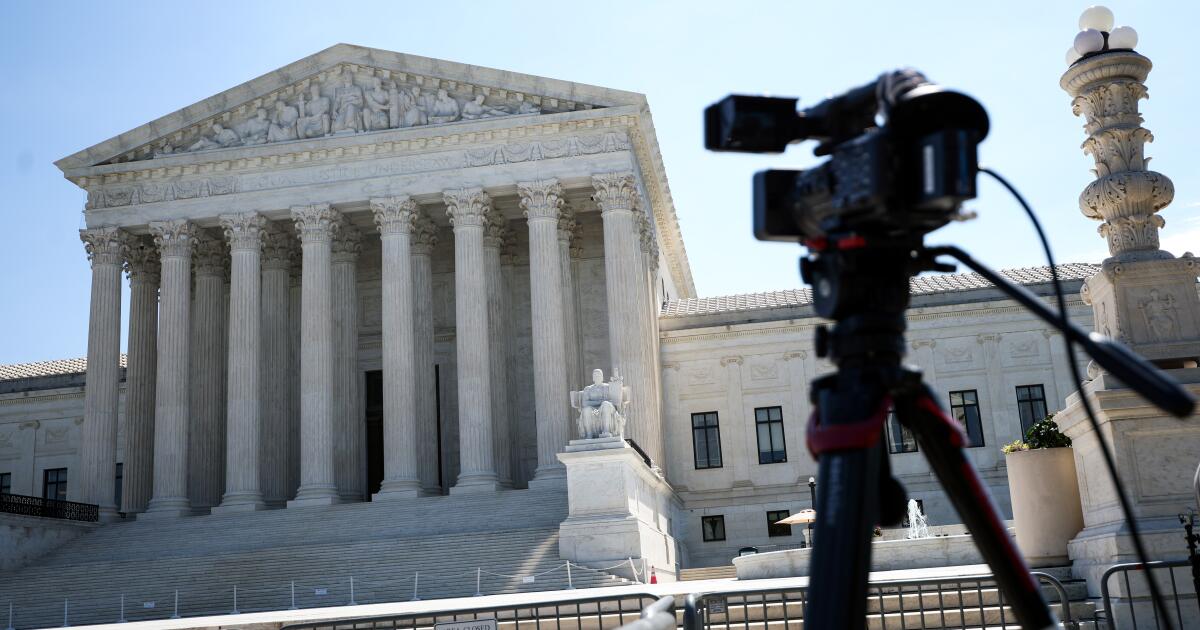
Supreme Court Faces Landmark Rulings on Gun Rights, Transgender Athletes, and Presidential Power
The US Supreme Court prepares to rule in June 2026 on pivotal cases regarding birthright citizenship, gun rights, transgender athletes, and executive agency power. These decisions will ripple beyond the courtroom, reshaping media regulations, athlete brand equity, and the legal frameworks governing the global entertainment workforce and creative intellectual property.
While the legal community treats these cases as matters of constitutional purity, the entertainment industry views them as volatility triggers. In the high-stakes world of media, a shift in the legal landscape isn’t just a policy change; it is a financial event. As we enter the heat of the summer movie season, where studios are gambling billions on franchise stability, the looming SCOTUS decisions introduce a level of systemic risk that no amount of hedging can fully mitigate. We are looking at a potential restructuring of how media conglomerates are regulated and how the “face” of modern sports is marketed to a global audience.
The Regulatory Guillotine: Executive Power and the FCC
The most immediate threat to the media establishment lies in the court’s deliberation over the President’s power over independent agencies. For the entertainment sector, this is a direct line to the Federal Communications Commission (FCC). If the “independence” of these agencies is stripped, the FCC effectively becomes an arm of the executive branch, turning spectrum allocations and merger approvals into political currency. We have already seen the volatility in Variety’s analysis of media consolidation, but a centralized executive grip could accelerate predatory acquisitions of mid-tier networks.


When the rules of syndication and broadcast ownership become subject to the whims of a single administration, the stability of backend gross for creators evaporates. A sudden shift in regulatory capture could freeze the merger of streaming giants or dismantle the net neutrality frameworks that allow SVOD platforms to compete on a level playing field. For the C-suite executives at Disney or Netflix, this isn’t about ideology; it’s about the predictability of their five-year growth projections.
“The industry is terrified not of a specific ruling, but of the disappearance of the ‘buffer.’ When the regulatory body becomes a political tool, the legal certainty required for billion-dollar IP acquisitions vanishes overnight,” says Marcus Thorne, a senior partner at a leading media law firm.
Navigating this level of regulatory instability requires more than a standard legal team. The smartest studios are already pivoting, employing elite IP and regulatory lawyers to restructure their holdings before the June rulings create a bottleneck of uncertainty.
Brand Equity in the Crossfire: The Athlete Identity Crisis
The case regarding transgender athletes is less about the locker room and more about the balance sheet. In the current attention economy, athletes are no longer just players; they are vertically integrated brands. According to recent Hollywood Reporter insights into sports media, the intersection of identity and eligibility is where the most aggressive brand equity is currently being built—and broken.
A ruling that restricts transgender athletes from competing in specific categories doesn’t just change a game; it triggers a cascade of “morality clause” activations in sponsorship contracts. We are talking about multi-million dollar endorsements with apparel giants and luxury watchmakers. The PR fallout of a court-mandated exclusion can alienate a Gen Z demographic that views inclusivity as a non-negotiable brand pillar, leading to a sharp drop in social media sentiment and, SVOD viewership for sports-centric documentaries and series.
When a global icon becomes the center of a constitutional firestorm, a standard press release is a death sentence. The immediate move for talent agencies is to deploy crisis communication firms and reputation managers to pivot the narrative from “legal eligibility” to “human resilience” before the sponsors panic and pull the plug on the backend payouts.
The Global Talent Pipeline and the Citizenship Pivot
The debate over birthright citizenship may seem distant from a film set in Atlanta or a recording studio in Nashville, but Hollywood is a global village built on the movement of people. The industry relies on a precarious ecosystem of O-1 visas and green cards to bring in the world’s top directors, cinematographers, and stars. Any judicial narrowing of citizenship or residency rights creates a logistical nightmare for production schedules.
Per the filed court dockets, the arguments surrounding citizenship are shifting toward a more restrictive interpretation of the 14th Amendment. For a production house, a sudden change in the legal status of a lead actor or a key showrunner can freeze a project in pre-production, leading to catastrophic insurance claims and budget overruns. The “talent pipeline” is the lifeblood of the creative zeitgeist; if that pipeline is constricted by legal volatility, the creative output of the industry suffers.
This is why the most successful production companies are no longer treating immigration as a clerical task. They are partnering with specialized immigration law firms that understand the nuances of the entertainment industry, ensuring that their “creative capital” is legally insulated from the shifting sands of SCOTUS rulings.
The Logistics of Violence: Gun Rights and Production Insurance
Finally, the court’s decision on gun rights intersects with the physical reality of filmmaking. While the legal battle focuses on the Second Amendment, the industry focuses on liability. The cost of production insurance for action sequences has skyrocketed over the last three years, driven by a combination of high-profile on-set accidents and a tightening legal environment regarding firearm accessibility.

If the court expands gun rights further, the liability landscape for studios becomes even more complex. The tension between “creative realism” and “corporate safety” is at an all-time high. We are seeing a shift toward total digital replacement of firearms in post-production—not for artistic reasons, but to lower the insurance premiums that eat into the production budget. The business of “the bang” is becoming a business of risk management.
As June approaches, the entertainment world is holding its breath. These rulings will define who gets to play, who gets to be paid, and who gets to stay in the room. The intersection of law and culture is where the most ruthless business decisions are made, and those who fail to anticipate the shift will find themselves on the wrong side of the legacy. Whether you are a studio head protecting a franchise or a talent agent shielding a client, the only defense against judicial volatility is professional expertise. For those looking to navigate these turbulent waters, the World Today News Directory remains the gold standard for connecting with the vetted legal, PR, and logistical professionals capable of turning a legal crisis into a strategic advantage.
Disclaimer: The views and cultural analyses presented in this article are for informational and entertainment purposes only. Information regarding legal disputes or financial data is based on available public records.
Related reading