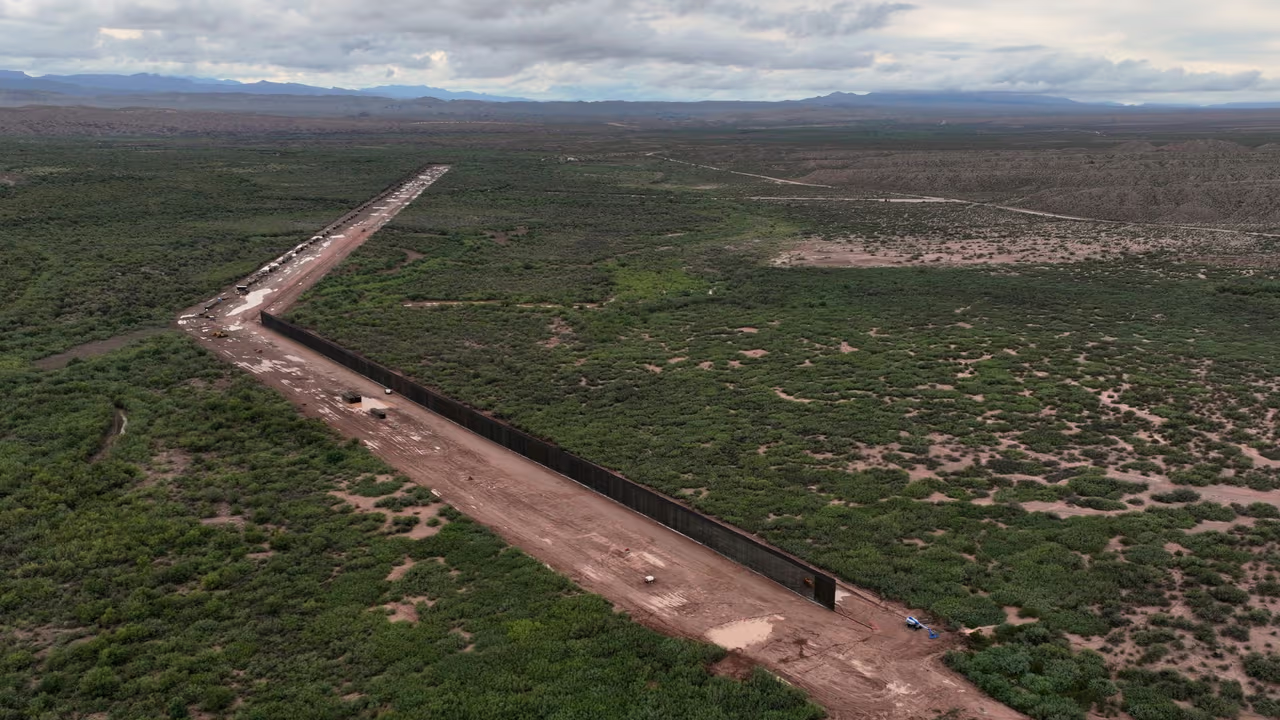
Supreme Court Allows Trump to Resume Big Bend Border Wall Construction
The U.S. Supreme Court on Monday authorized the administration of President Donald Trump to immediately resume border wall construction in the Big Bend region of West Texas.
The high court's unsigned ruling sets aside a preliminary injunction issued by U.S. District Judge Kathleen Cardone.
The Supreme Court justified its order by stating that the lower court’s suspension delayed construction and prevented the government from advancing its compelling interests in border security and integrity. Solicitor General D. John Sauer warned that stopping the project left one-quarter of the southern border vulnerable to cartel incursions, drug trafficking, and illegal crossings, while also warning of operational damage and irreversible costs.
Jackson was the sole member of the high court to voice disagreement with the order.
The project, valued at $1.7 billion, involves building nine-meter-tall bollard walls, patrol roads, lighting systems, and detection technology across public lands in Big Bend National Park and Big Bend Ranch State Park. The initiative touches approximately 320 kilometers of the Rio Grande corridor and the scenic Santa Elena Canyon.
Plaintiffs in the challenge include a nonprofit environmental organization, a river excursion guide, and a religious group. They argued that heavy machinery will permanently alter a unique natural environment. The Center for Biological Diversity and other groups sued the federal government over its decision to waive dozens of environmental laws to accelerate the project.
That statute empowers the agency secretary—a post held successively by Kristi Noem and Markwayne Mullin—to exempt the executive branch from legal requirements to ensure expedited construction.

Excavators arrived in the area in August, drawing pushback from Texas lawmakers across the political spectrum, local ranchers, and law enforcement agencies. Following those local objections, Rodney Scott, commissioner of Customs and Border Protection, announced a temporary pause in the work.
The Supreme Court’s intervention means that barrier construction in the border region can proceed simultaneously with ongoing legal challenges in federal courts. The court concluded that the government’s interest in border integrity outweighs any aesthetic, recreational, and environmental harm claimed by the plaintiffs.