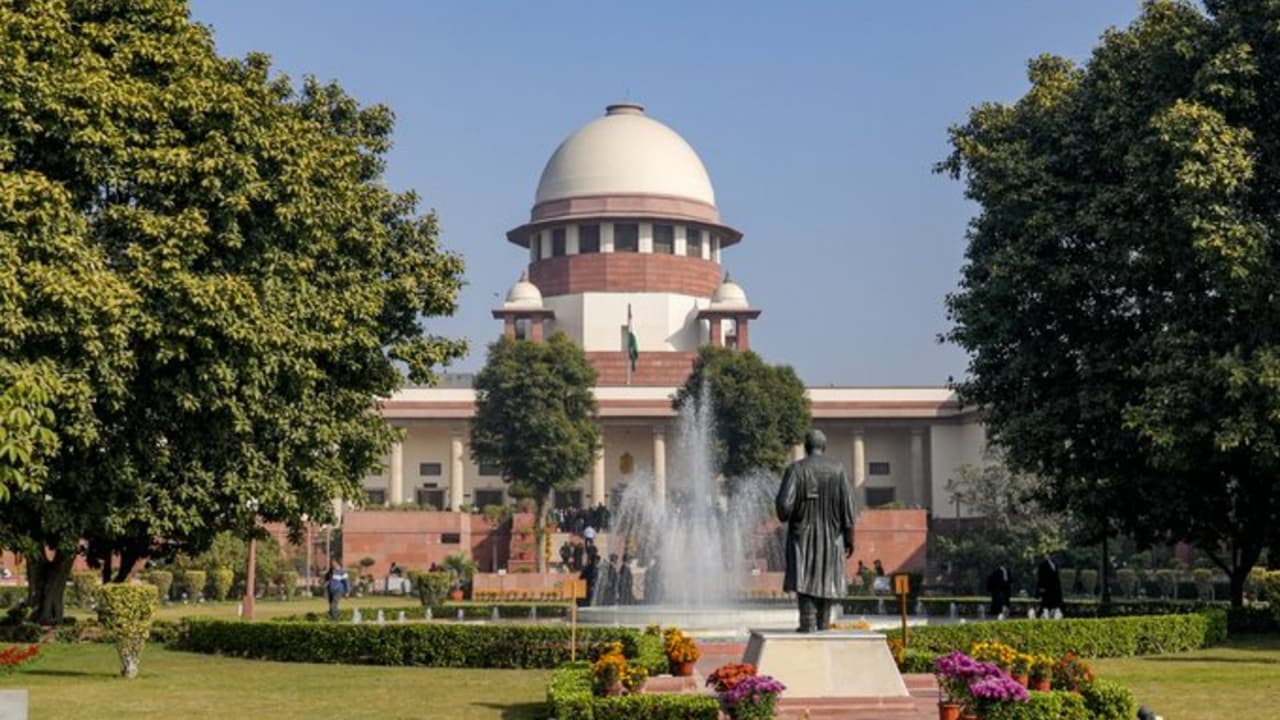
Supreme Court Rules Against Indefinite Occupations at Protest Sites
Chief Justice Surya Kant declared that no group can indefinitely occupy public spaces, ruling that designated protest venues require fixed time limits to protect public access and commercial activity.
Supreme Court Rejects Indefinite Occupations at Public Sites
The bench—comprising Chief Justice Surya Kant, Justice Joymalya Bagchi, and Justice V. Mohana—issued the observations while hearing petitions concerning recent demonstrations in Central Delhi, including actions at Jantar Mantar and a gathering organized by opposition parties against the Chief Election Commissioner at Ramlila Maidan, Mathrubhumi reported. The court emphasized that public spaces cannot be permanently cordoned off by a single group. The bench was also hearing petitions filed by M.A. Baby and others in connection with the SIR protests in Delhi, alongside matters challenging mass preventive detentions.
“No one has the right to indefinitely occupy a location for protests,” the court stated, according to Manorama News. The bench pointed out that farmers, workers, lawyers, and journalists also hold fundamental rights to access public venues for expression.
Traders Seek Bans and Compensation for Festival Season Disruptions
Commercial associations approached the court detailing severe financial losses suffered by the business sector during ongoing protests in the capital, Deepika.com reported. Traders requested that authorities bar protests and similar disruptions for the upcoming two-month festival period.

Appearing for the central government, Solicitor General Tushar Mehta argued that organizers who call for demonstrations must shoulder full accountability for the resulting consequences. Mehta told the bench that Jantar Mantar had been granted permission for a single day during a recent demonstration by the CJP, yet participants occupied the location for 17 days, Manorama News reported. He maintained that unauthorized marches toward Parliament or the Supreme Court cannot be tolerated. Mehta further noted that the government had previously withdrawn the designated protest site status for Jantar Mantar and identified three alternative locations, including Ramlila Maidan.
Responding to these commercial grievances, the Supreme Court instructed that organizers be added as opposing parties in petitions concerning trader losses. The bench also issued notices to the central government regarding petitions filed by auto-rickshaw and truck unions whose livelihoods faced severe interruption.

Upcoming Hearings on Police Action and Media Safety
Alongside commercial disputes, the court reviewed petitions challenging mass preventive detentions and alleged police misconduct during the Delhi demonstrations. The central government defended its deployment of CCTV surveillance at protest zones as a necessary measure for women’s safety.
The proceedings experienced tense exchanges when lawyers repeatedly attempted to speak loudly over one another, prompting Chief Justice Surya Kant to admonish the counsel by stating that the courtroom is not a fish market and warning them not to create a disturbance.
The bench scheduled separate hearings for November 23 to address petitions regarding alleged violence against female journalists during the unrest, including a petition alleging that Rahul Gandhi had shoved a pregnant journalist.