
Supermassive Black Holes: Remnants of the Universe’s First Stars?
Astronomers are gaining new insights into the origins of supermassive black holes, with recent research pointing to a potential link with the earliest stars formed in the universe. these findings, published as of August 20, 2025, offer a compelling description for the prevalence of these cosmic giants observed throughout the cosmos.
The Enigma of Supermassive Black Holes
Supermassive black holes, residing at the centers of most large galaxies-including our own Milky Way-possess masses millions to billions of times that of the Sun.Their formation has long been a subject of debate, especially given observations from the James Webb Space Telescope (JWST) revealing numerous black holes existing in the early universe.
Population III Stars: The Prime Suspects
The prevailing theory centers around “Population III” stars-the first generation of stars to form after the Big Bang. These stars were vastly different from those we observe today, composed almost entirely of hydrogen adn helium. A research team’s simulations suggest these stars could have grown to immense sizes due to energy released from dark matter annihilation, ultimately collapsing into supermassive black holes.
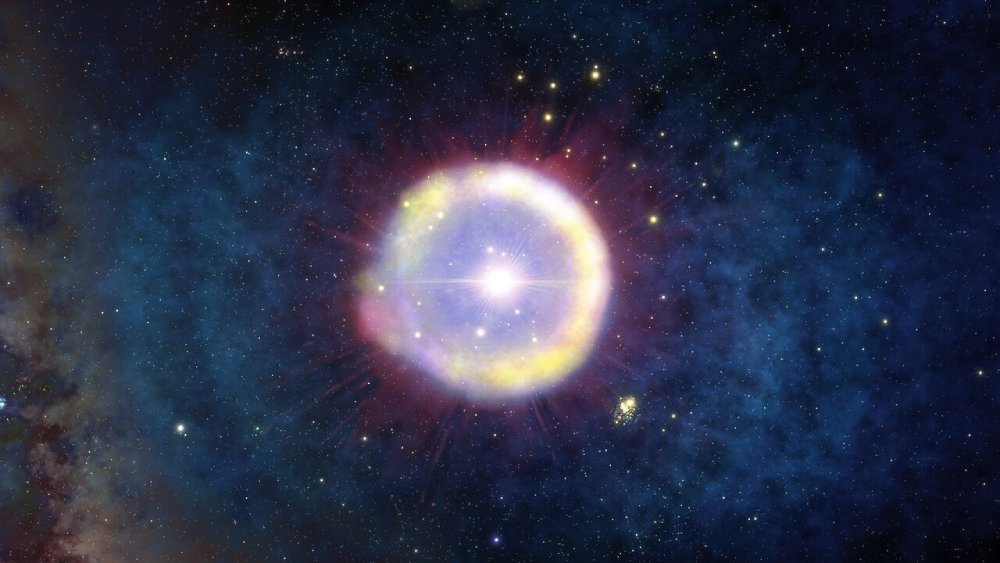
▲ An artistic rendering of Population III stars approximately 100 million years after the Big Bang. (Source: NOIRLab)
A Two-Stage Universe?
This new model proposes a two-stage process of star birth and ionization. The earliest Population III stars would have lived fast and died young, releasing tremendous energy that briefly re-ionized the surrounding hydrogen. This “short ionization” event preceded the more gradual reionization driven by later generations of galaxies.
Did You Know?
The James Webb Space Telescope’s advanced capabilities have been instrumental in observing these distant black holes and providing data to support this new theory.
Implications for Cosmology
This research could resolve several ongoing cosmological puzzles, including the Hubble constant tension and evidence of dynamic dark energy. The findings suggest that the early universe may have been more complex than previously thought, with a distinct period of star formation and ionization preceding the galaxy-dominated era.
pro Tip:
Understanding the formation of supermassive black holes is crucial for comprehending the evolution of galaxies and the large-scale structure of the universe.
Key Findings Summarized
| Feature | Description |
|---|---|
| star Type | Population III – First generation of stars |
| Formation Mechanism | Dark matter annihilation leading to rapid growth and collapse |
| Ionization Event | “Short ionization” preceding galaxy-driven reionization |
| Observational Support | James Webb Space Telescope data |
Do you find the idea of a two-stage universe intriguing? What other mysteries of the cosmos do you hope scientists will unravel next?
(Source: Taipei Planetarium, authorized reprint; image source: Pixabay)
Looking Ahead: The Future of Black hole Research
Ongoing research utilizing the JWST and other advanced telescopes promises to further refine our understanding of supermassive black hole formation. scientists are actively seeking to identify more Population III stars and analyze their properties, providing crucial data to validate or refine current models. The study of gravitational waves also offers a unique window into the dynamics of black hole mergers and growth.
Frequently Asked Questions About Supermassive Black Holes
- What are supermassive black holes? These are black holes with masses millions or billions of times that of our Sun,typically found at the centers of galaxies.
- How do supermassive black holes form? Current research suggests they may originate from the collapse of massive Population III stars in the early universe.
- What is Population III? Population III stars were the first stars to form after the Big Bang, composed primarily of hydrogen and helium.
- What role does dark matter play? Dark matter annihilation may have provided the energy needed for Population III stars to grow to immense sizes.
- Why is the James Webb Space Telescope crucial for this research? The JWST’s advanced capabilities allow astronomers to observe distant black holes and gather data to test these theories.
We hope you found this exploration of supermassive black holes insightful! Please share this article with your friends and colleagues, and let us know your thoughts in the comments below. Don’t forget to subscribe to our newsletter for more exciting updates on the latest scientific discoveries.
