
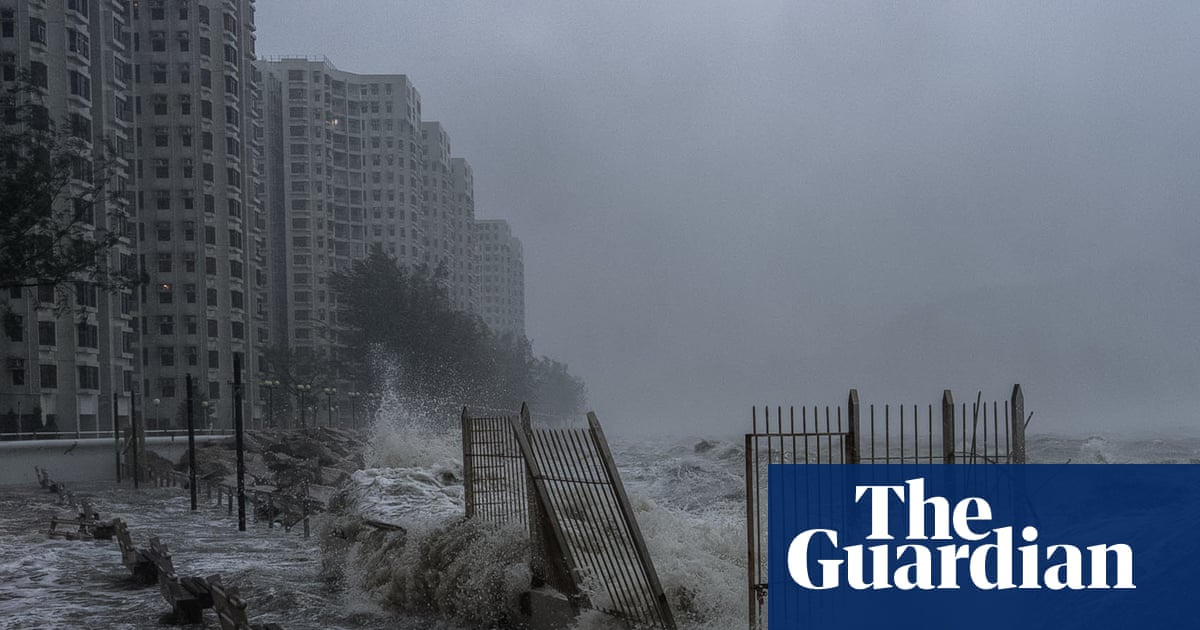
Super Typhoon Ragasa Leaves Trail of Destruction in Taiwan, Threatens Hong Kong and Southern China
TAIPEI, Taiwan – At least 14 people have been killed and dozens injured in Taiwan as Super Typhoon Ragasa swept across the island, leaving widespread flooding, landslides, and power outages. Simultaneously, Hong Kong has issued it’s highest typhoon warning as the storm approaches, and authorities in southern China are evacuating hundreds of thousands of residents in preparation for Ragasa’s landfall.
Ragasa, named after the Filipino word for rapid motion, brought torrential rainfall and fierce winds to Taiwan beginning Tuesday, triggering landslides in mountainous areas and causing significant damage to infrastructure. The storm’s impact extends beyond Taiwan, with Hong Kong bracing for its closest approach later Wednesday morning. The Hong Kong Observatory issued a T10 signal – its highest typhoon warning – at 2.40am, stating it would ”remain in force for some time.”
The storm is forecast to make landfall in the central and western coastal areas of guangdong province within 24 hours, according to the province’s emergency management bureau. Shenzhen has already ordered the evacuation of 400,000 people,with other cities including Chaozhou,Zhuhai,Dongguan and Foshan implementing similar measures. Authorities in Shenzhen have instructed all but essential personnel to remain indoors.
Hong Kong residents are preparing for significant swells and a potential storm surge, with some areas anticipating water levels four to five metres above normal. An AFP reporter observed waves reaching nearly five metres high crashing into the Heng Fa Chuen residential district on Tuesday night. Terence Choi, a Hong Kong resident, reported stocking two days’ worth of food, expressing concern about potential power and water supply disruptions. Yang Lee-o, a resident of Lei Yue Mun for 40 years, confirmed government workers had been reinforcing the area with sandbags.
Hong Kong’s number-two official, Eric Chan, has described Ragasa as a “serious threat” comparable to the super typhoons that impacted the region in 2017 and 2018, causing hundreds of millions of dollars in property damage. Scientists warn that climate change is contributing to the increasing intensity of storms worldwide.
