
Earth Braces for Geomagnetic Storm as Solar Coronal Hole Unleashes High-Speed Winds
Table of Contents
- Earth Braces for Geomagnetic Storm as Solar Coronal Hole Unleashes High-Speed Winds
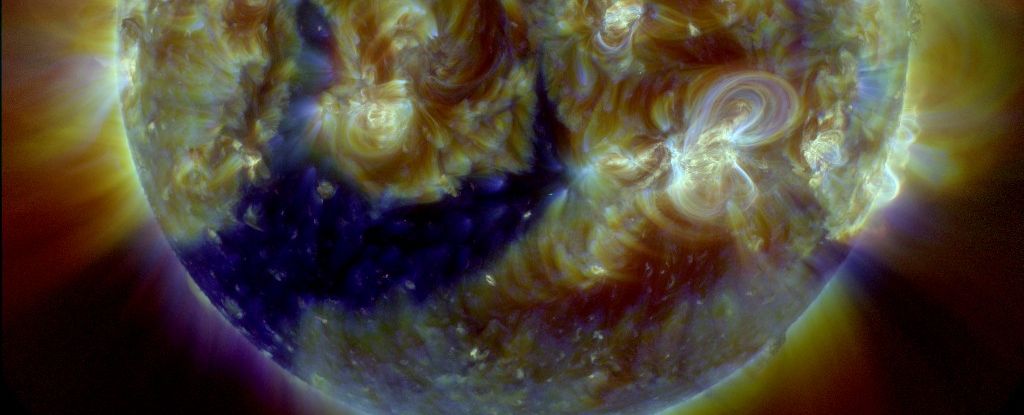
A significant opening in the Sun’s atmosphere, known as a coronal hole, is currently ejecting a stream of high-velocity solar wind directly towards Earth. Space weather forecasters predict this event will likely trigger a moderate (G2) geomagnetic storm, with effects expected to begin around Saturday, June 14, according to the National oceanic and Atmospheric Administration (NOAA).
What to Expect from the Incoming Geomagnetic Storm
Coronal holes form where the Sun’s magnetic field weakens, allowing charged particles to escape more freely into space. When these particles reach Earth, they interact with our planet’s magnetic field, leading to geomagnetic storms and potentially impressive aurora displays. The intensity of geomagnetic storms is measured on a scale from G1 to G5,with G5 being the most extreme and least frequent.
Did You Know? The most powerful geomagnetic storm on record, the Carrington Event of 1859, caused telegraph systems to fail and auroras to be seen as far south as the Caribbean.
A G2-level storm, while not considered a major threat, can still cause minor disruptions. Satellites may require slight course corrections,and some high-frequency radio blackouts are possible.However, the most anticipated effect is the increased likelihood of auroras, also known as the Northern and Southern Lights.
Prime Aurora Viewing Opportunities
The charged particles from the Sun follow Earth’s magnetic field lines towards the poles, where they collide with atmospheric gases. this interaction produces the mesmerizing light displays of the aurora borealis (Northern Lights) and aurora australis (Southern Lights). During this G2 storm, aurora may be visible at latitudes as low as 55 degrees north and south.
Pro Tip: Use aurora forecasting websites and apps to get real-time updates on aurora activity and visibility in your area.
While the Northern Hemisphere is approaching the summer solstice, with its shorter nights, opportunities to view the aurora still exist. Find a location away from city lights for the best viewing experience. The Space Weather Prediction Center provides real-time aurora forecasts.
Geomagnetic Storm Scale
| Storm Level | Severity | Potential Impacts |
|---|---|---|
| G1 | Minor | Weak power grid fluctuations; minor impact on satellite operations. |
| G2 | Moderate | High-latitude power grid voltage corrections may be required; HF radio propagation can fade at higher latitudes. |
| G3 | Strong | Intermittent satellite navigation problems; HF radio blackout. |
| G4 | Severe | Widespread voltage control problems; satellite disruptions; HF radio blackout over large areas. |
| G5 | extreme | Complete collapse of power grids; total HF radio blackout; satellites disabled. |
Recent Solar Activity and the Solar Maximum
The Sun is currently in a period of heightened activity known as the solar maximum, part of its regular 11-year cycle. This phase is characterized by increased sunspots, solar flares, and coronal mass ejections, leading to more frequent and intense geomagnetic storms.NASA officially declared that the solar maximum is happening now.
Have you ever witnessed the aurora borealis or australis? What are your tips for capturing the best photos of the Northern or Southern Lights?
Understanding Geomagnetic Storms: An Evergreen Viewpoint
Geomagnetic storms are a natural phenomenon resulting from the Sun’s dynamic activity.These storms have occurred throughout Earth’s history, influencing our planet’s magnetic surroundings and occasionally impacting human technology. Understanding the causes and effects of geomagnetic storms is crucial for protecting critical infrastructure and appreciating the beauty of the aurora.
The study of space weather has advanced substantially in recent decades, with improved monitoring and forecasting capabilities.satellites like the Solar Dynamics Observatory (SDO) provide continuous observations of the Sun,allowing scientists to track solar activity and predict potential geomagnetic storms. This facts is vital for mitigating the risks associated with these events.
Frequently Asked Questions About Geomagnetic Storms
What causes a geomagnetic storm?
Geomagnetic storms are caused by disturbances in the Earth’s magnetosphere, which are often triggered by solar events such as coronal mass ejections (CMEs) and high-speed solar wind streams emanating from coronal holes.
How do geomagnetic storms affect Earth?
Geomagnetic storms can affect various aspects of Earth, including causing fluctuations in power grids, disrupting satellite operations, interfering with radio communications, and creating auroras.
Can geomagnetic storms damage satellites?
Yes, intense geomagnetic storms can damage satellites by causing electrical charging and disrupting thier electronic systems. Satellite operators often take precautions during storms, such as reorienting satellites to minimize exposure.
Are there any health risks associated with geomagnetic storms?
For the general population, there are no direct health risks associated with geomagnetic storms. However, some studies suggest a possible correlation between geomagnetic activity and certain health conditions, but more research is needed.
How can I prepare for a geomagnetic storm?
Individuals do not typically need to take specific actions to prepare for a geomagnetic storm. However, those who rely on satellite-based services, such as GPS, may experience temporary disruptions. Power companies and other critical infrastructure operators have protocols in place to mitigate the effects of severe storms.
Stay informed about space weather and potential aurora displays! Share this article with your friends and family,and let us know in the comments if you plan to watch for the aurora during this geomagnetic storm.
