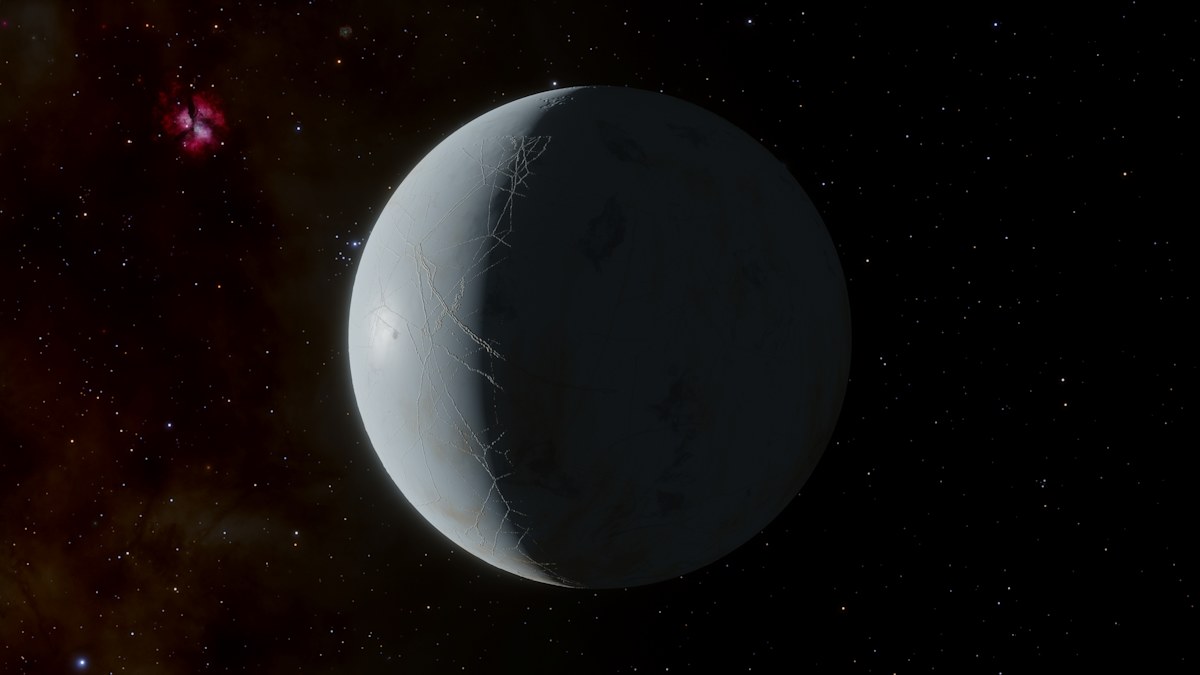
Study Proposes Earth-Mass Planet X2 Beyond Neptune to Explain Odd Orbits
“If this planet exists, it could change how we understand the history of our solar system and how its most distant objects came to follow such unusual orbits,” said Patryk Sofia Lykawka, an adjunct associate professor at the University of Southern Queensland.
Researchers have developed new computer models suggesting a hidden planet, nicknamed Planet X2 (PX2), may be orbiting the Sun far beyond Neptune.
The study, published on November 13 in the Monthly Notices of the Royal Astronomical Society, proposes that an Earth-class world with 1.5 to two times the mass of Earth could explain the strange paths taken by icy bodies in the outer solar system. While astronomers have long searched for a “Planet X,” this hypothetical world is distinct from the larger “Planet Nine” theory, which posits a much heavier planet.
The research was authored by Patryk Sofia Lykawka, Pedro Bernardinelli, and Jonathan Horner. Models of the Edgeworth–Kuiper belt have previously failed to explain the solar system’s architecture beyond 50 astronomical units, leaving the origins of high-inclination populations and extreme trans-Neptunian objects a persistent mystery.
Computer simulations conducted by the team, including researchers from Kindai University and the National Astronomical Observatory of Japan, spanned 4.5 billion years to test the gravitational influence of a distant object. To resolve orbital anomalies, the team incorporated “grainy Neptune migration” alongside two scenarios involving either primordial scattering planets or a stable Earth-class planet.
While primordial embryos were typically ejected within tens of megayears, the PX2 scenario successfully replicated the orbital niches of extreme trans-Neptunian objects like Sedna and 2012 VP113. The model suggests that the gravity of PX2 could pull icy objects away from the influence of Neptune or tip them into highly tilted paths, accounting for the orbits of extreme trans-Neptunian objects like Sedna, according to the study.
 0.2758%2Cmultiply_3%2Cratio1.777778%2Cwidth_1059%2Cx0%2Cy_0/t_crop_custom/c_scale%2Cw_1200%2Cq_88%2Cf_auto/b03bf9b4ae8fe12bee325d7ff595627c38baf01e261ddbe248238e38b8099ff8″ alt=”” title=”Photo: Nine.com.au” width=”1200″ height=”675″ style=”max-width:100%;height:auto;border-radius:4px;” loading=”lazy” />
Historical Context and Orbital Mechanics
The search for hidden worlds has a long history. Later, Percival Lowell searched for a “Planet X” to explain Uranus’s behavior, a quest that led to the discovery of Pluto in 1930.
| Orbital Feature | Planet X2 Model Estimate |
|---|---|
| Average distance from Sun | 33 billion to 46 billion miles |
| Closest approach to Sun | At least 19 billion miles |
| Estimated mass | 1.5 to 2 times Earth’s mass |
The researchers acknowledge that while their model reproduces several observed orbital patterns, some differences between the simulations and actual observations remain, Lykawka said. Other scientists have previously suggested that the unusual orbits of distant icy bodies might be a statistical fluke, potentially caused by limited telescope coverage of the sky.
“Imagine discovering, after decades of mapping our solar system, that another planet has been hiding from us all this time,” said Patryk Sofia Lykawka.
Patryk Sofia Lykawka is an adjunct associate professor at the University of Southern Queensland who also serves as a researcher based at Kindai University in Japan. In the field of planetary science, his work involves running computer simulations spanning 4.5 billion years of the Solar System’s evolution to investigate the gravitational influence and orbits of distant, undiscovered bodies beyond Neptune.
The scientific community now looks toward the Vera C. Rubin Observatory in Chile to potentially validate the theory. “The exciting thing is that we now have an opportunity to put this idea to the test,” said Jonti Horner, a professor at the University of Southern Queensland.
As the observatory begins its sky survey, researchers expect to find new clues regarding whether an additional planet is waiting to be discovered in the solar system’s distant reaches. “As the Rubin Observatory surveys the sky, we will find new clues that help us understand the distant reaches of the solar system – and whether another planet is still waiting to be discovered,” said Jonti Horner.