
Potential First Glimpse of Dark Matter Reported in Gamma Ray Analysis
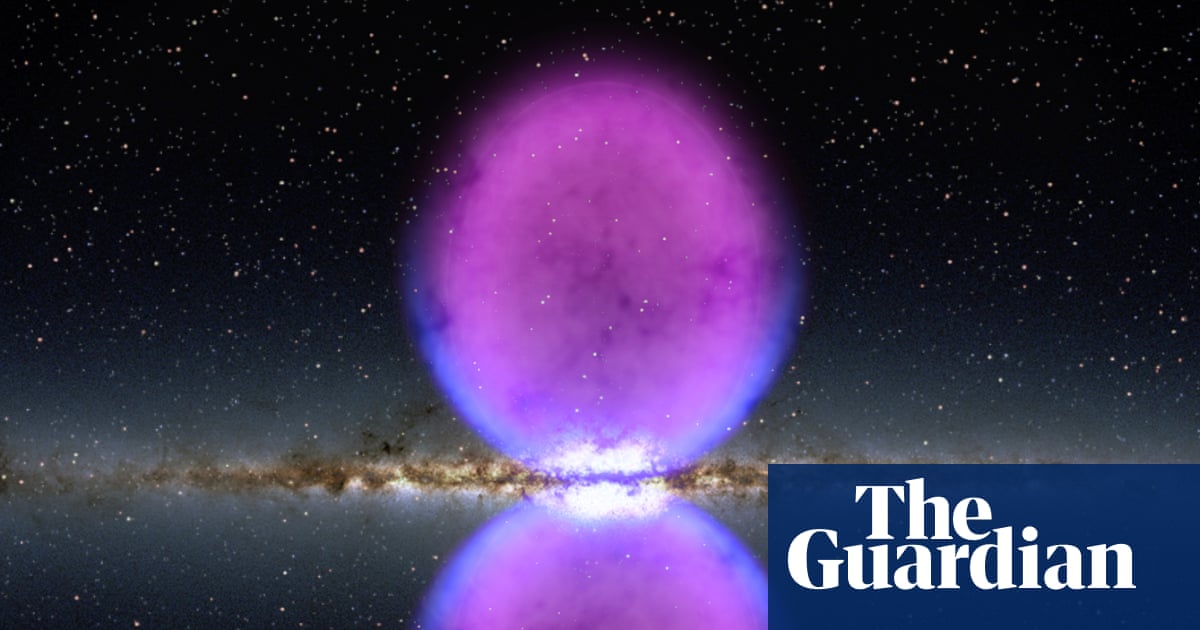
A new study suggests the first direct evidence of dark matter may have been observed, nearly a century after scientists first proposed its existence. Astrophysicist tomonori Totani of the University of Tokyo analyzed data from NASA’s Fermi Gamma-ray Space Telescope and identified a pattern of gamma rays emanating from the center of the Milky Way that aligns with predicted characteristics of dark matter.
The concept of dark matter originated in the 1930s with the work of Fritz Zwicky, who observed galaxies spinning faster than their visible mass could account for. This led to the hypothesis of an unseen substance exerting gravitational pull – dark matter - which neither emits nor absorbs light. Despite decades of searching using ground-based detectors, space telescopes, and facilities like the Large Hadron Collider, direct detection has remained elusive.
Totani’s analysis focused on the possibility that dark matter is composed of weakly interacting massive particles (WIMPs), heavier than protons but with minimal interaction with ordinary matter. According to theory, WIMP collisions would result in annihilation, releasing gamma rays. The observed gamma ray pattern appears to correspond to the expected shape of a dark matter halo surrounding the galactic center.
If confirmed, the findings suggest dark matter particles could be approximately 500 times more massive than a proton, and would represent a significant breakthrough, as dark matter is estimated to comprise 27% of the universe.
However, researchers emphasize the need for further investigation to rule out option explanations for the gamma ray signal, including other astrophysical processes and background emissions. A key test will be the detection of similar gamma ray signatures from other regions of space, such as dwarf galaxies. Currently, a lack of such signals casts doubt on the interpretation, according to astrophysicist justin Read of the University of Surrey.
Theoretical astrophysicist Kinwah Wu of UCL also cautioned that “extraordinary evidence” is required for such a significant claim, and that while the study is encouraging, it doesn’t yet meet that standard. The research has been published in the Journal of Cosmology and Astroparticle Physics.
