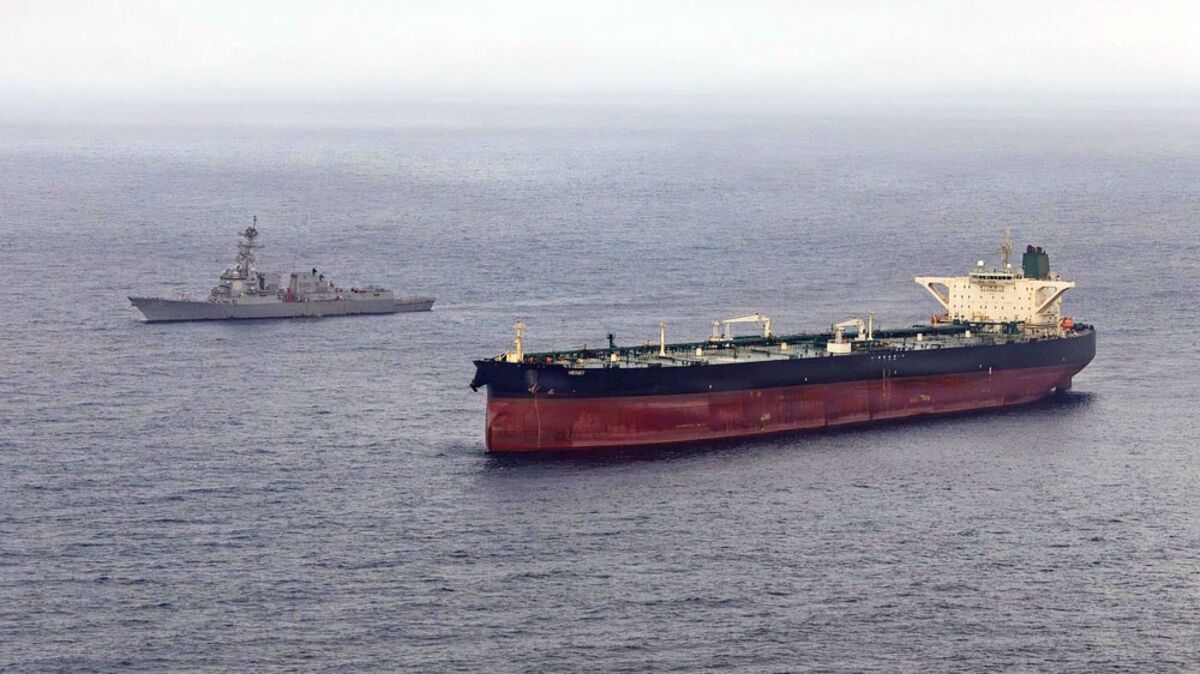
The Strait of Hormuz, a chokepoint for 20% of global oil trade, remains closed to normal traffic despite a June 2026 Iran-U.S. deal that promised toll-free passage. Shipping delays now exceed 12 days per vessel, costing the UAE’s Fujairah port $180 million monthly in lost transit fees, while Tehran and Washington clash over enforcement. Tanker operators warn the deal’s “materiality” clause—requiring verifiable Iranian compliance—has created a legal gray zone. Meanwhile, regional navies report a 40% spike in suspicious vessel activity near the strait’s northern approaches.
Why the Strait of Hormuz’s Reopening Is Stuck in Legal and Logistical Gridlock
The Iran-U.S. agreement signed June 12, 2026, was supposed to restore free passage through the Strait of Hormuz by removing tolls and demilitarizing the waterway. But as of June 16, only 18 of the 420 vessels scheduled for transit have passed without incident—far below the 1,200 monthly average pre-2024. The bottleneck isn’t just Iranian resistance; it’s a three-way stalemate between Washington’s demands for “material” compliance, Tehran’s insistence on phased implementation, and the shipping industry’s refusal to risk delays.
“The deal’s language is a legal minefield. ‘Material’ isn’t defined, and without that, no tanker operator will commit to routes.”
Three Reasons Ships Aren’t Moving—And Why It Matters for Global Trade
Legal ambiguity: The U.S. State Department’s “materiality” clause requires Iran to prove it’s dismantling its shadow maritime militia, the Islamic Revolutionary Guard Corps Navy (IRGCN), before tolls are lifted. Iran argues this violates the deal’s “good-faith” principle.
Military posture: Satellite imagery from Maxar Technologies shows Iranian patrol boats remain within 12 nautical miles of the strait’s centerline—well inside the 24-mile “territorial waters” where tolls were historically enforced.
Economic pressure: Fujairah’s free zone, which processes 30% of Hormuz-bound oil, has seen container volumes drop 22% since April, according to Fujairah Ports Authority data. Local trucking firms report a 35% surge in demurrage fees as ships sit idle.
How the Strait’s Closure Is Redrawing Global Supply Chains
The Strait of Hormuz isn’t just a waterway—it’s the world’s most critical oil artery. When it clogs, the ripple effects hit hard:
Region
Direct Impact
Indirect Cost (Monthly)
UAE (Fujairah)
Port congestion; 1,200+ vessels delayed
$180M (lost transit fees)
India (Mumbai)
Crude oil imports delayed by 7–10 days
$320M (storage/premium costs)
China (Shanghai)
LNG shipments rerouted via Cape of Good Hope
$450M (longer transit)
Europe (Rotterdam)
Refinery input shortages
$280M (spot-market surges)
The longer the strait stays disrupted, the more permanent the detours become. “We’re seeing a shift from temporary rerouting to structural changes,” says Dr. Ravi Kapoor, a maritime economist at the Nippon Institute for Urban Affairs. “Singapore’s port is already advertising ‘Hormuz Alternative’ routes, and Dubai’s logistics firms are hiring port optimization consultants to map new hubs.”
What Happens Next: Three Scenarios for Resolution
Diplomatic breakthrough: If Iran and the U.S. agree on a third-party audit (e.g., via the UN International Maritime Organization) to verify IRGCN withdrawal, tolls could be suspended within 30 days. Risk: Iran’s Supreme Leader has warned against “foreign oversight.”
Market forcing: With Brent crude already up 8% since May, shipping giants like Maersk may unilaterally declare the strait “safe” if Iranian attacks drop below 2023 levels. Risk: Legal exposure for operators.
Prolonged stalemate: The strait remains a “flashpoint,” with sporadic closures triggering $1.2 trillion in annual oil market volatility. Regional firms are already diversifying: Oil traders in Geneva report a 50% spike in requests for non-Hormuz escrow services.
The Human Cost: Fishermen and Smugglers Exploiting the Chaos
In the Iranian port of Bandar Abbas, fishermen say their catches have halved since military patrols intensified. “Before, we’d fish near the strait’s edge. Now? We’re told to stay 50 kilometers inland,” says Mohammad Reza, a 42-year-old fisherman. Meanwhile, smugglers are capitalizing: UNODC reports a 60% increase in fuel smuggling via small boats, as tankers sit idle.
“The strait’s closure isn’t just about oil—it’s about livelihoods. Fishermen, truckers, even dockworkers are losing their jobs while the big players negotiate.”
US Iran Sanctions Deal Reported
Who Wins If the Strait Stays Closed?
Winners:
Suez Canal Authority: Traffic through the canal is up 18% YoY, with toll revenues hitting $1.3 billion in Q1 2026.
UAE port operators: Fujairah’s container throughput is at a 10-year low.
The Long Game: How Permanent Are These Changes?
Historically, the Strait of Hormuz has reopened within 6–12 months of crises. But this time, the stakes are different. The Iran-U.S. deal lacks an enforcement mechanism—a gap that Ambassador Richard Grenell, former U.S. National Security Council director, warns could set a dangerous precedent.
“Without teeth, agreements like this become hostage to the weakest link. If Iran can dictate terms, every future deal will be a gamble.”
For businesses, the message is clear: Energy risk consultants are advising clients to lock in multi-year contracts for non-Hormuz routes. Meanwhile, international arbitration firms in Geneva and Dubai are bracing for a wave of disputes over delayed shipments.
The Bottom Line: A Strait in Limbo
The Strait of Hormuz’s future hinges on three factors:
1. Iran’s willingness to demilitarize—without it, tolls stay suspended.
2. The U.S. ability to enforce compliance—or risk losing credibility.
3. The shipping industry’s patience—currently at 45 days of delays.
For now, the strait remains a high-stakes poker game. But the real losers? The millions of people—from Iranian fishermen to UAE truckers—whose lives depend on a waterway that’s been turned into a political chessboard.
If you’re a business navigating these waters—literally or figuratively—now is the time to secure verified maritime risk advisors and contract specialists who understand the new rules of Hormuz. The strait may reopen, but the supply chains that emerge from this crisis won’t look the same.