
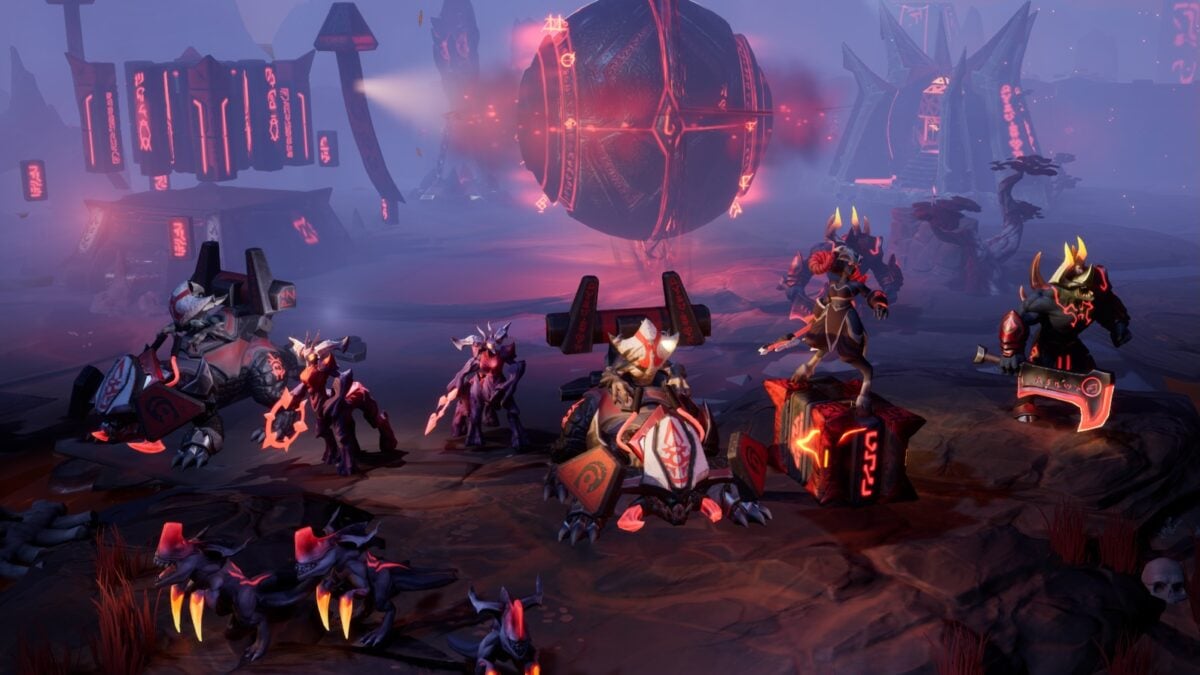
Stormgate Multiplayer Shut Down: AI Acquisition Kills Online Play
Stormgate Goes Dark: When AI Inference Eats Your Game Servers
The real-time strategy genre has taken enough body blows over the last decade, but the latest casualty isn’t a balance patch or a toxic community—it’s infrastructure arbitrage. Frost Giant Studios’ Stormgate, the spiritual successor to StarCraft that barely cracked 100 concurrent players this year, is losing its online multiplayer functionality. The culprit isn’t a lack of interest; it’s a classic case of compute resource contention. Hathora, the server orchestration partner powering Stormgate‘s backend, has been acquired by Fireworks AI and is pivoting its entire fleet toward large language model (LLM) inference, leaving game state synchronization on the cutting room floor.
The Tech TL;DR:
- Infrastructure Pivot: Hathora is shifting from low-latency game server orchestration to high-throughput AI inference workloads under Fireworks AI ownership.
- Service Sunset: Multiplayer support ends April 2026; migration to Nitrado’s GameFabric is offered but reportedly declined by Frost Giant.
- Enterprise Lesson: Reliance on niche PaaS providers without long-term SLA guarantees creates single points of failure for dependent applications.
This isn’t just a gaming story; it’s a warning label for any CTO building on top of specialized Platform-as-a-Service (PaaS) layers. When a vendor gets acquired by an AI hyperscaler, the economics of compute change overnight. Gaming requires millisecond-level consistency for state replication across UDP packets. AI inference requires massive GPU throughput for batch processing. These are mutually exclusive workload profiles on the same hardware. Fireworks AI isn’t malicious; they are simply optimizing for the higher margin per FLOP. Stormgate was collateral damage in the Great Compute Reallocation of 2026.
The Architecture Mismatch: Gaming vs. Inference
To understand why Stormgate is going offline, you have to look at the underlying orchestration. Hathora built its reputation on Kubernetes-based server orchestration tailored for gaming. They managed the ephemeral nature of game instances, spinning up containers only when a lobby filled. Fireworks AI, conversely, deals in sustained, heavy compute loads for token generation.
According to the Fireworks AI developer documentation, their infrastructure is optimized for “low-latency inference at scale,” which sounds similar to gaming but operates on fundamentally different time scales. A 200ms delay in an LLM response is acceptable; a 200ms delay in an RTS unit command is game-breaking. When Hathora’s engineering team was absorbed into Fireworks, the operational focus shifted from maintaining persistent WebSocket connections for game state to optimizing transformer model throughput.
Frost Giant Studios claimed they are looking for a new partner, but the market for specialized game server hosting is consolidating. The refusal to migrate to Nitrado’s GameFabric—Hathora’s suggested alternative—suggests either a technical incompatibility in the netcode or a financial disagreement. In the current market, finding a provider willing to support a title with sub-100 concurrent users is economically unviable without significant subsidy.
The Migration Matrix: Alternatives and Risks
For enterprises facing similar vendor lock-in or pivot risks, the options usually boil down to three paths. We’ve analyzed the trade-offs below based on current industry standards for container orchestration and managed services.
| Migration Path | Latency Profile | Operational Overhead | Cost Efficiency |
|---|---|---|---|
| Specialized Game PaaS (e.g., Nitrado) | Optimized for UDP/TCP Game Traffic | Low (Managed Control Plane) | High (Premium for Niche) |
| General Cloud (AWS GameLift/Azure) | Variable (Depends on Region) | Medium (Requires DevOps) | Medium (Pay-as-you-go) |
| Bare Metal/Dedicated | Consistent (No Noisy Neighbors) | High (Full Stack Management) | Low (High CapEx) |
The table highlights why Frost Giant is in a bind. Moving to a general cloud provider like AWS requires rewriting the deployment pipeline to interact with GameLift APIs, a task that demands senior DevOps resources they may not have budgeted for. Moving to bare metal is too capital intensive for a struggling title. This is where the value of external expertise becomes critical. Organizations facing similar infrastructure pivots should immediately engage cloud migration specialists to audit their dependency tree before a vendor announcement forces their hand.
The Security Implications of Orchestration Drift
There is a secondary, darker angle to this story: security posture. When a backend provider changes hands, the attack surface shifts. Fireworks AI operates in a different threat model than a gaming studio. Their security protocols are designed to protect model weights and prevent prompt injection, not to prevent DDoS attacks on game lobbies or cheat injection via memory manipulation.
As noted by the AI Cyber Authority, the intersection of AI infrastructure and traditional application hosting creates unique vulnerabilities. If Frost Giant attempts to cobble together a solution using leftover Hathora configurations or rushed alternatives, they risk exposing player data. The “planned outage” mentioned in the Discord announcement is a polite way of saying the current security certificates and handshake protocols may become invalid once the root infrastructure changes ownership.
“When you build on someone else’s abstraction layer, you are renting stability. The moment their business model changes, your uptime guarantee evaporates. This is why cybersecurity audit services should include vendor risk assessment as a primary deliverable.”
Enterprise IT leaders should take note. Relying on a startup for critical infrastructure without a clear exit strategy is technical debt in its purest form. If you are running production workloads on a platform that could be acquired by an AI firm next quarter, you demand a contingency plan now.
Implementation: Checking Your Vendor Health
For developers worried about their own stack’s stability, you can’t rely on press releases. You need to monitor the health of your dependencies. Below is a conceptual Python script using the requests library to monitor the status page of critical PaaS providers. This is a basic implementation of “Vendor Health Monitoring” that should be part of any CI/CD pipeline.
import requests import time def check_vendor_status(vendor_url, timeout=5): """ Monitors the status page of a critical infrastructure vendor. In a production env, this would trigger a PagerDuty alert. """ try: response = requests.get(vendor_url, timeout=timeout) if response.status_code == 200: # Parse JSON status page logic would go here print(f"[OK] {vendor_url} is reachable.") return True else: print(f"[WARN] {vendor_url} returned status {response.status_code}") return False except requests.exceptions.RequestException as e: print(f"[CRITICAL] Connection failed to {vendor_url}: {e}") return False # Example usage for critical dependencies vendors = [ "https://status.hathora.dev", "https://status.fireworks.ai", "https://status.aws.amazon.com" ] for vendor in vendors: check_vendor_status(vendor) time.sleep(1) This script is trivial, but the principle is not. Automated monitoring of vendor status pages, combined with contractual SLAs, is the only way to mitigate the risk of sudden service termination. For companies that lack the internal bandwidth to build these monitoring systems, partnering with managed service providers (MSPs) who specialize in multi-cloud resilience is a necessary investment.
The Editorial Kicker
Stormgate might return to online play if Frost Giant can secure funding for a new server architecture, but the writing is on the wall. The era of niche, gaming-specific cloud orchestration is being swallowed by the AI gold rush. Compute is becoming a monolith, and specialized workloads are being forced to adapt or die. For the rest of us in the enterprise sector, the lesson is clear: diversify your infrastructure providers, audit your vendor dependencies, and never assume that a “partner” relationship guarantees longevity in an AI-first economy.
Disclaimer: The technical analyses and security protocols detailed in this article are for informational purposes only. Always consult with certified IT and cybersecurity professionals before altering enterprise networks or handling sensitive data.