
Tiny Stone,Monumental Shift: New Evidence points to Humans – Not Ice – Moving Stonehenge‘s Bluestones
Salisbury Plain,UK – For decades,the question of how the bluestones of Stonehenge – the smaller stones set within the larger sarsen circle – arrived at their iconic location has been a source of intense debate. Now, a seemingly insignificant piece of rock, unearthed during excavations nearly a century ago, is dramatically shifting the consensus. New analysis of a palm-sized stone, dubbed the Newall boulder, strongly suggests that people, not glacial activity, were responsible for transporting these ancient stones over 125 miles from Wales.
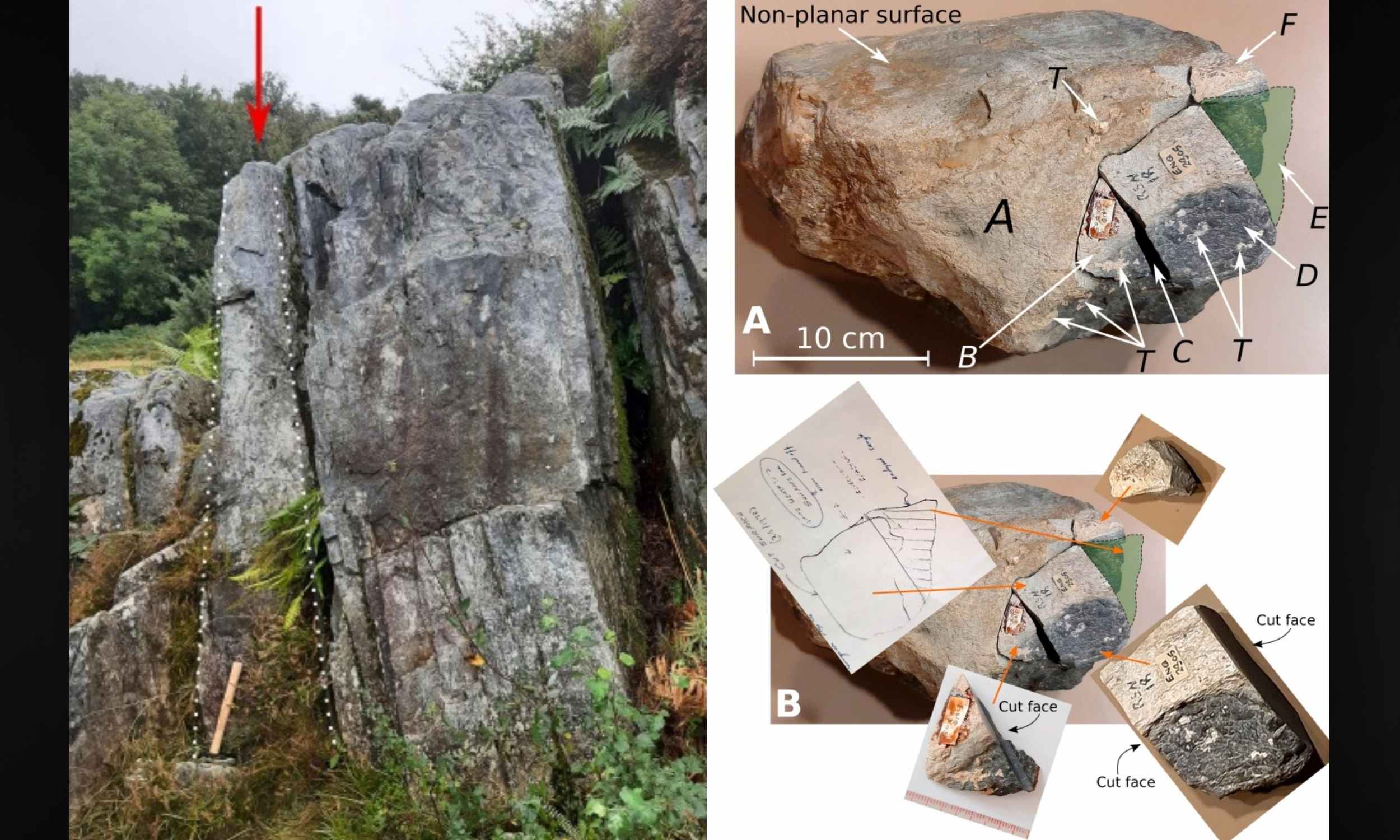
researchers, lead by Dr. Richard E. Bevins of aberystwyth University, meticulously mapped the boulder’s mineral composition and chemistry, tracing its origins to Craig Rhos-y-felin in west Wales. This outcrop is a known source for the bluestones, but proving how they got to Salisbury Plain has remained elusive.
[Image of Craig Rhos-y-Felin, Wales – linked in source]
“The value of this particular stone is simple,” explains Dr. bevins. “As a standalone piece with a clear excavation history, it offers a fair test for the human versus ice question that has followed Stonehenge for decades.”
A Microscopic Clue, A Macro Impact
The newall boulder, measuring just 8.7 x 5.9 x 3.9 inches, was originally excavated in 1924 by Lt Col Hawley. Re-examination using modern techniques revealed crucial details. Unlike stones transported by glaciers, the boulder shows no evidence of glacial scratching. Instead, its wear patterns indicate breakage and subsequent weathering – consistent with human handling and quarrying.
Microscopic analysis of the stone’s structure revealed a unique combination of minerals, including distinctive needle-like stilpnomelane and aligned titanite grains, matching the geological signature of Craig Rhos-y-Felin. Further geochemical analysis confirmed the Welsh origin, even accounting for millennia of burial in chalky soil. The boulder’s shape also aligns with the dimensions of a buried bluestone stump (Stone 32d) at Stonehenge.
Debunking the Ice Age Theory
The findings directly challenge the long-held theory that glaciers transported the bluestones to Salisbury Plain during the last Ice Age. Regional geological surveys reveal no evidence of glacial till, erratic trains, or moraine ridges in the area. Furthermore, existing glacial evidence indicates that major ice advances flowed offshore into the celtic Sea, a trajectory that wouldn’t have delivered stones to the Stonehenge site.
Instead, the team found evidence of human activity around the monument.Small fragments of stone exhibiting sharp edges, indicative of intentional “dressing” by humans, were discovered. A natural scattering of rounded cobbles, which would be expected from glacial activity, was notably absent.
A Living Landscape of Quarrying and Transport
The research builds upon previous archaeological work at bluestone quarries in Wales, specifically at Carn Goedog and Craig Rhos-y-Felin. Excavations there have uncovered evidence of deliberate stone extraction,
