
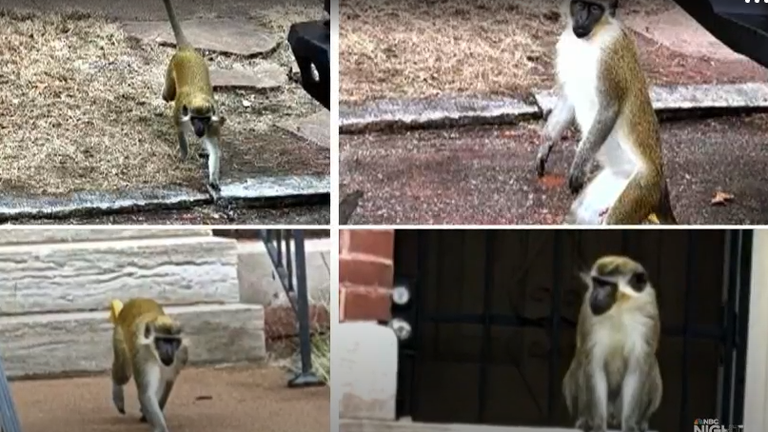
A troop of vervet monkeys has captivated and confounded residents of St. Louis, Missouri, after escaping containment and roaming the city for several days. The unusual situation is complex not only by the challenge of safely recapturing the primates but also by the proliferation of artificial intelligence (AI)-generated images falsely claiming to depict the monkeys’ whereabouts.
the Great St. Louis Monkey Escape
The frist sightings of the monkeys were reported on Thursday, and as of Monday, they remain at large. Authorities are unsure how many monkeys are involved, with the largest reported sighting numbering just four Sky News. The mystery surrounding their origin – who owned them and how they escaped – continues to deepen. It is indeed illegal to own exotic animals within the city limits of St. Louis, making it unlikely that an owner will come forward Sky News.
The situation has been further muddied by residents posting fabricated images online, seemingly to claim they’ve spotted or even captured the monkeys. These images, created using AI, have added to the confusion and hampered genuine efforts to track the animals. Willie Springer, a spokesperson for the Department of Health, noted the widespread circulation of rumors and the difficulty in discerning fact from fiction, stating, “It’s been a lot in regard to AI and what’s genuine and what’s not.”
The Challenge of AI-Generated Misinformation
the incident highlights a growing concern in the age of readily available AI tools: the ease with which misinformation can be created and disseminated. While many residents likely intend no harm, the spread of false information complicates the work of animal control and potentially endangers both the public and the monkeys themselves. The ability to generate realistic images with minimal effort means that verifying reports becomes significantly more challenging. This situation serves as a stark reminder of the need for critical thinking and media literacy in the digital age.
efforts to Recapture the Monkeys
Animal control officers are working in collaboration with primate experts from the St. Louis Zoo to safely recapture the vervet monkeys. NBC News reported that officers are actively patrolling the streets, equipped with catch poles Sky News. Justen Hauser, the environmental health bureau chief for the St. Louis Department of Health, emphasized the unprecedented nature of the situation, stating, “this is the first time we have had a situation dealing with monkeys at large in the city of st Louis.”
Understanding Vervet Monkeys
Vervet monkeys are native to sub-Saharan Africa and are known for their intelligence and social behaviour. Typically weighing between 7 and 17 pounds (3.18 to 7.71 kg), they are sometimes referred to as “green monkeys” due to the greenish tint of their fur. While generally social animals, vervet monkeys can become unpredictable or aggressive when stressed, making their recapture a delicate operation. Their complex social structures and communication methods are well-documented by primatologists, and understanding these behaviors is crucial for a safe and triumphant capture.
Safety Precautions and Public Advice
Authorities are urging residents to maintain a safe distance from the monkeys and to refrain from attempting to capture them independently. Instead, individuals who spot the animals are encouraged to contact the authorities instantly. Approaching or attempting to interact with the monkeys could provoke a defensive response and potentially lead to injury for both humans and animals.
looking Ahead
the ongoing situation in St. Louis underscores the increasing intersection of wildlife management, public safety, and the challenges posed by rapidly evolving technology.as AI tools become more sophisticated, the ability to distinguish between authentic and fabricated content will become increasingly critical. The successful recapture of the vervet monkeys will require a coordinated effort, a commitment to accurate information, and a continued focus on public safety. The incident also raises important questions about the regulation of exotic animal ownership and the potential risks associated with keeping such animals in urban environments.
