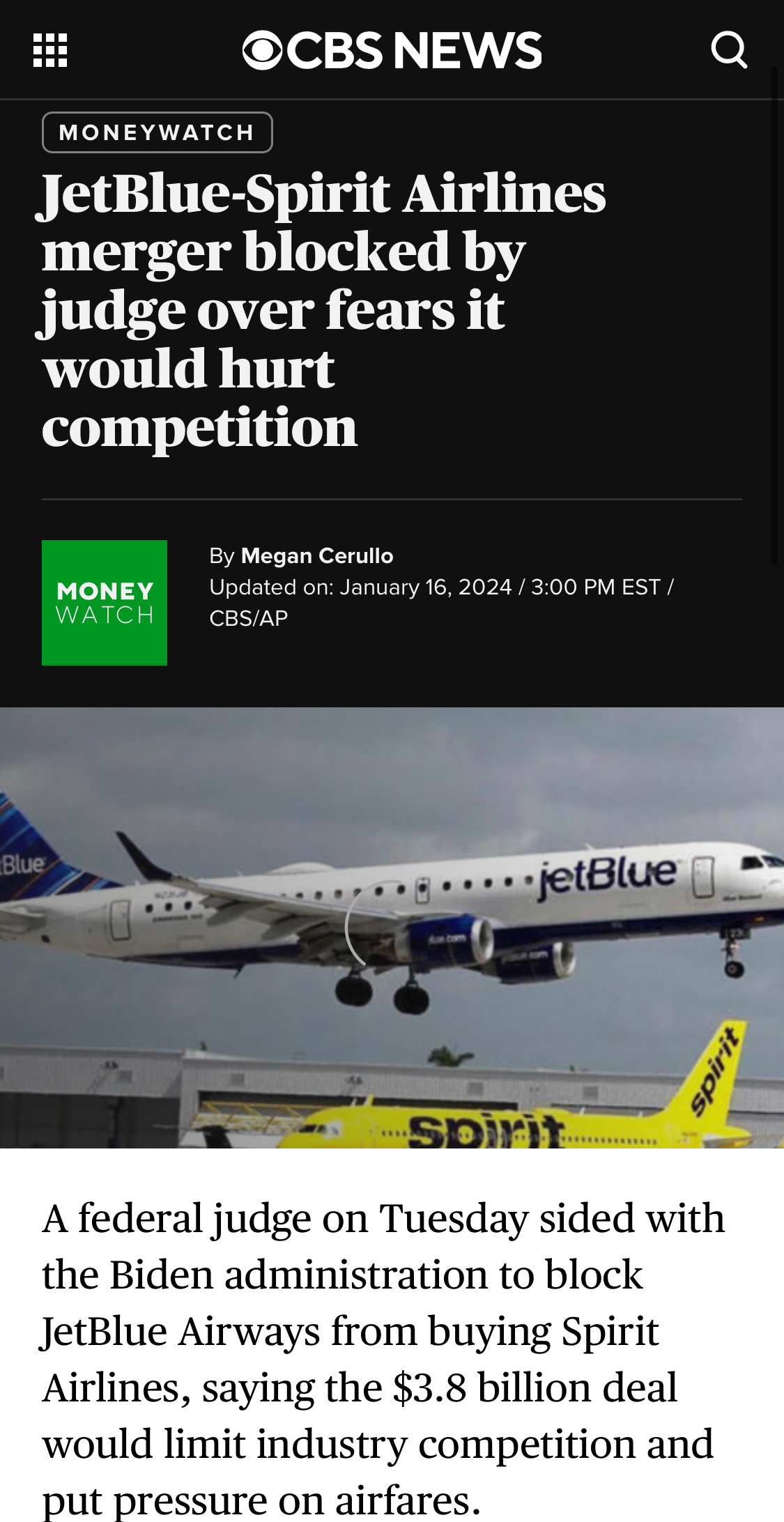
Spirit Airlines shuts down after $500 million federal rescue deal collapses
The immediate consequence for thousands of travelers on Saturday morning was the sudden cancellation of all scheduled flights. In a statement released early May 2, 2026, Spirit Airlines regretfully announced
it had started an orderly wind-down of operations, effective immediately.
The directive to passengers was blunt: All Spirit flights have been cancelled, and Spirit Guests should not go to the airport,
the airline stated. The shutdown marks the final collapse of a carrier that had navigated two bankruptcy filings and operational changes over the last two years prior to the cessation of service.
A failed $500 million lifeline
The cessation of flights follows the breakdown of negotiations with the Trump administration. According to CBS News, the proposed federal bailout would have seen the U.S. government take a 90% stake in the airline in exchange for a $500 million infusion of capital.
The deal failed to materialize as Spirit’s cash reserves dwindled. While the specific terms that led to the breakdown remain undisclosed, the result was a total lack of liquidity. Spirit stated that with no additional funding available to the Company, Spirit had no choice but to begin this wind-down.
The failure of this rescue package highlights the challenges of returning the airline to financial stability. Despite the government’s willingness to consider an equity stake, the $500 million request did not result in a sustainable agreement to keep the carrier operational.
Geopolitical shocks or systemic failure?
In the wake of the shutdown, different perspectives have emerged regarding why the airline actually failed. Spirit has framed its collapse as a casualty of external geopolitical volatility, specifically the Iran war. The airline cited a recent material increase in oil prices
brought on by the Iran war and
other business pressures as the primary drivers that significantly impacted Spirit’s financial outlook,
according to the airline’s statement.
This narrative of external misfortune was rejected by Department of Transportation Secretary Sean Duffy. Duffy disputed the airline’s version of events, pointing instead to a history of internal instability.
“Spirit was in dire straits long before the war with Iran,” Duffy said, adding that the airline’s low-cost model “wasn’t working.” Sean Duffy, Secretary of Transportation
The timeline of Spirit’s decline supports Duffy’s assessment. The company’s first bankruptcy filing occurred in November 2024, at which point it had already lost more than $2.5 billion since the start of 2020. The airline attempted to stabilize by cutting almost 4,000 jobs and 200 underperforming routes in 2025. Despite these cuts, Spirit filed for bankruptcy a second time in August 2025, disclosing in a regulatory filing that it had substantial doubt
about its ability to continue operating.
Navigating the refund and rescue process
For the passengers left stranded, the path to recovering funds depends entirely on how the ticket was purchased. Spirit Airlines has stated it will automatically process refunds for flights purchased directly through the airline using a credit or debit card.
Secretary Duffy confirmed that Spirit maintains a reserve fund to facilitate these refunds to the original form of payment. However, the process is more complex for those who used intermediaries. Travelers who booked through third-party travel agents are instructed to contact their point of purchase directly to seek reimbursement.
For those who used vouchers, points, or credits, the outcome is less certain; these passengers will have to navigate the ongoing bankruptcy process to determine if they can recover value. The Department of Transportation has suggested that passengers also consider contacting their credit card companies to request a chargeback
for services not rendered under the Fair Credit Billing Act, or checking travel insurance policies for coverage regarding insolvency
or service cessation.
To mitigate the immediate travel crisis, several competitors have introduced rescue fares
. According to The Guardian, airlines including American, United, Delta, JetBlue, Frontier, and Southwest are reducing ticket prices for stranded Spirit passengers.
These offers vary by carrier:
- Southwest: Offers are available only in person at airport ticket counters through Wednesday, May 6.
- United: Bookings are available online for up to two weeks.
- Delta: Delta Air Lines is offering reduced, nonrefundable rescue fares in affected markets for five days, including routes between the U.S. and Latin America.
Frontier’s chief commercial officer, Bobby Schroeter, noted that Spirit Airlines played an important role in expanding access to affordable travel and bringing more low fares to more people,
while acknowledging the difficulty of the moment for the airline’s customers and staff.
The fragility of the budget flight model
The collapse of Spirit is not an isolated event but a symptom of a broader squeeze on the low-cost carrier (LCC) model. The industry is currently grappling with energy price volatility that threatens the thin margins upon which budget airlines rely. A Deutsche Bank forecast indicates that U.S. passenger airlines’ annual fuel bills are expected to increase by $24 billion relative to forecasts made before the Iran war.
While the bank suggests airlines may generate $14 billion in additional revenue to offset these costs, the net result is still a predicted loss of $8.4 billion more than previously expected across the sector. For a healthy airline, this is a manageable headwind; for a carrier like Spirit, which was already burdened by billions in losses and two bankruptcy filings in less than two years, it was a terminal blow.
The failure of Spirit highlights the volatility inherent in the ultra-low-cost sector, particularly when fuel costs increase and the company’s financial position is weakened. The pursuit of a federal bailout indicates that the company sought government intervention to address its liquidity needs.
The disappearance of Spirit from the skies leaves a gap in the market for budget-conscious travelers, but the reluctance of the government to provide a permanent subsidy suggests a shifting view on the viability of the ultra-low-cost model in a high-cost energy environment. The industry now faces a period where the cost of flying may fundamentally rise, as the carriers that once drove prices down are no longer able to absorb the shocks of global conflict.