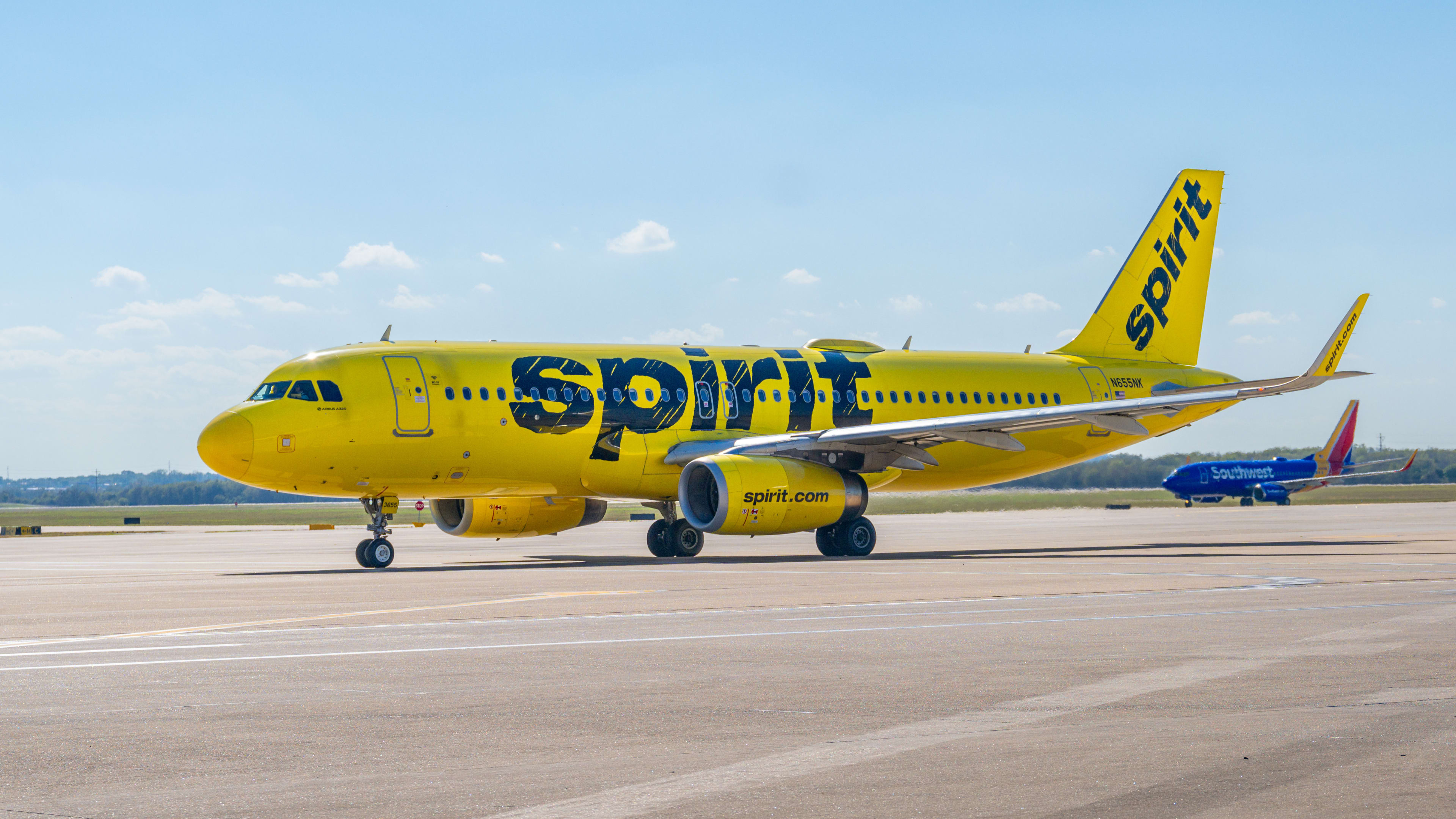
Spirit Airlines ceases all operations leaving thousands of passengers stranded
The immediate reality for thousands of travelers is that Spirit Airlines has ceased all operations. As of 3 a.m. Saturday, Spirit Airlines stopped flying, and the infrastructure typically used to resolve travel disruptions—customer service lines and airport kiosks—has vanished.
“This morning at 3 a.m., Spirit Airlines ceased operations. So what that means is Spirit does not have airplanes in the air flying as of this morning. Also, their call centers are closed, and they don’t have staff at ticket counters. So if you have a flight scheduled with Spirit Airlines, don’t show up at the airport. There will be no one here to assist you,” Secretary Sean Duffy
Secretary Duffy indicated that because Spirit is no longer staffing its physical or digital touchpoints, passengers cannot rely on the airline for rebooking or immediate assistance. Travelers with active itineraries are encouraged to look for seats on other carriers to ensure they can reach their destinations.
Securing Rescue Fares and Alternative Flights
Several airlines have stepped in with discounted options to move stranded passengers. Delta Air Lines is offering reduced, nonrefundable rescue fares across all domestic markets where Spirit operated. These options include nonstop routes and one-stop connections via Delta hubs, as well as routes between the U.S. and Latin America.
Frontier Airlines has also announced discounted rescue fares, focusing on a wide array of specific routes. These include high-frequency connections from Atlanta (ATL) to cities such as Dallas (DFW), Detroit (DTW), Newark (EWR), Fort Lauderdale (FLL), Houston (IAH), Las Vegas (LAS), Orlando (MCO), and Miami (MIA). Frontier’s rescue efforts also extend to routes from Baltimore (BWI) to Cancun (CUN) and San Juan (SJU), as well as connections from Dallas to Los Angeles (LAX) and New York LaGuardia (LGA).
Beyond these specific carrier programs, Secretary Sean Duffy reported via Fox Business that United, Delta, JetBlue, and Southwest are capping ticket prices for Spirit customers who need to rebook. For those who can validate their original Spirit booking, these airlines will offer one-way tickets costing around $200.
The window for these offers is limited. Secretary Duffy urged travelers to act quickly, stating, I would recommend that if you have a ticket with spirit that you actually try to book with these airlines as soon as possible, these offers are not going to be open forever
.
Financial Recovery and the Refund Process
While securing a new flight is the immediate priority, the question of financial recovery for prepaid tickets remains a significant point of concern for affected travelers. Under standard Department of Transportation (DOT) regulations, passengers are generally entitled to a refund if a carrier cancels a flight and the passenger chooses not to travel on an alternative provided by the airline.
However, the collapse of an airline creates a complex situation for those seeking their money back. In cases where an airline ceases operations, the process for obtaining refunds may change as the company’s financial obligations are reassessed and managed through formal channels.
Current reporting does not provide a specific date or timeline for when Spirit customers can expect money to return to their accounts. Passengers are encouraged to maintain meticulous records of all transactions, including the original ticket price and any additional fees paid for baggage or seat assignments.
If a traveler paid for their flight using a credit card, they may have additional protections. Many credit card issuers allow customers to initiate a chargeback for services not rendered, which can be a faster route to recovery than waiting for a bankruptcy court’s distribution of funds.
Government Intervention and Labor Transition
The U.S. government’s response has focused on both passenger relief and the sudden unemployment of Spirit’s workforce. Secretary Duffy noted that major carriers have implemented price capping for Spirit customers to manage the cost of rebooking during the crisis.
The impact extends beyond the passengers to the pilots, flight attendants, and ground crews who lost their positions at 3 a.m. Saturday. To address this, the Department of Transportation is facilitating a pathway for preferential employment. According to Secretary Duffy, American and United have created microsites specifically for Spirit employees to jump the line, jump the queue and get preferential treatment in the application process
.
This effort targets a broad range of roles, including baggage workers and call center staff, reflecting a wider demand for aviation workers across the industry. These microsites serve as a dedicated channel for Spirit’s displaced staff to apply for available roles at other carriers.
What to Watch
As the situation evolves, travelers should monitor official announcements from the Department of Transportation regarding the formal claims process for refunds. The most critical point of failure for many passengers will be the validation of their original tickets; ensuring that digital copies of all bookings are saved now will be essential for any future financial claims.
Additionally, passengers should watch for the expiration of the “rescue fares.” Because these offers are designed for immediate crisis relief, they are unlikely to remain active once the initial wave of stranded passengers has been accommodated. Those who have not yet secured alternative transportation should prioritize booking over attempting to contact Spirit’s defunct customer service channels.