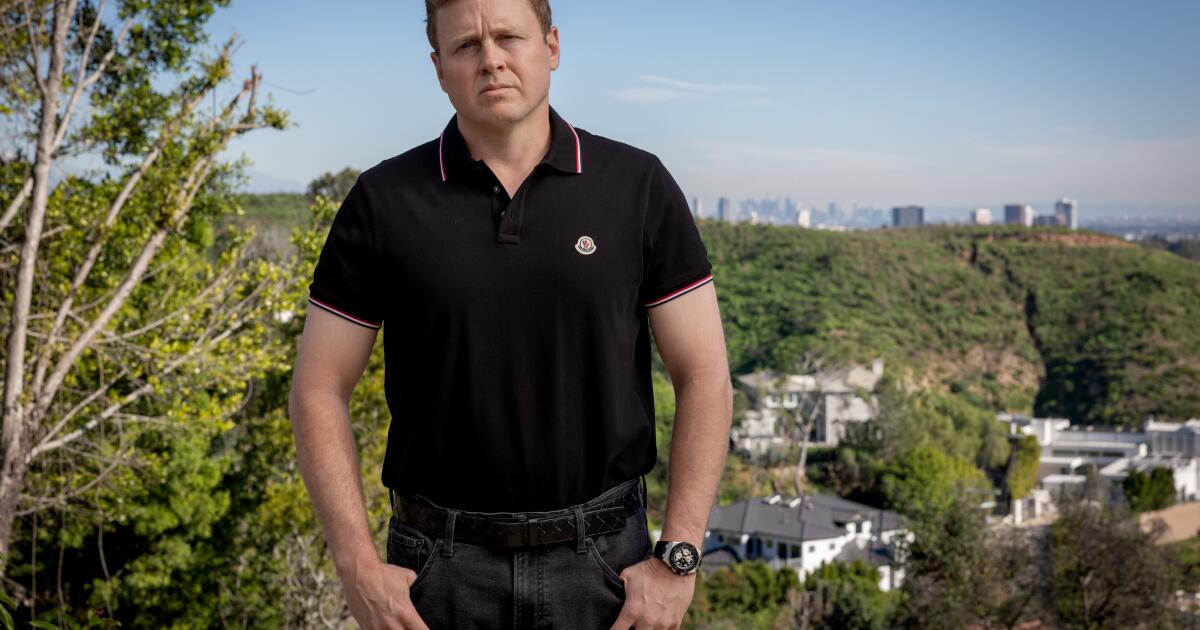
Spencer Pratt’s AI-Powered LA Mayor Bid: Can It Win Over Voters?
Reality TV star Spencer Pratt, best known for his role on *The Hills*, has launched a viral campaign for Los Angeles mayor using an AI-generated ad that paints him as an outsider fighting against political corruption. The ad, which has amassed over 6 million views on X, contrasts his modest living situation—a mobile home—with the mansions of incumbent Mayor Karen Bass and front-runner City Councilmember Nithya Raman. Pratt’s bid, framed around his personal loss in the 2023 Palisades wildfire, taps into growing voter frustration with Democratic leadership. But will his outsider appeal translate into real votes in a city where Republicans hold less than 20% of registered voters? The stakes are high: Los Angeles’ next mayor will shape disaster recovery, housing policy, and economic resilience in a city still grappling with climate disasters and homelessness crises.
The AI Superhero Gambit: Virality vs. Viability
Pratt’s campaign ad—unofficially dubbed an “AI superhero treatment”—is a masterclass in emotional storytelling. It leverages two powerful narratives: personal sacrifice (his home destroyed by wildfires) and anti-establishment outrage (accusing Bass and Raman of living in “mansions” while Angelenos suffer). The ad’s viral success underscores a broader trend: in an era where trust in institutions is eroding, candidates are increasingly turning to AI-generated content to bypass traditional media gatekeepers. But virality isn’t votes. Polling from prediction markets like Polymarket shows Pratt trailing Bass by just 1 percentage point (20% to 19%), while Raman leads with 58%. The question isn’t whether Pratt’s message resonates—it clearly does—but whether it can overcome structural barriers like Los Angeles’ deep-blue electorate and the city’s nonpartisan ballot system, which allows Democrats to consolidate votes without party labels.
“This isn’t just about one candidate’s charisma. It’s about whether voters believe the system is rigged against them—and if they’re willing to bet on an outsider who’s never held office. That’s a high-risk gamble, even for a reality TV star.”
From Reality TV to City Hall: The Long Shot’s Playbook
Pratt’s campaign is a case study in brand leverage. For over a decade, he’s built a public persona around luxury, controversy, and relatability—qualities that now underpin his political pitch. But translating celebrity into governance is fraught with challenges. Los Angeles’ mayoral race is uniquely nonpartisan, meaning voters aren’t swayed by party labels but by tangible promises. Pratt’s platform centers on three pillars:
- Disaster recovery: Directing blame at Bass for the Palisades wildfire’s inadequate response.
- Housing affordability: Criticizing “corrupt politicians” for failing to address homelessness.
- Economic populism: Positioning himself as a voice for “working-class Angelenos.”
The problem? These issues are already central to Bass’s campaign. Without a clear policy differentiator, Pratt risks being seen as a protest vote rather than a viable alternative.
The Wildfire Factor: A Double-Edged Sword
The 2023 Palisades wildfire, which destroyed 1,000+ homes and killed four people, remains a raw wound in L.A. Politics. Pratt’s ad weaponizes the disaster, framing it as proof of Bass’s failures. But the reality is more nuanced. The fire’s causes were multifactorial, involving utility infrastructure, drought conditions, and urban sprawl—not just political incompetence. Experts warn that Pratt’s narrative risks oversimplifying a complex crisis.

“Using a natural disaster as a political cudgel is dangerous. Voters deserve solutions, not score-settling. The Palisades fire exposed systemic vulnerabilities in our grid and emergency response—fixing those requires collaboration, not partisan blame games.”
Demographics vs. Delusion: Can Pratt Win?
Los Angeles’ electorate is 70% Democratic, with only 18% identifying as Republican (per the Los Angeles County Registrar). Pratt’s Republican affiliation is a liability, but his message resonates with a broader “anti-establishment” coalition: renters priced out of their neighborhoods, slight business owners struggling with regulations, and climate-angry homeowners like Pratt himself. The key demographic? Independent voters, who make up 35% of the electorate. If Pratt can peel off even a fraction of these voters from Bass, he could force a runoff—or at least force Raman to pivot her campaign.
| Candidate | Party | Key Issue | Voter Base | Chance of Winning (Polymarket) |
|---|---|---|---|---|
| Nithya Raman | Democratic | Progressive reform, homelessness, climate action | Young professionals, activists, unions | 58% |
| Karen Bass | Democratic | Incumbency, disaster recovery, corporate ties | Establishment Democrats, moderate voters | 19% |
| Spencer Pratt | Republican | Anti-corruption, housing affordability, wildfire blame | Independents, homeowners, anti-tax voters | 20% |
The Bigger Picture: What’s at Stake for L.A.
Beyond the spectacle of a reality star running for mayor, this race exposes deeper fractures in Los Angeles’ governance. The city faces three existential challenges:
- Climate resilience: With wildfires, heatwaves, and flooding increasing, L.A. Needs a mayor who can unite stakeholders on infrastructure upgrades. Pratt’s divisive rhetoric risks stalling progress.
- Homelessness: The city’s 2024 homelessness report found over 70,000 unsheltered residents. Pratt’s focus on “corruption” ignores the systemic failures in mental health services and affordable housing.
- Economic inequality: L.A.’s GDP is the 19th largest in the world, but wealth disparity is stark. Pratt’s populist rhetoric could either mobilize working-class voters or deepen polarization.
The outcome of this race will determine whether L.A. Doubles down on its progressive agenda or lurches toward a culture-war-driven backlash.
Where the Rubber Meets the Road
Pratt’s campaign highlights a critical gap in L.A.’s civic infrastructure: disaster preparedness. The Palisades fire revealed that emergency response plans were outdated, and recovery efforts were slow. For residents still rebuilding, the question isn’t just “Who will be mayor?” but “Who will fix what’s broken?” This is where certified emergency restoration contractors and community resilience organizations step in—providing immediate relief while holding leaders accountable. Meanwhile, municipal law firms are already advising businesses on how to navigate the city’s shifting zoning and environmental regulations post-fire.

The Kicker: Virality Isn’t Victory
Spencer Pratt’s AI-generated ad is a symptom of a larger crisis: distrust in institutions. In an era where voters crave authenticity but also spectacle, candidates like Pratt thrive by blending personal narrative with algorithmic amplification. But Los Angeles isn’t just another reality show—it’s a city on the brink. The mayoral race will decide whether the city moves forward with unity or fractures further under the weight of division. For Angelenos, the real question isn’t whether Pratt’s message is compelling. It’s whether any of the candidates have a plan to actually solve the problems they’re exploiting.
As the campaign heats up, one thing is certain: the city’s most pressing needs—rebuilding infrastructure, supporting displaced families, and navigating new climate policies—won’t wait for the election. The time to act is now.