Spain, China, and the Global Battle for the Electric Vehicle Industry
<>
Spain is emerging as a critical geopolitical battleground in the global electric vehicle (EV) industry, balancing the pursuit of foreign direct investment against the risks of economic dependency. As the European Union and the United States escalate trade tensions with China over EV subsidies, Spain’s recent decision to host a SAIC manufacturing plant in Ferrol highlights the country’s attempt to maintain industrial autonomy while navigating a shifting global automotive hierarchy.
The Ferrol Project: Balancing Industrial Ambition and Security
The proposed construction of a SAIC manufacturing facility in Ferrol, Galicia, recently became the focus of intense scrutiny within the Spanish government. Initial reports suggested that the Ministry of Defense held reservations regarding the potential for the site to serve as a hub for Chinese state-led espionage. However, the ministry subsequently confirmed it would allow the project to proceed, signaling that the potential for regional reindustrialization outweighs the perceived security risks.
This project aims to produce vehicles and generate jobs.
Spain’s Position in the Global Automotive Hierarchy
Historically, Spain has functioned as a vital node in the global automotive sector, though it has occupied a “semi-peripheral” position. While Germany maintains its role as the industry’s central hub—controlling the highest value-added segments such as R&D and proprietary technology—Spain has largely relied on assembly operations. Data from the European Union indicates that while Spain’s automotive exports represent a significant portion of its total industrial output, the country maintains only 29% national ownership of its automotive sector, compared to 79% in Germany.
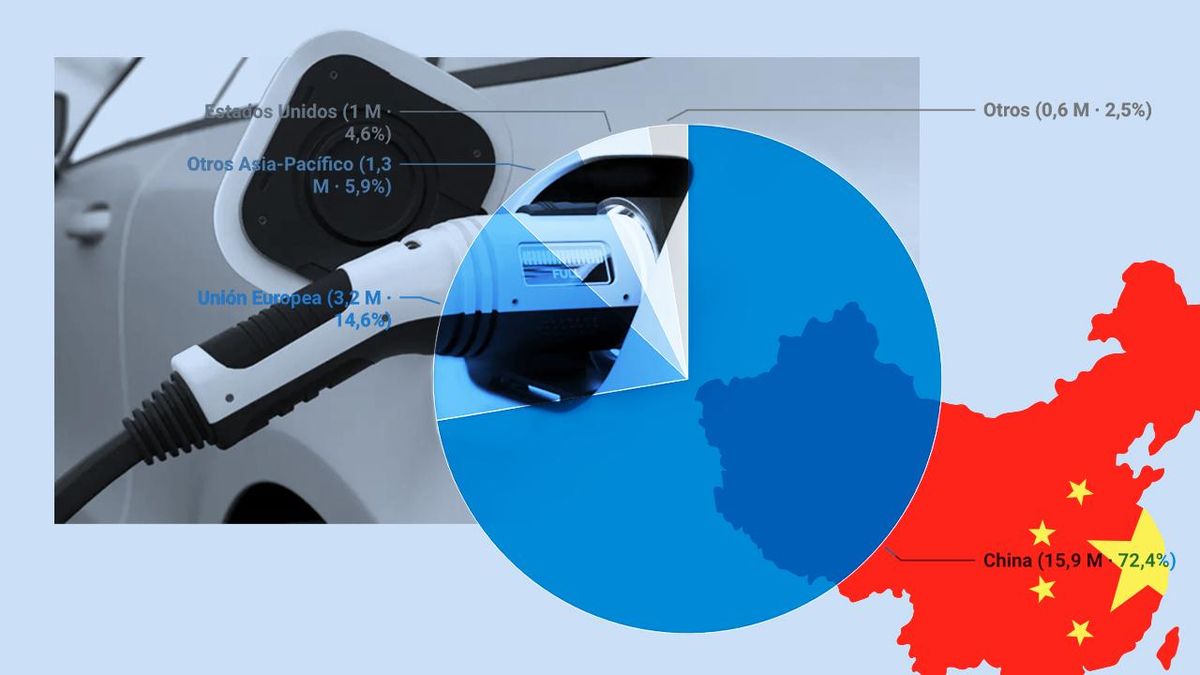
This imbalance creates a structural vulnerability. As the industry transitions from internal combustion engines to electric powertrains, the geographic center of production is shifting toward Asia. China now controls approximately 91% of graphite refining and 80% of global battery production, according to the International Energy Agency.
The Neomercantilist Pivot in European Policy
This includes the implementation of anti-subsidy tariffs, with companies like SAIC facing rates for failing to cooperate with EU trade investigations. These measures are designed to force foreign manufacturers to localize their production and adhere to stricter content requirements.
While the EU seeks to protect its market, countries like Spain are actively courting Chinese capital to sustain local employment. This creates a paradox: the more Europe attempts to restrict Chinese influence, the more it relies on the very investments that threaten its existing automotive manufacturing base.
Strategic Risks and the Future of National Control
The core challenge for Spain is not merely the nationality of the capital it attracts, but the degree of control it retains over the value generated. If the SAIC plant in Ferrol remains limited to assembly, Spain risks repeating the historical pattern of providing labor and infrastructure while the intellectual property and strategic decision-making remain in China.
True industrial transformation will require more than just the presence of foreign factories; it requires the development of local supplier networks and technological capabilities.
The transition to electric mobility is not just a technological shift; it is a fundamental reorganization of economic power. Spain stands at a crossroads where its choice to court international partners will define its industrial standing for the next decade. Whether this leads to a robust, autonomous manufacturing base or further subordination to external decision-makers remains the defining question of the modern automotive era. Success will likely depend on the ability to leverage foreign investment as a bridge to higher-value activities, ensuring that the next generation of vehicles is not only built in Spain but designed and controlled by a domestic ecosystem.