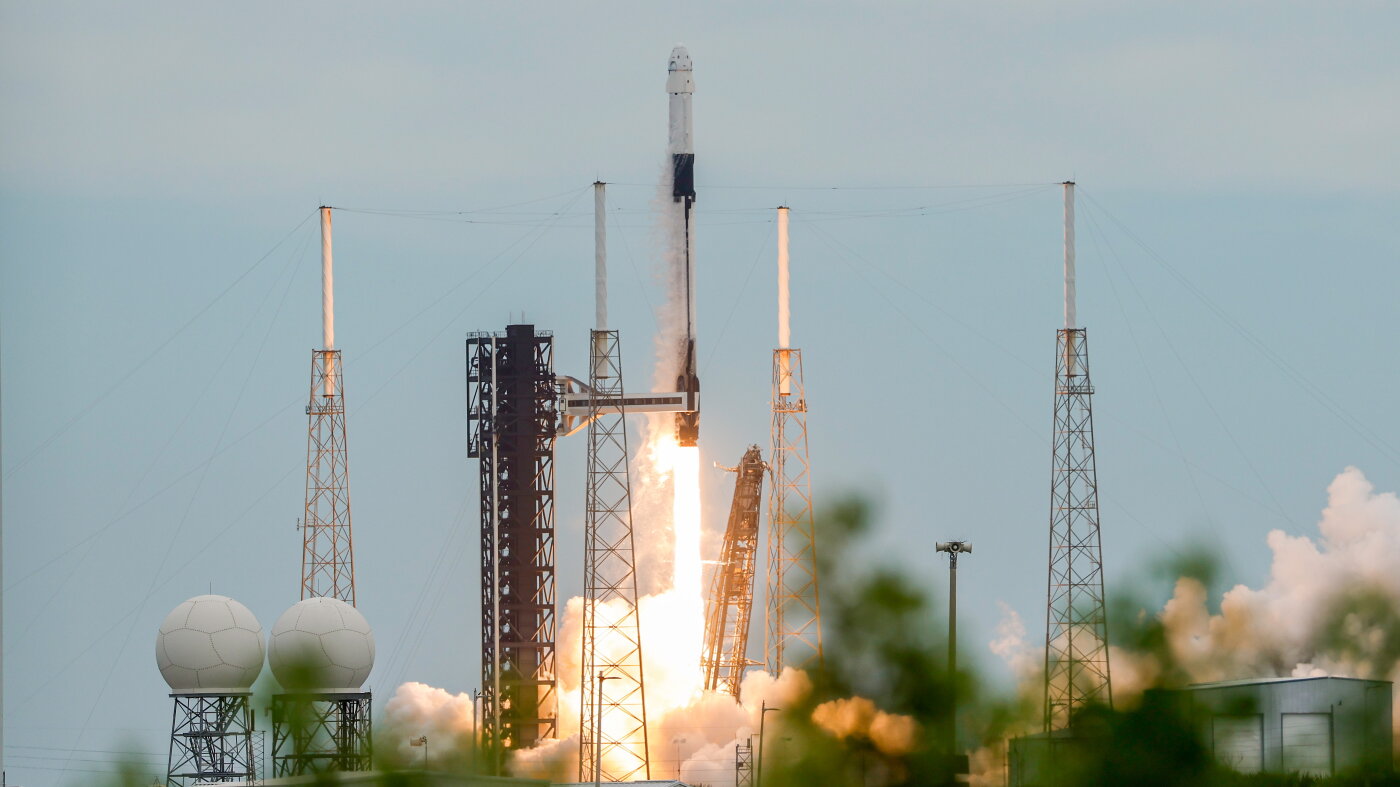
SpaceX Launches NASA Crew-13 to International Space Station From Florida
SpaceX launched the Crew-13 mission to the International Space Station on Thursday from the Cape Canaveral Space Force Station in Florida. Despite gusty winds and thunderstorm risks, the Falcon 9 rocket successfully carried four astronauts aboard the Dragon capsule “Grace,” beginning a six-month mission to conduct medical research and station maintenance. The spacecraft soared northeast over the Atlantic Ocean, with an estimated eight-hour transit time required to reach and dock with the orbiting outpost.
Jessica Watkins Leads International Crew-13 Team
The Crew-13 mission includes a diverse international team tasked with living and working on the orbiting laboratory for approximately half a year. The crew is led by commander Jessica Watkins, a geologist and NASA astronaut. Watkins is making her second trip to space, having previously served on the 2022 Crew-4 mission; she holds the record for the most time in space of any Black woman, with 170 days logged. Pilot Luke Delaney, a naval aviator from DeBary, Florida, is also aboard for his first spaceflight. Both Kutryk and Teteryatnikov are first-time space travelers.
Delaney, who grew up roughly 50 miles from the Space Coast, reflected on his journey ahead of the launch: I did grow up pretty close to here. I got to watch Space Shuttle launches, and now I’m going to get to see it from a little bit different perspective.
To celebrate his milestone, Deltona High School, his alma mater, officially declared Thursday Luke Delaney Day,
with students gathering to watch the ascent.

The crew is scheduled to perform several scientific investigations, including stem cell research aimed at understanding Parkinson’s disease treatment and studies regarding crop production in microgravity to support future long-duration exploration. The team will also test new medical monitoring equipment designed to track astronaut health.
Oxidizer Leak Delayed Dragon Capsule Launch
The mission launch followed a period of intensive troubleshooting. NASA officials reported that a leak of oxidizer was detected on the Dragon capsule during processing in August, necessitating a delay from the original mid-September target. Lori Glaze, NASA’s head of human spaceflight, stated that the delay allowed for the necessary repairs to ensure the safety of the spacecraft, noting, It took a lot of effort, time, [and] many, many hours in determined troubleshooting to put us on the right path for launch.
The capsule, named “Grace,” is the fifth and final Dragon spacecraft built by SpaceX and has previously supported the Axiom Ax-4 mission.
Mission Patch Incorporates Apollo 13 History
The Crew-13 mission has drawn comparisons to the 1970 Apollo 13 flight, an event remembered for the ingenuity required to return the crew safely to Earth after a mid-mission explosion occurred 55 hours into that journey. While the current crew members are not superstitious, they incorporated elements of the Apollo 13 history into their mission patch.
Relief of the Crew-12 Mission
The arrival of the Crew-13 team marks the transition of operations on the International Space Station. The incoming crew will relieve the members of the Crew-12 mission, who have been stationed at the outpost since February. The departing astronauts are expected to return to Earth next week, with a planned splashdown off the coast of Southern California. This flight represents the 13th operational mission for NASA under the SpaceX program, bringing the total number of agency-funded SpaceX missions to 14, including a 2020 crewed test flight.

Logistical Considerations for Aerospace Operations
The complexity of maintaining human presence in low-Earth orbit requires constant coordination between public agencies and private sector partners.
As the Crew-13 mission progresses, the focus shifts from the launch phase to the long-term operational requirements of the International Space Station.