
S&P 500, Dow Jones & Nasdaq Rise Amid Iran Conflict Concerns | Dollar Weakens
Global Markets Surge Amidst Easing Iran Tensions
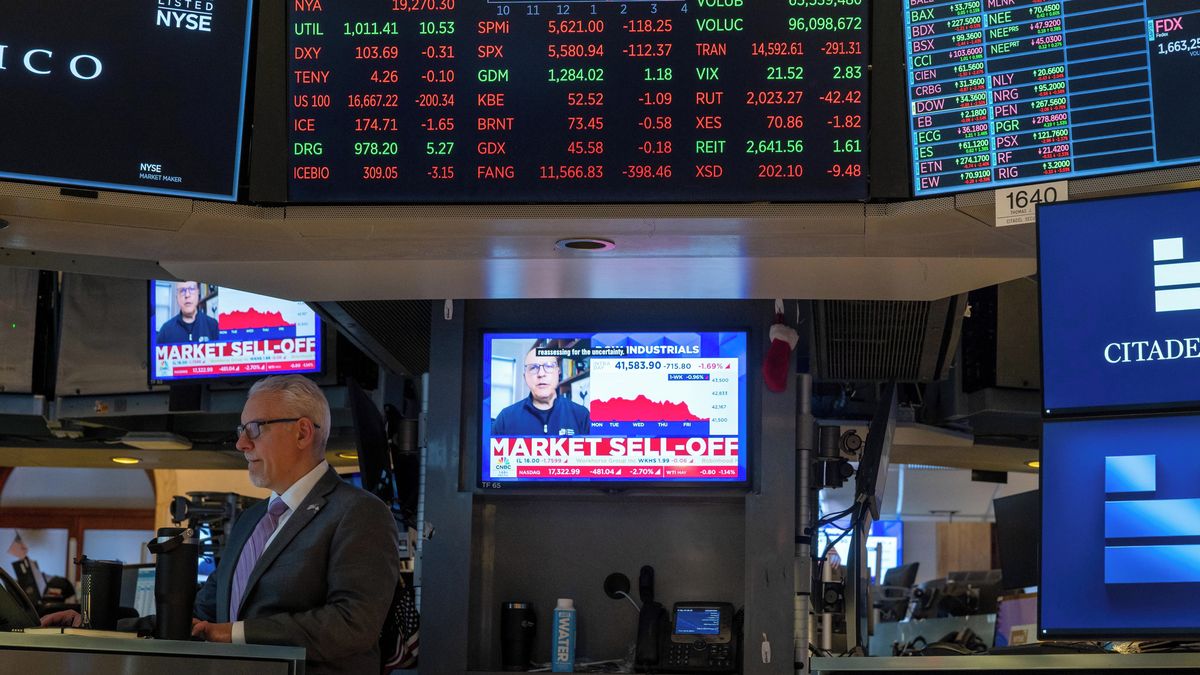
World stock markets experienced a significant rally Tuesday, fueled by speculation that military conflict between the United States and Iran may be averted. The S&P 500 climbed 2.9 percent to 6,528.52, marking its largest single-day gain since last spring. The Dow Jones Industrial Average rose 2.5 percent, closing at 46,341.51, whereas the Nasdaq Composite saw a 3.8 percent increase, finishing at 21,590.63.

Despite Tuesday’s gains, both the S&P 500 and Dow Jones are still on track for their deepest quarterly declines since 2022. Preliminary data indicates the S&P 500 is down 4.63 percent for the quarter, and the Dow Jones has fallen 3.58 percent. The Nasdaq has experienced a 7.11 percent loss over the same period.
The dollar weakened on foreign exchange markets Tuesday, though it remains poised for its best quarter since the third quarter of 2024. Since the end of February, the dollar has benefited from demand for safe-haven assets amid ongoing uncertainty surrounding the duration of the conflict. Around 9:45 PM CET, the dollar index, which tracks the dollar’s performance against a basket of six major world currencies, was down 0.6 percent at 99.906. The dollar also fell 0.64 percent against the yen to 158.686 JPY.
U.S. President Donald Trump reportedly informed his advisors that he is willing to de-escalate military operations against Iran, even if the Strait of Hormuz remains largely closed, deferring a complex operation to reopen it to a later date, according to sources cited by The Wall Street Journal.
In a brief statement Tuesday evening, Trump indicated that U.S. Military operations against Iran were “coming to an end.”
Iranian President Pezeškján, in a phone call with European Council President António Costa, conveyed Iran’s willingness to end the war, according to the AFP news agency. However, Teheran stipulated that “necessary guarantees to prevent a repetition of aggression” against Iran are a prerequisite for halting hostilities. Pezeškján added that a cessation of hostilities by the United States and Israel is the key to de-escalation, and also demanded financial compensation for damages caused by recent strikes.
“What you’re seeing in capital markets today is speculation around an earlier resolution to the conflict or a cessation of hostilities,” said Bill Northey, an investor at U.S. Bank Wealth Management. “The details are murky, but capital markets are looking for any indication that there’s an opportunity for a more normal flow of energy through the Strait of Hormuz.”
Iran has threatened cyberattacks targeting U.S. Technological firms, with a list of 18 companies reportedly compiled for potential action.