
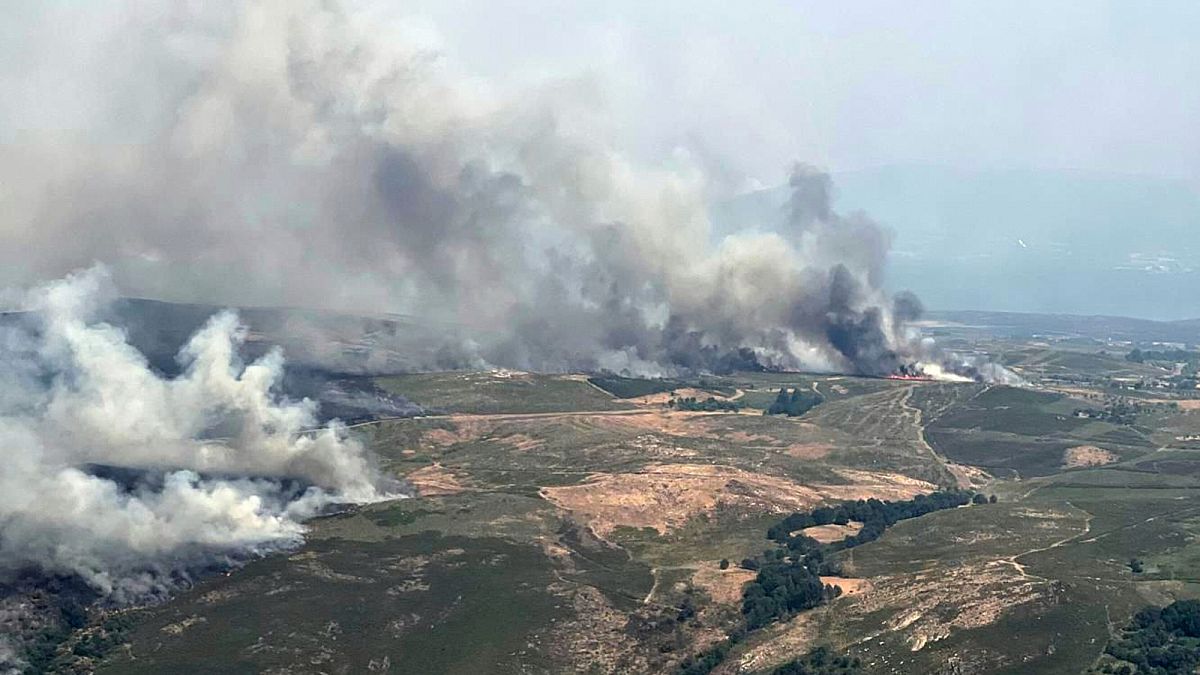
Southern Europe Wildfires: Heatwave Intensifies Blazes, Prompts Emergency Responses
Table of Contents
- Southern Europe Wildfires: Heatwave Intensifies Blazes, Prompts Emergency Responses
A surge of wildfires is currently devastating parts of southern Europe, exacerbated by a prolonged and intense heatwave. Emergency services are stretched thin as nations grapple with rapidly spreading flames, evacuations, and tragic loss of life. The situation is notably critical in Spain, Portugal, Greece, and Turkey, with international aid being mobilized to assist in containment efforts.
Spain Faces ‘Extreme Risk’ as Fires Rage
Spain is confronting 14 major wildfires, according to virginia Barcones, the nation’s general director of emergency services. Prime Minister Pedro Sánchez warned of an “extreme risk of new fires” on X, formerly known as Twitter, acknowledging the severity of the situation. Today will once again be a very tough day, with an extreme risk of new fires,
Sánchez stated.
Tragically, three individuals have perished in Spain due to the fires, including two volunteer firefighters. Sánchez extended his condolences to the family of the second firefighter, who succumbed to severe burns in a León hospital on Thursday.The AEMET, spain’s national weather agency, has issued extreme fire risk warnings across moast of the country, particularly in the north and west, where the largest blazes are concentrated. Highway closures and rail service suspensions, including the high-speed line to Madrid, are disrupting travel in the Galicia region.
This year, fires in Spain have already consumed approximately 158,000 hectares of land-an area comparable in size to metropolitan London, according to the European Union’s European Forest Fire Information System.
Did You Know? Wildfires release meaningful amounts of carbon dioxide into the atmosphere, contributing to climate change and creating a dangerous feedback loop.
Portugal Battles Blazes, Records First Fatality
Nearly 4,000 firefighters are actively combating seven major fires across Portugal. authorities have extended the state of alert until Sunday, anticipating continued high temperatures. In the Guarda district, limited resources are hindering firefighting efforts as flames spread to neighboring municipalities like Pinhel and Trancoso. A former mayor of Vila Franca do deão was found deceased on Saturday, marking the first fire-related fatality in portugal this summer.
The portuguese government requested assistance through the EU’s civil protection mechanism, a collaborative initiative providing firefighting support to member states in need. Spain previously received two Canadair water bomber aircraft through the same mechanism-a first for the country.
Greece Issues New Evacuation Orders
A wildfire on the Greek island of Chios has been burning uncontrollably for four days, prompting further overnight evacuations. Firefighters are utilizing two water-dropping planes and two helicopters in the north of the island, aided by a temporary lull in high winds. Following recent large fires in western Greece, the fire service remains on high alert near Athens and in southern regions, where conditions remain conducive to fire ignition.
Turkey Contains Most Fires, International Aid Deployed
Firefighters in Turkey have largely contained fires across several provinces, though ongoing monitoring remains crucial.Meanwhile, Greece, Bulgaria, Montenegro, and Albania have also requested assistance from the EU’s firefighting force, which has been activated more frequently this year than during the entirety of the previous fire season.
Wildfire impact: A Statistical Overview
| Country | Major Fires (as of Aug 16, 2025) | Hectares burned (Approximate) | Fatalities |
|---|---|---|---|
| Spain | 14 | 158,000 | 3 |
| Portugal | 7 | Data Pending | 1 |
| Greece | Multiple | Data pending | 0 |
| Turkey | Multiple | Largely Contained | 0 |
Scientists attribute the increasing frequency and intensity of wildfires in Europe to climate change, which exacerbates heat and dryness. The burning of fossil fuels releases heat-trapping gases, driving global warming and creating conditions ripe for wildfires. Europe is warming at roughly twice the global average rate as the 1980s, according to the EU’s Copernicus Climate Change Service [[1]]. The EU monitoring agency reported that 2024 was the hottest year on record for both the globe and Europe, with the second-highest number of “heat stress” days ever recorded.
Pro Tip: Staying informed about local fire risk levels and following evacuation orders are crucial steps in protecting yourself and your community during wildfire season.
what measures do you think are most effective in preventing and mitigating the impact of wildfires? How can international cooperation be strengthened to address this growing threat?
Understanding the Escalating wildfire Crisis
The recent surge in wildfires across Southern Europe is not an isolated event, but rather a symptom of a larger, long-term trend. Climate change is undeniably a key driver, creating hotter, drier conditions that make forests and vegetation more susceptible to ignition and rapid spread. Changes in land management practices, including forest density and fuel load, also play a significant role. Historically, many European forests were actively managed to reduce fire risk, but these practices have declined in recent decades. Furthermore, increased human activity in wildland-urban interfaces-where homes and communities are built near forested areas-increases the likelihood of accidental ignitions and complicates firefighting efforts.
Frequently Asked Questions About European Wildfires
- What is causing the wildfires in Southern Europe? The primary causes are a combination of extreme heat, prolonged drought, and, in some cases, human activity.
- How is climate change impacting wildfires? Climate change is increasing the frequency and intensity of heatwaves and droughts, creating ideal conditions for wildfires to start and spread.
- What is the EU doing to help? The EU is providing assistance through its civil protection mechanism, deploying firefighting resources and coordinating international aid.
- Are wildfires becoming more common? Yes, wildfires are becoming more frequent and severe in many parts of the world, including Southern Europe.
- what can individuals do to prevent wildfires? Be cautious with fire outdoors, clear vegetation around homes, and report any suspicious activity.
This is a developing story. Stay tuned for updates as the situation evolves. We encourage you to share this information with your network and to support organizations working to combat wildfires and address climate change.
