
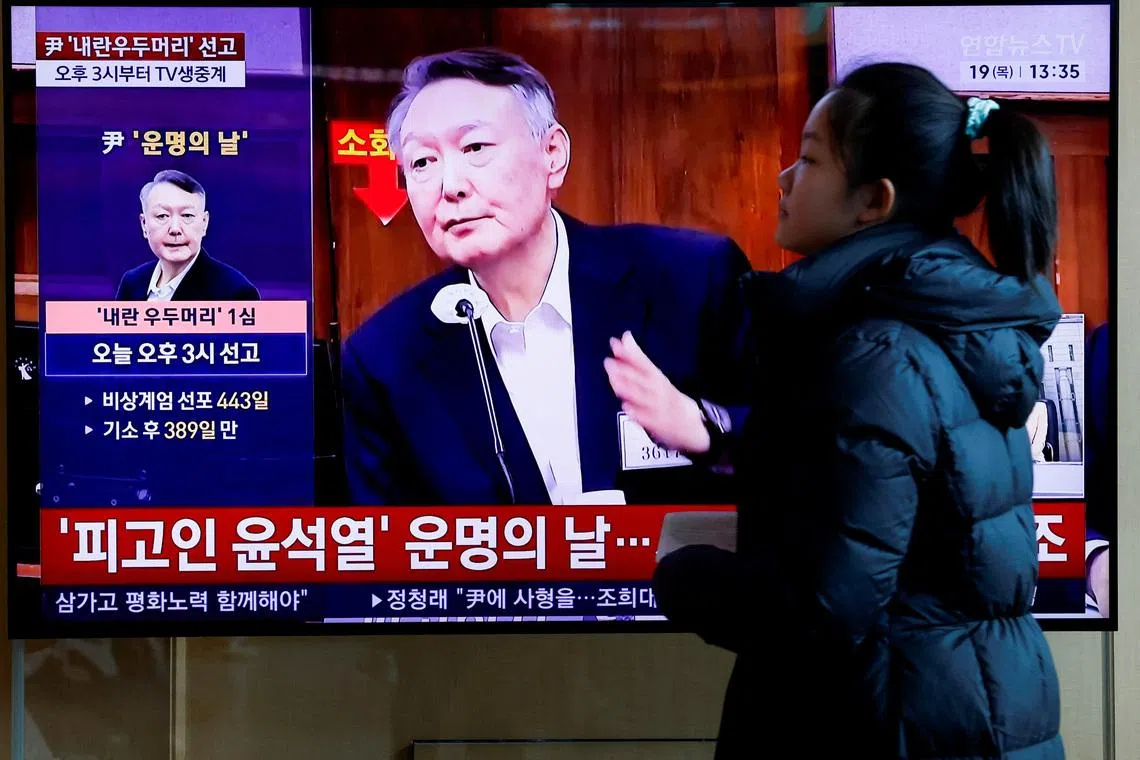
SEOUL – Former South Korean President Yoon Suk Yeol was sentenced to life in prison on Thursday, February 19, 2026, after being convicted of attempting to overthrow the government by imposing martial law in December 2024. The Seoul Central District Court found Yoon guilty of insurrection, a charge that carried a potential penalty of death or life imprisonment.
Prosecutors had initially sought the death penalty for Yoon, 65, arguing his actions represented a grave threat to South Korea’s democratic institutions. While expressing some regret over the life sentence, the prosecution declined to immediately state whether it would appeal the decision.
Judge Jee Kui-youn, delivering the verdict, detailed how Yoon conspired with then-Defense Minister Kim Yong-hyun to deploy troops toward the National Assembly with the intent of paralyzing its functions. “This proves the court’s judgment that sending armed troops to Parliament… and using equipment to try to make arrests all constitute acts of insurrection,” Judge Jee stated. The court also cited the “enormous social cost” incurred as a result of the martial law declaration.
Kim Yong-hyun, Yoon’s former defense minister, received a 30-year prison sentence. Several other high-ranking officials and military personnel involved in the attempt were also sentenced to varying terms. Yoon, appearing ashen-faced in a dark navy suit, listened as the sentences were read. His legal team indicated they would discuss an appeal with him, with lawyer Yoon Kab-keun arguing the court’s ruling disregarded fundamental legal principles of evidence-based findings.
The attempt to impose martial law, which lasted approximately six hours, triggered widespread protests and was ultimately rejected by the National Assembly. The incident sent shockwaves through South Korea, a key US ally and a nation long considered a bastion of democracy in Asia.
During the trial, Yoon maintained his innocence, asserting he had the presidential authority to declare martial law and that his actions were intended as a warning against obstructionist tactics by opposition parties. He is currently held at the Seoul Detention Centre and faces a separate five-year jail term stemming from a January conviction on charges of obstructing authorities attempting to arrest him following the martial law declaration. He is appealing that sentence as well.
The sentencing comes after eight trial proceedings for the former president. Judicial guidelines suggest the entire legal process, including appeals, should conclude within two years, though trials frequently exceed this timeframe.
Current President Lee Jae Myung, who won a snap election in June 2025 following Yoon’s removal from office, commended the South Korean public for resisting the attempted imposition of martial law. In a post on X, President Lee stated, “It was possible because it was the Republic of Korea,” adding that the nation’s response would serve as a historical example. He accompanied the post with a newspaper report detailing recommendations for a Nobel Peace Prize nomination for the South Korean public, recognizing their non-violent opposition to the deployment of troops and police.
Outside the court, hundreds of Yoon supporters rallied, calling for his release, while others, like Ko Jeong-suk, 65, expressed disappointment with the sentence. “I really consider it should have been the death sentence so that this doesn’t become an example to repeat,” Ko said, reflecting concerns about potential future attempts to subvert the democratic process.
